Neuroimaging Techniques: How We See the Brain in Action

Imagine looking into the human brain’s complex workings. We can uncover its secrets and understand how it influences our thoughts and feelings. Neuroimaging techniques are the advanced tools that help us see the brain’s structure and how it functions. These include MRI, PET, and EEG, which are changing how we view the brain’s amazing abilities.
These methods give us a peek into the brain’s inner workings. They show us its detailed anatomy and how its parts connect. Whether you’re a scientist, doctor, or just curious about the mind, these technologies offer a unique view. They let researchers track brain activity and find out which parts do what.
But neuroimaging is more than just research. It’s also crucial in medicine, helping diagnose and monitor brain and mental health issues. It’s used for conditions like Alzheimer’s, Parkinson’s, schizophrenia, and depression. It shows the brain’s changes, helping doctors and patients understand better.
As we learn more about the brain, neuroimaging keeps getting better. It opens up new ways to understand and treat brain and mental health problems. Let’s dive into the world of brain mapping and see how these technologies are changing our view of the brain.
What is Brain Mapping?
Brain mapping is a multidisciplinary approach that uses many techniques to study the brain. It creates detailed maps of brain anatomy with imaging methods like MRI and CT scans. It also measures brain activity during tasks with fMRI and PET scans.
This method helps us understand how different brain parts work together. It sheds light on cognitive functions, emotions, and behaviors.
A Multidisciplinary Approach to Understanding Brain Structure and Function
Researchers in brain mapping use tools from many fields, including cognitive neuroscience, neuroanatomy, and neuroimaging. By combining these views, scientists can better understand the brain’s structure and function.
Key technologies in brain mapping include:
- CAT scans for structural imaging
- MRI for detailed imaging of brain structures
- DTI for tracking neuron tracts and connectivity
- EEG for recording electrical brain activity
- PET scans for assessing brain function
- fMRI for mapping brain activity during specific tasks
These brain mapping techniques have greatly improved our knowledge of the brain. They help in diagnosing and treating neurological and psychiatric disorders.
Key Neuroimaging Techniques
Neuroimaging techniques are key to understanding the brain. They help us see how the brain works and what it looks like. These methods are split into two main types: structural and functional brain mapping.
Structural Brain Mapping with MRI and CT Scans
Structural brain mapping uses Magnetic Resonance Imaging (MRI) and Computed Tomography (CT) scans. These tools create detailed images of the brain’s structure. They help find brain abnormalities and study specific brain areas.
Functional Brain Mapping with fMRI, PET, and EEG
Functional brain mapping looks at brain activity during tasks. Functional Magnetic Resonance Imaging (fMRI), Positron Emission Tomography (PET), and Electroencephalography (EEG) show how brain areas work together. They help us understand brain functions and how we behave.
| Technique | Measure | Temporal Resolution | Spatial Resolution |
|---|---|---|---|
| MRI | Structural anatomy | Seconds to minutes | Millimeters |
| CT Scans | Structural anatomy | Seconds | Millimeters |
| fMRI | Changes in blood oxygenation (proxy for neural activity) | Seconds | Millimeters |
| PET | Changes in metabolic activity and neurotransmitter levels | Seconds to minutes | Millimeters |
| EEG | Electrical activity of neurons | Milliseconds | Centimeters |
By combining these techniques, we get a full picture of the brain. This helps researchers and doctors study the brain’s structure and function. It also helps them understand how the brain reacts to different things.
Neuroimaging Techniques in Action
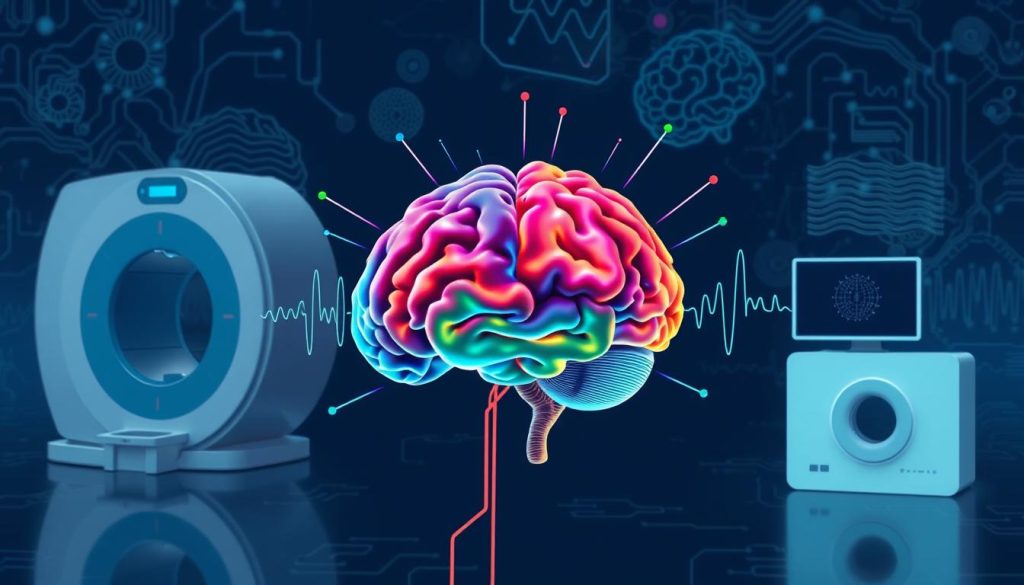
Neuroimaging techniques are changing how we see the human brain. They are key in research and medical use. These methods help us understand brain structure, guide surgeries, and diagnose diseases.
In research, tools like MRI, fMRI, PET, and EEG let scientists explore the brain’s details. MRI and CT scans show brain structures and problems. Meanwhile, fMRI, PET, and EEG show how the brain works during tasks.
This information helps researchers understand how the brain handles information and memories. It also shows how it controls different functions.
The medical field also benefits from these advancements. Neuroimaging helps surgeons by giving them detailed brain maps. It’s also key in diagnosing and tracking diseases like epilepsy and Alzheimer’s.
- Brain mapping techniques have been key in understanding mental health disorders. They show how the brain is different in people with schizophrenia and depression.
- Electrophysiological mapping and connectomics help us understand how the brain talks to itself. They show how different parts of the brain connect.
As neuroimaging grows, we’ll learn more about the brain. Researchers aim to fully understand how we think. This could lead to better treatments for many brain and mental health issues.
Mapping Brain Activity and Neural Connections
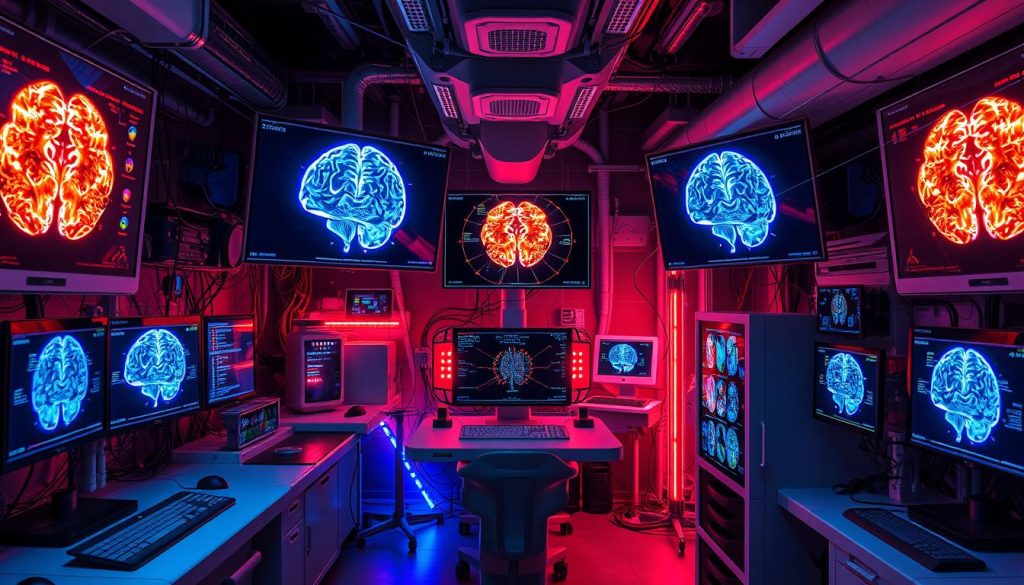
Advanced neuroimaging techniques go beyond just mapping the brain’s structure. They let researchers explore the brain’s inner workings. Electrophysiological mapping, for example, records the electrical signals of neurons. This gives insights into brain activity’s timing and patterns.
It reveals the complex neural networks and cognitive processes behind our thoughts and actions.
Electrophysiological Mapping and Connectomics
Electrophysiological mapping is a key tool in neuroscience. It uses electrodes to capture the electrical signals of neurons. This helps researchers understand how different brain regions communicate and work together.
The field of connectomics takes brain mapping further. It aims to create a detailed map of the brain’s neural connections. This is to understand how the brain processes information, forms memories, and enables our cognitive abilities.
Advanced imaging techniques like diffusion tensor imaging (DTI) and high-resolution MRI help trace nerve fibers. They map connections between brain regions. This knowledge is vital for understanding the brain and could lead to new treatments for neurological and psychiatric disorders.
 Theory of Mind: Understanding Others’ Perspectives
By combining insights from electrophysiological mapping and connectomics, scientists are gaining a deeper understanding of the brain. They are mapping the brain’s neural networks and their role in our thoughts, emotions, and behaviors. This knowledge could lead to new medical interventions and change how we see the human mind.
Unveiling the Brain’s Mysteries
The human brain is incredibly complex and fascinating. It has a vast network of neural connections and functions in many ways. Scientists are working hard to uncover its secrets and understand how it works.
Brainbow and ATLUM: Revolutionary Techniques
Brainbow is a groundbreaking method that uses genetic engineering. It labels neurons with different colors. This lets researchers see how neurons connect, giving a detailed look at the brain’s structure.
ATLUM is another innovative technique. It creates a detailed map of the brain by slicing it thinly. This, combined with advanced imaging, offers a deep view of the brain’s connections. It helps solve long-standing mysteries of the brain.
| Technique | Description | Key Benefit |
|---|---|---|
| Brainbow | Genetic labeling of neurons with fluorescent colors | Visualize intricate neural connections |
| ATLUM | Slicing the brain into thin ribbons for detailed mapping | Comprehensive wiring diagram of brain structure |
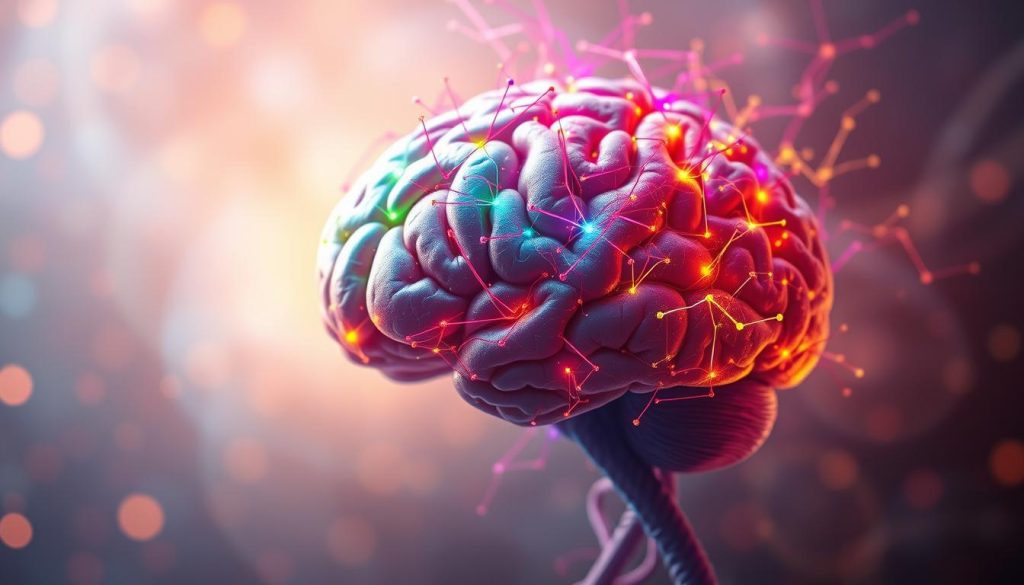
These methods, Brainbow and ATLUM, are major steps forward in brain research. They have the power to reveal the brain’s secrets and deepen our knowledge of it.
Medical Applications of Neuroimaging
Neuroimaging has changed healthcare a lot. It gives us deep insights into the brain’s structure and function. These advanced tools help in many ways, like guiding surgeries and diagnosing diseases.
Guiding Neurosurgeries and Diagnosing Neurological Disorders
Neurosurgeons use neuroimaging for precise surgeries. Techniques like fMRI and EEG help find seizure centers in epilepsy patients. This makes surgeries safer and more effective.
Neuroimaging also helps in diagnosing and tracking neurodegenerative diseases. It shows brain changes in diseases like Parkinson’s and Alzheimer’s. This helps doctors treat patients better and understand these diseases more.
Brain imaging is also key in studying psychiatric disorders. It shows how the brain changes in conditions like schizophrenia and depression. This helps find new treatments.
| Neuroimaging Technique | Medical Applications |
|---|---|
| Functional MRI (fMRI) | Locating seizure centers in epilepsy patients, guiding neurosurgical interventions |
| Electroencephalography (EEG) | Identifying epileptic seizure foci, monitoring brain activity during neurosurgery |
| Structural MRI and CT Scans | Diagnosing and monitoring neurodegenerative diseases like Alzheimer’s and Parkinson’s |
| PET Scans | Detecting early signs of Alzheimer’s disease, studying brain function in psychiatric disorders |
Neuroimaging keeps growing in healthcare. It’s changing how we understand and treat the brain.
Neuroimaging and Mental Health
Neuroimaging has changed how we study mental health. It lets us see the brain’s structure and activity. This helps us understand conditions like schizophrenia and depression better.
By looking at the brain, researchers find out what causes these conditions. This knowledge helps make better treatments. It also shows how the brain and mental health are connected.
Methods like MRI and CT scans show brain changes linked to mental health issues. These scans give insights into how brain structure affects mental health.
Functional brain mapping uses fMRI, PET, and EEG to study brain activity. It shows how the brain works during different tasks. This helps researchers understand the brain’s role in mental health.
Neuroimaging helps doctors diagnose and treat mental health problems. It also lets them see how treatments work. Neuroimaging research could lead to new treatments and better care for mental health.
| Neuroimaging Technique | Application in Mental Health |
|---|---|
| Magnetic Resonance Imaging (MRI) | Detects structural abnormalities in the brains of individuals with mental health disorders |
| Functional MRI (fMRI) | Measures brain activity during specific tasks, revealing patterns associated with mental health conditions |
| Positron Emission Tomography (PET) | Provides information about brain metabolism and neurotransmitter systems, which can be used to study the neural basis of mental health disorders |
| Electroencephalography (EEG) | Records electrical activity in the brain, allowing researchers to study brain function and connectivity in mental health disorders |
The field of neuroimaging and mental health is growing fast. We’re learning more about the brain and mental health. Soon, we’ll have even better ways to understand and treat mental health issues.
The Future of Brain Mapping
Neuroimaging technologies are getting better, making it possible to map the brain in more detail. Scientists aim to create maps that show the brain’s physical and mental processes. These brain mapping advancements could lead to major breakthroughs in neuroscience and treating brain and mental health issues.
Towards Comprehensive Maps of Brain Structure and Function
Current brain maps are useful but not complete. Researchers are using new neuroimaging techniques to make better maps. These include:
- Structural brain mapping with MRI and CT scans to generate high-resolution images of the brain’s anatomy
- Functional brain mapping with fMRI, PET, and EEG to track changes in blood flow, electrical activity, and metabolic processes during specific tasks
- Electrophysiological mapping to record the electrical activity of neurons and understand brain activity
- Connectomics to map the connections between neurons and brain regions, creating a comprehensive understanding of neural networks
These advanced methods, along with big data and machine learning, are helping create detailed brain maps. These maps show how brain structure and function are connected.
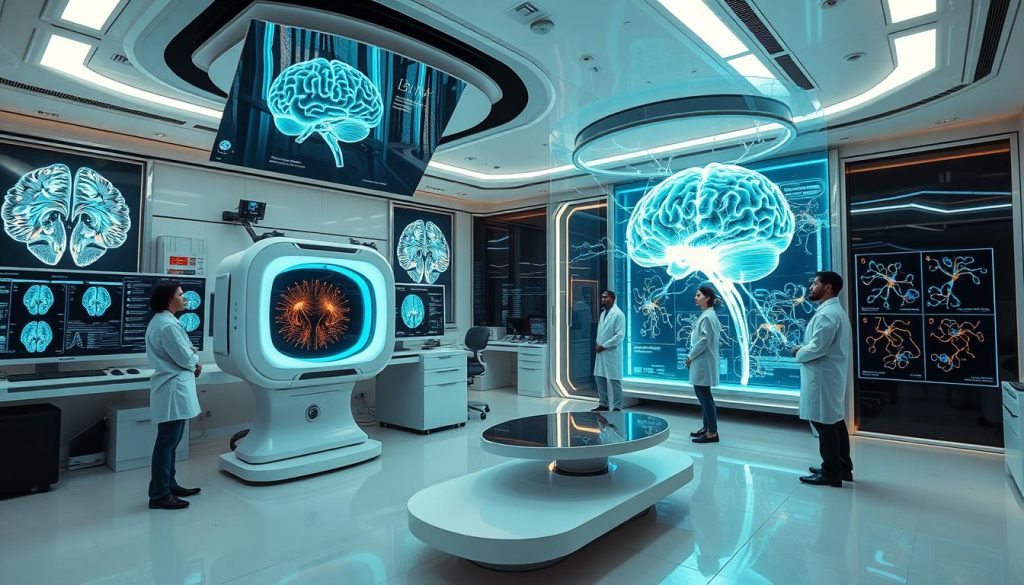
The future of brain mapping is exciting, with scientists working to understand the human mind better. New techniques like Brainbow and ATLUM are helping scientists uncover the brain’s secrets. These advances in neuroscience could lead to safer surgeries and better treatments for brain and mental health issues.
Neuroimaging Techniques: A Game-Changer
The field of neuroscience has seen a big change thanks to neuroimaging techniques. These new imaging methods have given us deep insights into the brain. They have also helped us understand how the brain works better.
 Neuroplasticity: How the Brain Adapts and Changes
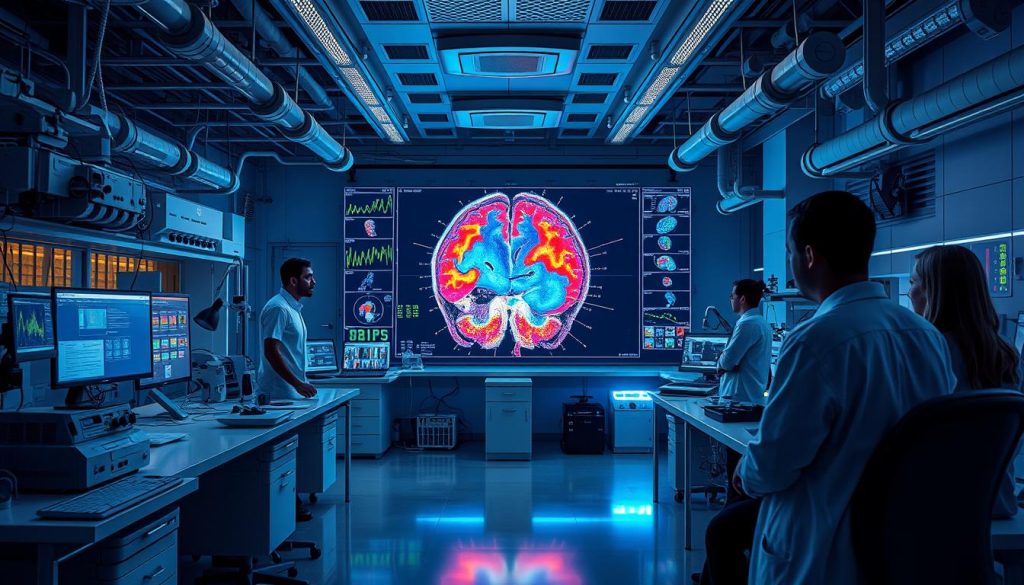
 Tools like MRI, fMRI, and PET have let scientists watch the brain in action. They show how brain activity, behavior, and thinking are connected. These tools have been key in uncovering how our minds work, leading to new neuroscience research.
Neuroimaging has changed how we diagnose and treat brain and mental health issues. It lets doctors see the brain’s details, helping them spot and track changes in brain conditions. This includes diseases like Alzheimer’s and Parkinson’s, and injuries to the brain.
Also, neuroimaging helps us study how our brains handle thoughts and feelings. This knowledge helps us understand human behavior and thinking better. It could lead to big improvements in psychology, psychiatry, education, and more.
As neuroimaging techniques get better, they will open up new areas in brain research. The future of brain understanding looks very promising, thanks to these new technologies.
Respect: The Bedrock of Positive Relationships
Respect is a basic need that builds strong relationships in our personal and work lives. The words we choose greatly affect how others see and respect us. Saying “I understand,” “I appreciate your insight,” and “What do you think?” shows empathy and value others’ thoughts.
How Language Impacts Respect
Telling someone “I respect your perspective” shows you value their opinion. This encourages open-mindedness. Using respectful words helps build trust and positive interactions. By picking our words carefully, we strengthen our bonds with others.
Effective communication strategies that show respect include:
- Listening actively and trying to see things from others’ point of view
- Showing gratitude for someone’s input or ideas
- Recognizing the worth of different perspectives and experiences
- Staying away from language that dismisses or interrupts others
By focusing on respect and positive relationships, we can make our interactions more rewarding. This creates a space where everyone feels important.

Well-being and Mental Health in Academia
In academia, well-being and mental health are key but often ignored. Faculty, staff, and students face a lot of stress and burnout. This affects their well-being in academia and mental health in higher education.
Higher education institutions must support the mental health and well-being of their community. It’s not just up to faculty and instructors. By talking openly about mental health, schools can fight against harmful cultures. They can create a place that encourages growth and balance.
Studies have linked lower heart rate variability (HRV) to bad neurodevelopmental outcomes in preterm. This means HRV could help spot mental health risks early. It allows for quick help to improve things.
The use of isotopes and radioisotopes in has helped us understand the brain better. This knowledge can help support faculty and student mental health in schools.
By focusing on well-being and mental health, schools can help their faculty and students do well. This makes the academic environment better for everyone.
Individual Well-being vs. Group Well-being
Well-being is important for both individuals and groups. Individual well-being is about feeling happy and healthy. Group well-being shows how well a team works together.
Good teams feel valued and respected. They talk openly and adapt to changes. This makes everyone feel better and work better together.
Cultivating a Culture of Growth and Adaptability
To help everyone feel good, teams should:
- Talk openly and share information
- Respect each other and feel like they belong
- Grow and learn together
- Be ready to change and face new challenges
This way, teams can reach their full potential. They become strong and supportive, helping everyone feel their best.
| Individual Well-being | Group Well-being |
|---|---|
| Reflects a person’s subjective sense of fulfillment, satisfaction, and mental and physical health. | A direct reflection of the culture within a department or institution. |
| Influenced by factors such as work-life balance, stress management, and personal growth opportunities. | Determined by the level of belonging, value, respect, communication, transparency, and adaptability within the group. |
| Contributes to overall happiness, productivity, and life satisfaction. | Impacts the group’s ability to retain talent, foster innovation, and maintain a thriving community. |

Strategies for Enhancing Well-being
Creating a culture of well-being in schools needs a mix of personal and group efforts. As an individual, focusing on work-life balance, taking care of yourself, and getting mental health help when needed are key. These steps can greatly improve your well-being.
On the group side, making mental health services easy to get, encouraging open talks, and seeing well-being as key to success helps everyone thrive. This approach supports the well-being of teachers, staff, and students.
- Prioritize work-life balance by setting limits, taking breaks, and doing things that make you happy outside of work.
- Practice self-care by doing mindfulness, exercising, and spending time with loved ones. This keeps your mind, body, and heart healthy.
- Seek support from mental health experts, friends, or work programs if you’re feeling stressed or need help with well-being.
For institutions, improving well-being can involve:
- Providing accessible mental health resources like counseling, workshops, and learning materials to help everyone’s well-being.
- Fostering a culture of open communication where people can share, ask for help, and work together on well-being issues.
- Promoting a holistic understanding of well-being as vital for success, not just an extra thing.
By taking a wide-ranging approach that covers both personal and group needs, schools can build a supportive environment. This environment helps everyone’s well-being and supports their success and strength over time.

The Importance of Work-Life Balance
In many fields, including academia, the need for work-life balance is becoming clear. For many, their job is a big part of who they are. The pandemic has shown us the importance of finding a better balance between work and life.
 Cognition and Perception: How We Interpret the World
 Creating a work culture that values both personal and professional growth is key. It leads to happier employees, better mental health, and lasting success. Studies in healthcare show how important good sleep is for heart health. This shows how sleep affects our overall well-being.
By focusing on work-life balance, people can manage their time better, reduce stress, and live healthier. This boosts productivity, creativity, and job performance. A culture that supports balance benefits everyone, making the workplace better for all.