
Shooting Stars: What Are They and When to See Them?

Have you ever looked up at the night sky and seen a bright streak of light? These are called shooting stars. They happen when small pieces of debris, called meteoroids, burn up in the Earth’s atmosphere. You can see shooting stars all year, but during meteor showers like the Perseids and Geminids, they are more frequent.
If you love looking at the stars or just want to learn more, knowing about shooting stars is fascinating. We’ll explore the science behind them and the best times and places to see them. We’ll also look into their mythological and cultural meanings.
Understanding Shooting Stars
Have you ever looked up at the night sky and seen the fleeting streaks of light called shooting stars? These amazing sights are caused by meteors – small pieces of space debris, known as meteoroids, burning up as they enter our atmosphere. They do this at speeds of about 25,000 mph.
What Causes Shooting Stars?
When these meteoroids hit the Earth’s atmosphere, they heat up due to friction with the air. This creates the bright, brief flashes of light we see in the sky. This process, called atmospheric entry, is what makes shooting stars so beautiful.
Differentiating Meteors, Meteoroids, and Meteorites
- Meteors are the bright streaks of light we see in the sky.
- Meteoroids are the actual pieces of space debris that enter our atmosphere.
- Meteorites are any part of the meteoroid that survives the atmospheric entry and lands on Earth.
Knowing the difference between these terms helps us understand the science behind shooting stars. It makes these night sky displays even more fascinating.
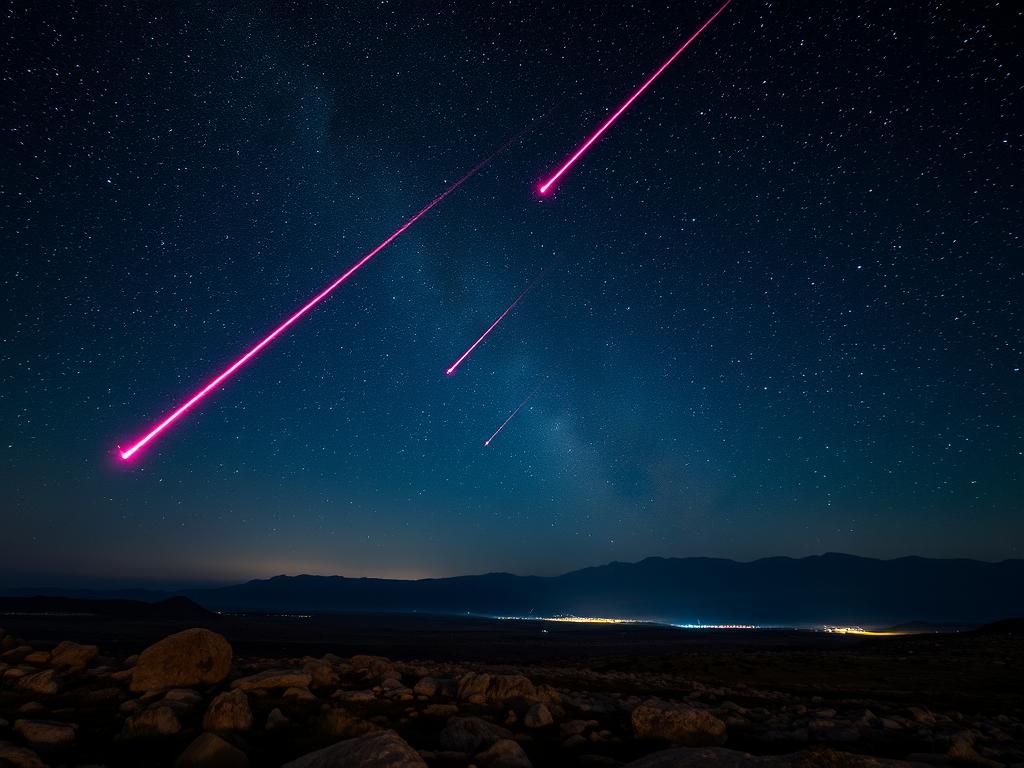
The Science Behind Meteor Showers
Meteor showers are amazing events that happen when Earth goes through debris left by comets or asteroids. As we move through these fields, tiny particles hit our atmosphere. This creates the stunning shooting stars we love to watch.
The timing and how bright meteor showers are depend on Earth’s orbit and how dense the debris is. This makes each shower unique and special.
Learning about meteor showers makes us appreciate them even more. The Draconids, for instance, peak on October 7th and 8th. They happen from October 6th to 10th. This is when Earth goes through Comet 21P/Giacobini-Zinner’s debris trail.
During this time, we see “shooting stars” in the sky. It’s a magical sight.
The Orionids meteor shower, linked to Halley’s Comet, peaks on October 20th-21st. At its best, it shows 10-20 meteors per hour. Knowing when these showers happen lets us plan our sky watching.
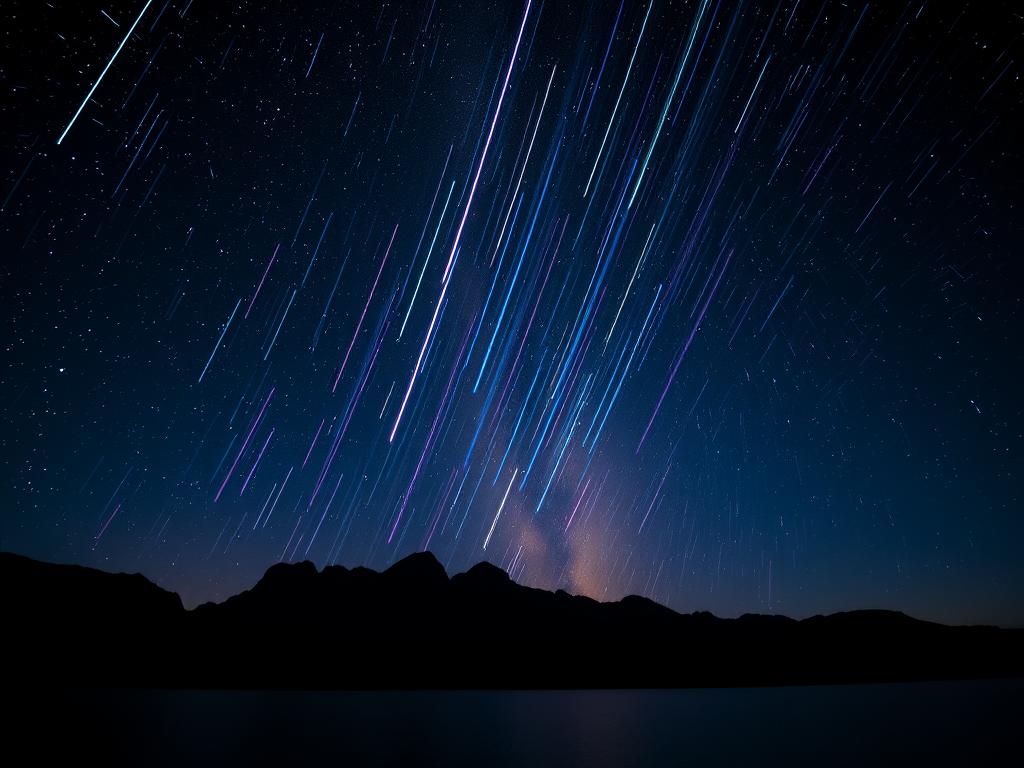
Understanding meteor showers helps us see the beauty of our universe. These events not only amaze us but also teach us about the cosmos.
Capturing the Celestial Phenomena
Astrophotography is the art of night sky photography. It lets us capture the beauty of shooting stars and meteor showers. To do this, we need the right camera settings and to know when to take the shot.
Tips for Photographing Shooting Stars
Here are some tips to help you capture stunning images of shooting stars and meteor showers:
- Find a dark, open spot away from city lights for the best view of the sky.
- Give your eyes 15-20 minutes to adjust to the dark to see the faint streaks of shooting stars better.
- Use a camera with manual settings to adjust shutter speed, aperture, and ISO for the best light.
- Choose a wide-angle lens with a big aperture (f/2.8 or lower) to let in more light.
- Set your shutter speed to 10 to 30 seconds to capture the whole path of the shooting stars.
- Use an ISO of 800 to 3200 to get good exposure without too much noise.
By using these tips, you can capture the beauty of the night sky and meteor showers through astrophotography.
| Camera Setting | Recommended Value |
|---|---|
| Shutter Speed | 10-30 seconds |
| Aperture | f/2.8 or lower |
| ISO | 800-3200 |
By following these camera settings and techniques, you can capture the beauty of the night sky. This includes the brief moments of meteor showers.
Upcoming Meteor Showers in 2023
The night sky in 2023 will be filled with amazing sights, including meteor showers. Two big meteor showers are coming: the Quadrantids in early January and the Lyrids in mid-April.
Quadrantids Meteor Shower
The Quadrantids meteor shower is short but intense. It happens from January 1 to 5, peaking on January 3-4. During the peak, you might see up to 120 meteors per hour, if the weather is good.
Lyrids Meteor Shower
The Lyrids meteor shower peaks around April 22. It’s active from April 16 to 25. At its peak, you can see up to 18 meteors per hour. The Lyrids are known for their bright, fast meteors.
If you love stargazing or just enjoy looking at the night sky, 2023 is a great year. The meteor showers 2023 are a chance to see the celestial events and the night sky up close. Make sure to mark your calendar for the Quadrantids and Lyrids meteor showers.
 Famous Constellations: A Guide for Sky Researchers
The Draconid Meteor Shower
As the nights get longer and the air cooler, skywatchers look forward to the Draconid meteor shower. It happens in early October, peaking around the 7th and 8th. The shooting stars seem to come from the Draco constellation in the northern sky.
When and Where to Watch the Draconids
The Draconid meteor shower is visible from October 6 to 10, with the peak on October 8. In a dark sky, you might see 5 to 10 meteors per hour. Sometimes, it can get even busier, with hundreds or thousands of stars per hour.
The best time to see the Draconids is right after sunset. The Draco constellation is high in the sky then. For the best view, go to a dark, rural spot away from city lights.
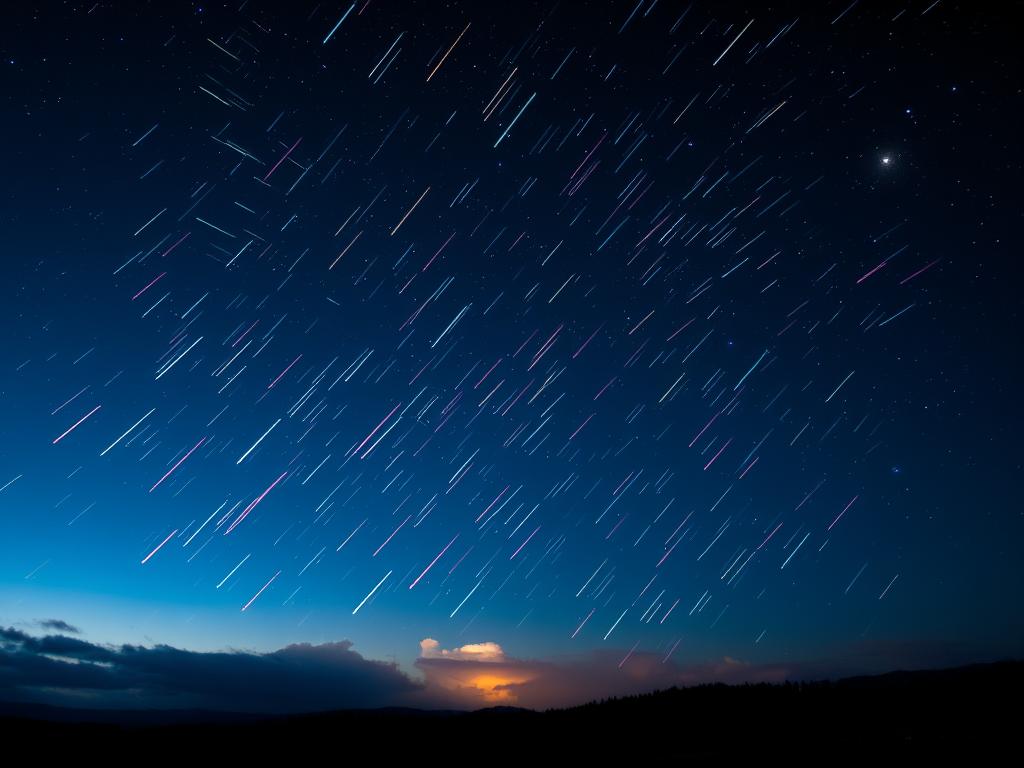
The Draconid meteor shower comes from the comet P/Giacobini-Zinner, about 2 kilometers wide. This comet orbits the sun every 6.6 years. Its close pass to Earth in 2018 made more meteors visible. The comet’s next close pass is in 2025, which might bring more meteor activity.
Shooting Stars and Astronomical Events
Shooting stars and meteor showers are just a few of the amazing things you can see in the sky. Throughout the year, we can watch eclipses, planetary alignments, and see comets and asteroids. Learning about these events helps us appreciate the universe and the discoveries in astronomy.
The Nadir Crater, off the coast of Guinea, is a recent discovery. It’s over five miles wide and was made by an asteroid. This shows how our solar system is always changing and reminds us of the dangers from space.
NASA’s DART mission was a big success. It hit the asteroid Dimorphos, changing its orbit by 32 minutes. This is a big step in learning how to protect our planet from asteroids.
The European Space Agency’s (ESA) Hera mission will start in late 2026. It will study asteroids further, thanks to the DART mission. Hera will have special cameras and instruments to help us learn more about asteroids.
Soon, we’ll see Comet C/2023 A3 (Tsuchinshan-ATLAS) in the sky. Venus, Saturn, Mars, and Jupiter will also be easy to spot. These planets will be great for stargazing and learning.
To enjoy these sights, find a dark place away from city lights. Check the weather for clear skies. Binoculars or telescopes can make your experience even better.
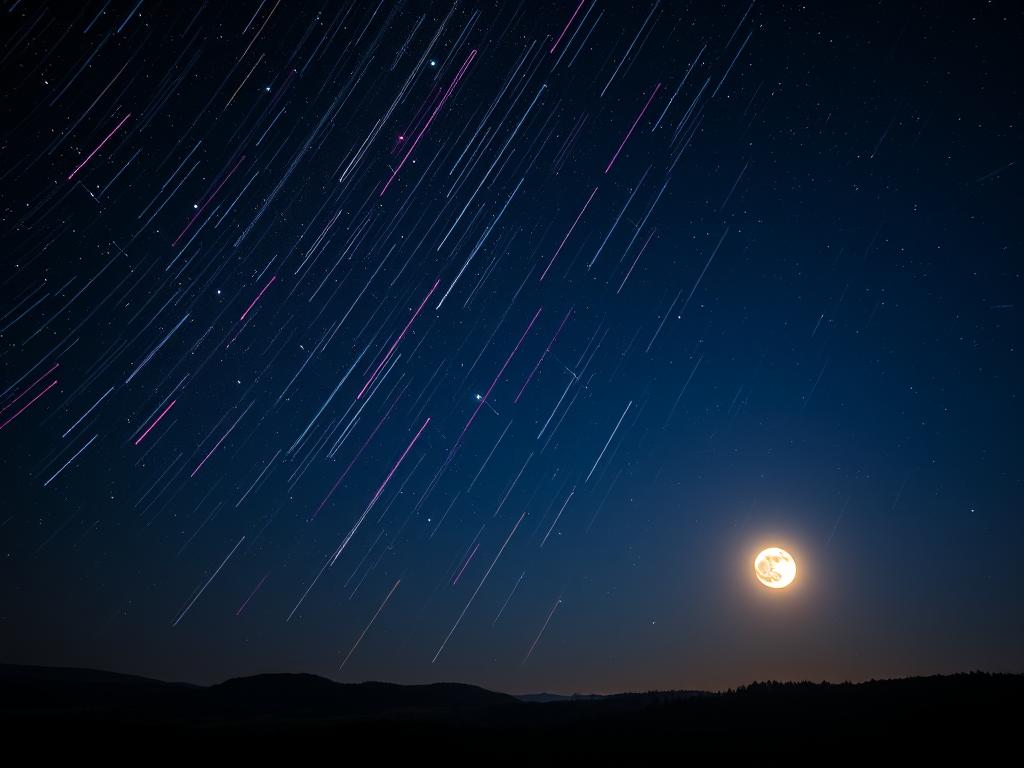
Watching shooting stars, planets align, or seeing a comet’s tail is amazing. These celestial phenomena give us a glimpse into the universe. By exploring these astronomical events, we can learn more about the world beyond our own.
Mythological Tales of Shooting Stars
Shooting stars have always fascinated people, leading to many myths and stories. They were seen as messages from the gods, signs of luck, or even the spirits of loved ones. These tales show our deep interest in the mysteries of the sky and nature.
In Greek myths, shooting stars were the gods’ tears. The Greeks thought they were messages from Zeus or the souls of heroes going to heaven. Native American traditions also saw them as guides from ancestors or signs of big events.
- In Chinese folklore, shooting stars were linked to the Cowherd and the Weaver Maiden. They believed the couple was together once a year when a star streaked by.
- In Japan, seeing a shooting star was thought to bring good luck. People would make wishes when they saw one.
- In the Middle East, some thought shooting stars were jinn, spirits being thrown out by angels.
These myths show our need to understand and connect with the world. As we learn more about shooting stars and meteor showers, their magic never fades. It proves the endless power of our imagination and the wonder of the universe.
Safety Guidelines for Viewing Shooting Stars
Watching meteor showers and the night sky is amazing and memorable. But, safety comes first. By following simple rules, you can enjoy the celestial show safely and have a great time.
First, pick a dark spot away from city lights. This makes the meteors easier to see and keeps you safe from tripping. Dark sky parks are perfect for this, as they’re made for stargazing.
When you go out, wear warm clothes and sturdy shoes. This keeps you comfy and safe from the cold or rough ground.
- Don’t drive right after seeing a meteor shower. The bright lights can mess with your vision and make driving risky.
- Be careful where you step to avoid falls or hitting things.
- Use a red flashlight or a red light app on your phone to keep your eyes adjusted to the dark.
By keeping these safety tips in mind, you can enjoy the magic of shooting stars and meteor showers. You’ll make memories that will last a lifetime under the starry sky.
| Safety Tip | Importance |
|---|---|
| Find a dark, secluded location | Enhances visibility and minimizes risk of tripping or stumbling |
| Dress warmly and appropriately | Ensures comfort and prevents exposure or injury |
| Avoid driving immediately after a meteor shower | Prevents temporary vision impairment and reduces accident risk |
| Use a red-filtered flashlight or smartphone app | Preserves night vision for better stargazing experience |
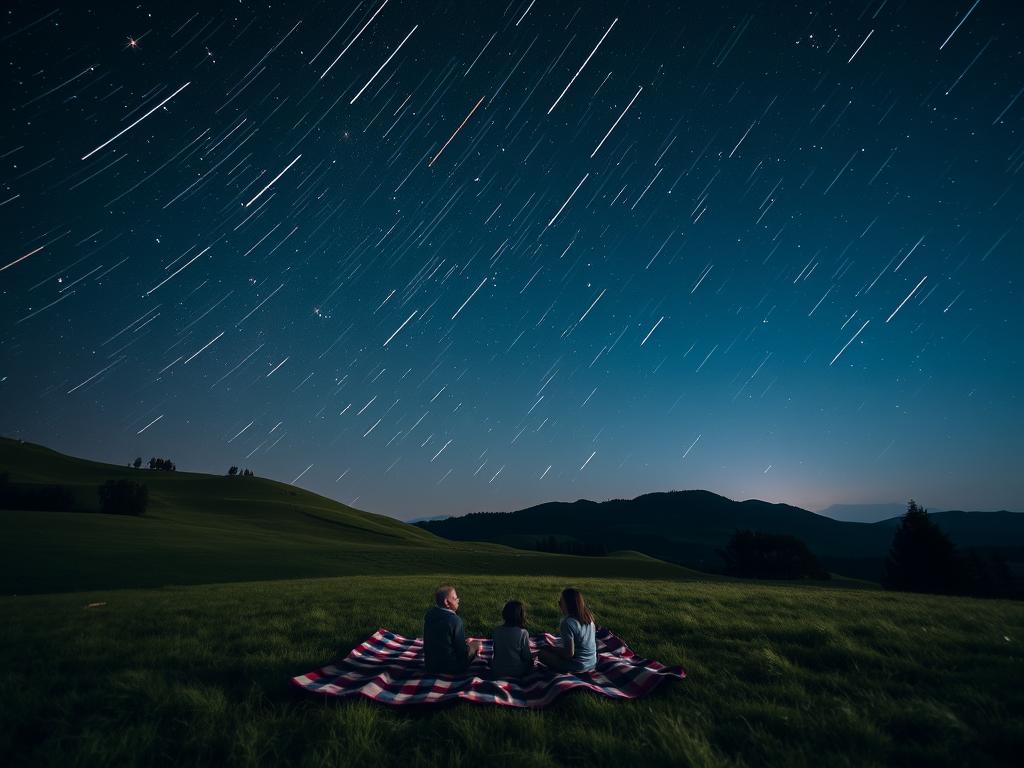
By following these safety guidelines, stargazers can fully immerse themselves in the awe-inspiring experience of viewing shooting stars and meteor showers, creating lasting memories under the captivating night sky.
 Star Formation: How Stars Are Born
Best Locations for Meteor Shower Viewing
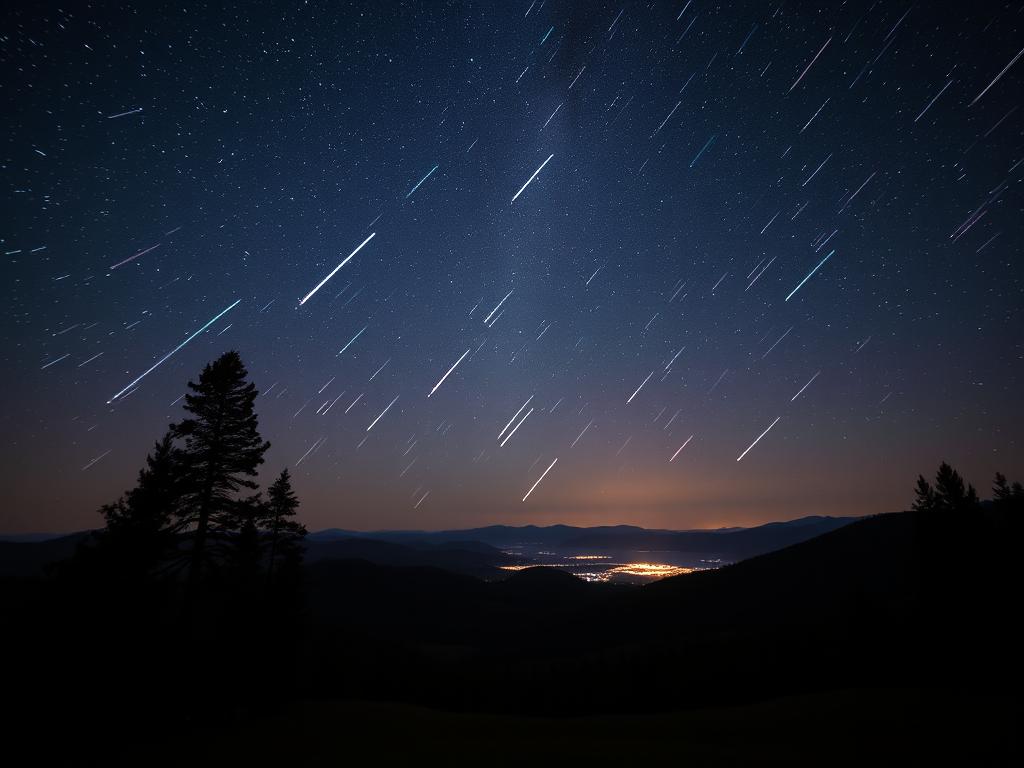
To fully enjoy meteor showers and other celestial wonders, find places with little light pollution. Dark sky parks and reserves are great for stargazing. They have strict rules on artificial lights.
These areas are often in remote places. They give clear views of the night sky. Here, you can see meteor showers and other sky events in all their glory. Dark sky parks are perfect for getting lost in the stars.
Dark Sky Parks and Reserves
- The Orionids meteor shower from the Halley’s Comet system is visible every 75 years, with optimal viewing conditions in dark sky parks.
- The Draconids meteor shower, caused by comet 21 P/Giacobini-Zinner, will be visible from October 6 to 10, with a peak around October 8 and 9 in dark sky reserves.
- The Southern Taurid meteor shower is expected to peak on October 10 and 11, with the best viewing experience in stargazing destinations with minimal light pollution.
- The Northern Taurids meteor shower will peak in the middle of November, making dark sky parks the ideal locations for witnessing this celestial event.
By visiting these dark sky parks and reserves, you’ll see the beauty of meteor showers. You’ll get to see the night sky without artificial lights.
Astronomy Apps and Resources
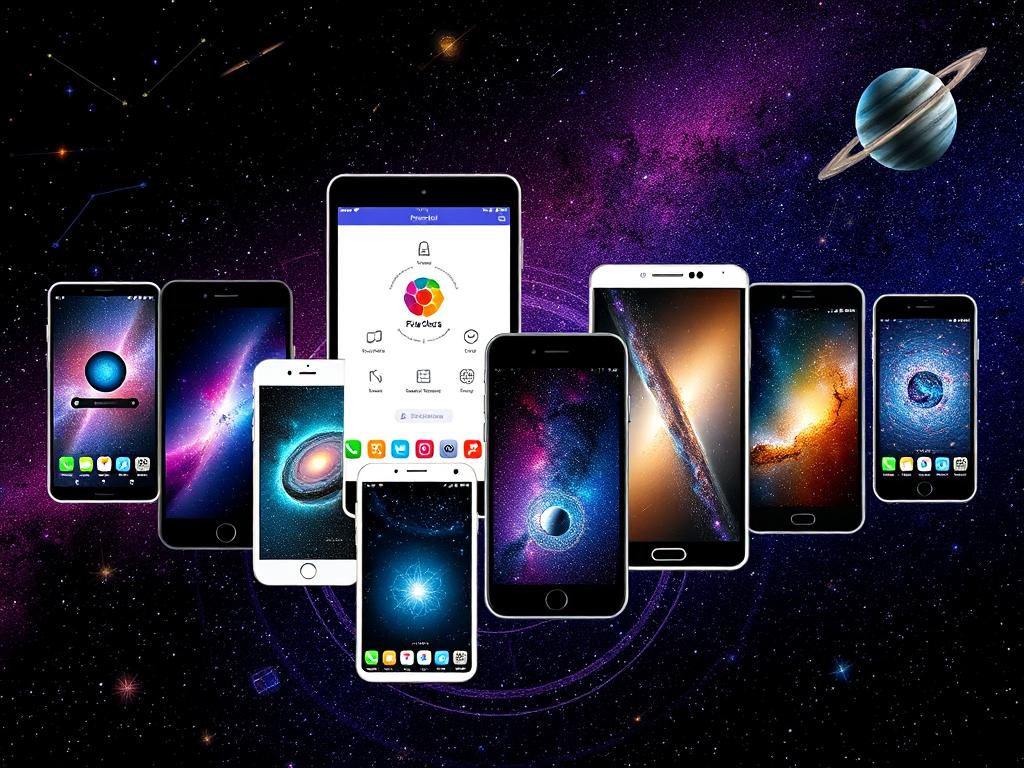
Technology has changed how we explore the stars. Now, we can track meteor showers in real-time and use interactive sky maps. These apps and resources help us understand and enjoy the night sky more.
Getting alerts for upcoming celestial event planning is very useful. These alerts tell us about big events like meteor showers. This way, we can plan our stargazing better and see more.
Apps also let us track meteor shower tracking. We can find out when and where to see meteor showers. This helps us plan our viewing and see these amazing events.
| App | Features | Platforms |
|---|---|---|
| SkySafari | Interactive star charts, celestial event notifications, telescope control | iOS, Android |
| Star Walk 2 | AR-enabled sky exploration, meteor shower tracking, augmented reality views | iOS, Android |
| NASA App | Live NASA TV, latest news and images, space mission updates | iOS, Android |
Using these astronomy apps and stargazing resources makes our stargazing better. They help both beginners and experts enjoy the stars more. We can learn more about the universe and see amazing sights.
Shooting Stars: Celestial Wonders for All Ages
Seeing meteor showers is fun for everyone. These events are great for families, schools, and community groups. They spark curiosity in kids and awe in adults, making the universe feel closer.
Stargazing is a great family activity. Kids love watching shooting stars. It’s a chance for parents to teach them about the universe.
Teachers can use meteor showers to teach science. They help students learn by observing the sky. This can inspire a love for space in students.
Watching shooting stars is amazing for anyone. It brings wonder and awe. Meteor showers offer fun and learning, connecting us to the universe.
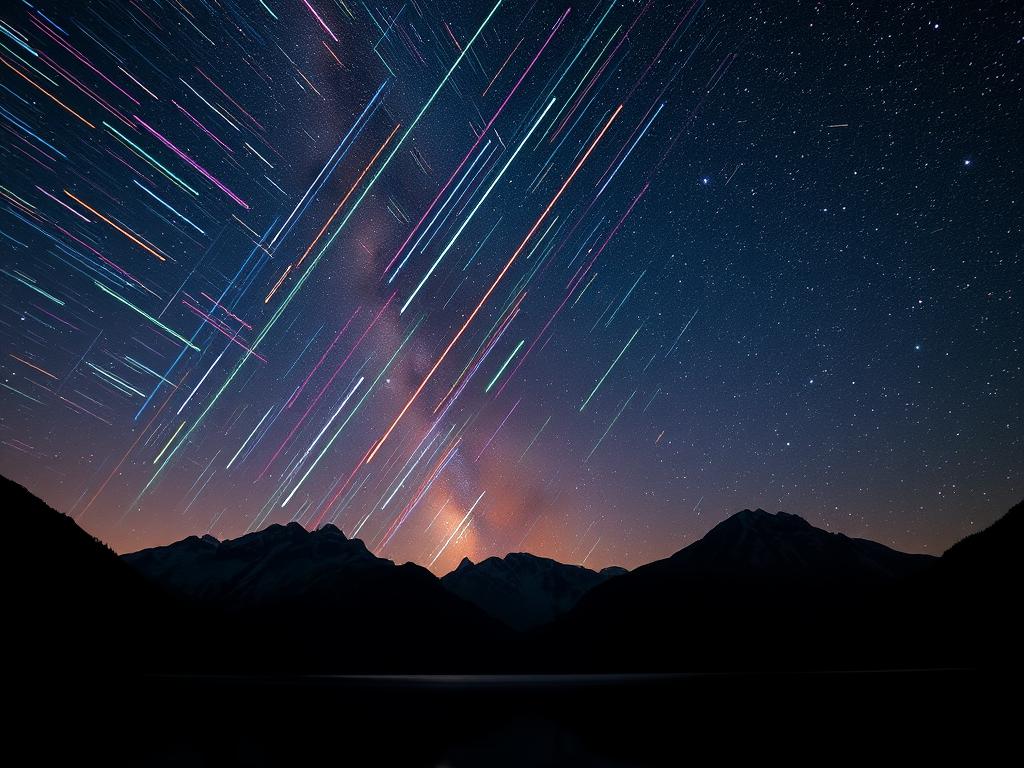
The Perseids: Nature’s Fireworks Display
The Perseid meteor shower is a highlight of the year, called “nature’s fireworks display.” It happens every mid-August. The shower is famous for its bright, fast shooting stars, with dozens or hundreds per hour at its peak.
Perseid Meteor Shower Peak Dates
The best time to see the Perseids is around August 12-13. It’s a favorite event for stargazers worldwide. During the peak, you can see about 50 meteors per hour under perfect conditions.
The Perseids are active from July 17 to August 24. The peak is on August 11th and 12th. This event is linked to Comet Swift-Tuttle, seen near Earth every 133 years. The Perseids have been recorded since AD 714, known for their bright meteors and fireballs.
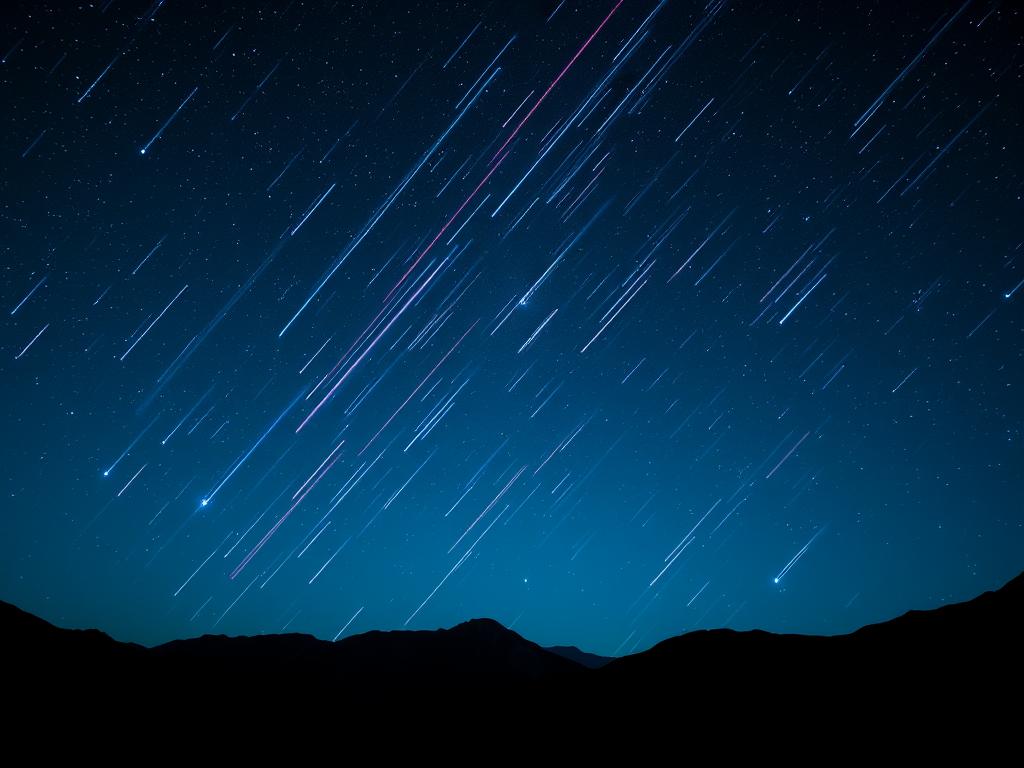
To get the most out of it, find a spot away from city lights. Let your eyes adjust to the dark for 15 minutes before watching. Telescopes and binoculars aren’t the best for the fast Perseids. They’re best seen with the naked eye.
The Perseids meteor shower is a stunning event in the summer sky. By planning your Perseid meteor shower viewing and following these tips, you can enjoy this amazing natural show. It’s a chance to make unforgettable memories under the stars.
Geminids: The Reliable Winter Meteor Shower
The Geminid meteor shower is a highlight of winter skies. It’s known for its consistent and stunning display of shooting stars. At its peak, you can see up to 120 meteors per hour.
The Geminids reach their peak around December 13-14. This makes it a perfect winter spectacle for stargazers. It’s a favorite among those who love astronomy, offering a chance to see the cosmos in winter.
Whether you’re a seasoned sky-watcher or new to the hobby, the Geminids are a must-see. They promise a breathtaking show that will amaze you. So, get cozy, grab a warm drink, and enjoy the Geminids’ magical display.
 The Future of Space Travel


