
Rosalind Franklin: The Unsung Hero of DNA Discovery
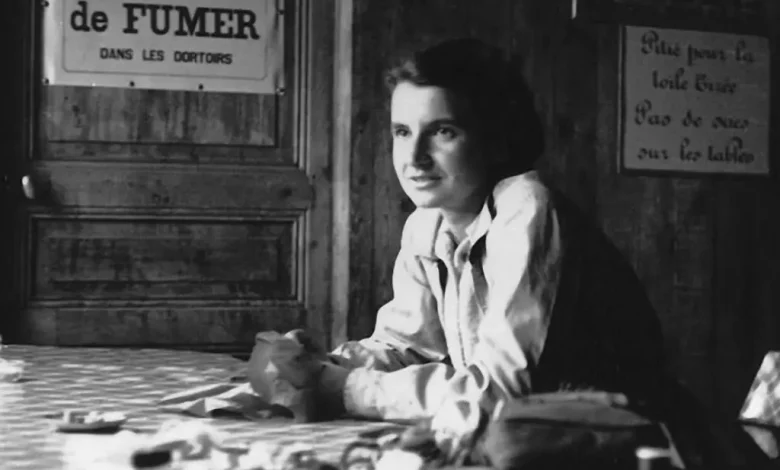
Rosalind Franklin, a British biophysicist and X-ray crystallographer, is often overshadowed by the more widely recognized figures in the discovery of the structure of DNA. However, her pioneering research and contributions were crucial to unlocking one of the greatest scientific breakthroughs of the 20th century. This article explores the life, work, and lasting impact of Rosalind Franklin on the discovery of the DNA double helix.
Early Life and Education
Rosalind Franklin was born on July 25, 1920, in London, England. She demonstrated exceptional academic abilities from a young age, particularly in science and mathematics. Franklin attended Newnham College at the University of Cambridge, where she earned her degree in Physical Chemistry. Her time at Cambridge was marked by an interest in X-ray crystallography, a technique that would become central to her groundbreaking work on DNA.
Scientific Career and X-ray Crystallography
Franklin’s expertise in X-ray crystallography was honed during her early research in Paris at the Laboratoire Central des Services Chimiques de l’État. There, she worked under the mentorship of Jacques Mering and used X-ray diffraction to investigate the molecular structures of coal and graphite. Her detailed work in crystallography laid the foundation for her future work on DNA.
 World’s Largest Caves: Hidden Wonders of Earth
The Discovery of DNA’s Structure
In 1951, Franklin began working at King’s College London in the biophysics department, where she started her famous collaboration with Maurice Wilkins. Here, she began to investigate the structure of deoxyribonucleic acid (DNA) using X-ray diffraction. Her photographs of DNA, particularly Photograph 51, provided essential evidence for the helical structure of DNA.
The key to this discovery came from Franklin’s ability to produce high-quality X-ray images of DNA fibers. Photograph 51, an X-ray diffraction image she took in 1952, showed a distinct pattern that indicated a helical structure, a crucial clue for understanding how genetic information is encoded.
This image, however, was shown without her consent to James Watson and Francis Crick, two scientists working at the University of Cambridge. This unauthorized access to her data played a pivotal role in the duo’s development of the DNA double helix model in 1953.
 Thomas Edison’s Most Controversial Inventions
The DNA Double Helix Model
Thanks to the insights from Rosalind Franklin’s X-ray images and the work of other scientists, Watson and Crick were able to propose the correct structure of DNA a double helix. Their famous model, published in the journal Nature in 1953, was based on Franklin’s data, though her contributions were not fully acknowledged at the time.
Challenges and Controversies
Franklin’s relationship with her colleagues, particularly with Wilkins, was often strained, and her work was frequently overlooked. The fact that Watson and Crick received the Nobel Prize in 1962 for their DNA model, without proper recognition of Franklin’s contributions, has been a point of significant controversy. In addition, the Nobel Prize is not awarded posthumously, and Franklin, who passed away from ovarian cancer in 1958 at the age of 37, was never able to receive the recognition she truly deserved.
Legacy and Recognition
Today, Franklin’s contributions are widely acknowledged by the scientific community. Her work has been instrumental in advancing our understanding of DNA, and she is now recognized as a pioneering scientist whose research changed the course of molecular biology. In addition to her role in DNA discovery, Franklin made significant contributions to the study of viruses and graphite, further solidifying her place as one of the leading scientists of her time.
 The Truth Behind Isaac Newton and the Falling Apple
Franklin’s Impact on Modern Science
Franklin’s groundbreaking work on X-ray diffraction and its application to molecular biology continues to influence research today. Without her meticulous attention to detail and her innovative methods, the structure of DNA might have remained a mystery for much longer. Her story serves as a reminder of the often-overlooked contributions of women in science and the importance of equitable recognition in scientific achievement.
Key Takeaways: The Legacy of Rosalind Franklin
- Rosalind Franklin played a pivotal role in the discovery of the DNA double helix.
- Her X-ray diffraction images, particularly Photograph 51, provided critical evidence for the DNA structure.
- Franklin’s work on DNA was often overshadowed by her male colleagues, leading to controversy regarding the attribution of the discovery.
- Despite this, Franklin’s legacy as a scientific pioneer continues to inspire new generations of scientists, especially women in science.
While Franklin may not have received the recognition she deserved during her lifetime, the scientific community now fully appreciates her monumental contributions to our understanding of the molecular basis of life. She remains one of the unsung heroes of DNA research and continues to serve as an inspiration in the world of science.


