

Angkor Wat: Cambodia’s Majestic Ancient Temple Complex

Angkor Wat Cambodia
Angkor Wat in Cambodia is not only the world’s largest religious monument but also one of the most intriguing and mysterious sites in human history. Originally constructed as a Hindu temple for the god Vishnu, this UNESCO World Heritage site later transformed into a Buddhist temple. Today, it stands as a majestic reminder of the Khmer Empire’s architectural genius and spiritual depth.
Historical Background of Angkor Wat
Constructed in the early 12th century during the reign of King Suryavarman II, Angkor Wat served as a center of worship and governance for the ancient Khmer Empire. This impressive complex covers over 160 hectares and includes numerous temples, reservoirs, and intricate stone carvings that narrate historical and mythological stories.
The name “Angkor Wat” translates to “City Temple,” representing the Khmer people’s belief in creating a bridge between the heavens and the earth. Over time, Angkor Wat has become a symbol of Cambodia’s national pride and spiritual identity.
 Mount Kailash: The Holy Mountain and Unexplored Peak of the Himalayas
 Architecture and Design of Angkor Wat
Angkor Wat’s architectural design reflects both Hindu cosmology and the Khmer civilization’s unique aesthetic sensibilities. Here are some of its most remarkable features:
- Central Tower: The central tower of Angkor Wat is 65 meters high, symbolizing Mount Meru, the mythical center of the universe in Hindu and Buddhist cosmology.
- Moats and Enclosures: The complex is surrounded by a 5.5 km moat and high walls, representing the cosmic ocean surrounding the earth.
- Intricate Bas-Reliefs: The inner walls feature bas-reliefs depicting scenes from Hindu epics like the Mahabharata and Ramayana as well as historical events from Khmer history.
- Symmetry and Alignment: The temple’s layout demonstrates the advanced understanding of geometry and alignment, with key structures aligned with celestial bodies.
The Significance of Angkor Wat in Buddhism
Although originally dedicated to Hinduism, Angkor Wat became a Buddhist site in the 14th century, reflecting Cambodia’s religious evolution. Statues of the Buddha and Buddhist iconography gradually replaced Hindu deities, yet many original carvings and statues were preserved. Today, Angkor Wat is a vital pilgrimage site for Buddhists around the world.
Engineering Marvels of Angkor Wat
Constructing Angkor Wat required sophisticated engineering and vast manpower. Some noteworthy engineering achievements include:
 Sahara Desert Mysteries: Ancient Secrets of the World’s Largest Desert
 - Stone Transportation: Archaeologists estimate that over 5 million tons of sandstone were used to build Angkor Wat. These stones were likely transported via a network of canals from a quarry about 50 kilometers away.
- Precise Stonework: Each stone was cut to fit perfectly without the use of mortar, showcasing advanced techniques in masonry.
- Hydraulic Systems: Angkor Wat and its surrounding cities were part of an extensive hydraulic city with canals, reservoirs, and moats designed to manage water supply and prevent flooding.
The Symbolism and Spirituality of Angkor Wat
Angkor Wat is often interpreted as a three-dimensional representation of Hindu cosmology. The five towers represent the peaks of Mount Meru, and the surrounding moat symbolizes the cosmic ocean. The temple is also oriented to the west, which is unusual in Hindu architecture and has led to various interpretations, including connections to death and the afterlife.
Mysteries and Discoveries at Angkor Wat
Despite extensive studies, many mysteries still surround Angkor Wat:
- Hidden Chambers: Using LiDAR technology, archaeologists discovered hidden chambers and previously unknown structures around Angkor Wat. These findings suggest there may be more to uncover beneath the temple complex.
- Purpose of the Moat: While it’s believed the moat symbolizes the cosmic ocean, some researchers speculate it served additional purposes, including groundwater control and flood prevention.
- Alignment with Solstices: Recent studies suggest Angkor Wat aligns with the summer solstice, further indicating that astronomical knowledge played a role in its construction.
Preservation Challenges and Efforts
Angkor Wat faces significant conservation challenges, from erosion and weathering to tourist impact. Preservation efforts focus on repairing structural damage, restoring intricate carvings, and stabilizing its foundations. UNESCO and the Cambodian government work together to maintain and protect this historic site, ensuring future generations can experience its grandeur.
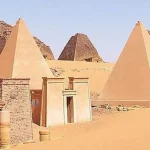 The Forgotten Pyramids of Sudan: An African Wonder
 Visiting Angkor Wat: A Guide for Travelers
Angkor Wat is open to visitors year-round, but early morning and late afternoon are popular times due to the stunning views of sunrise and sunset. Here are some tips for making the most of your visit:
- Timing: Early morning is best for cooler temperatures and fewer crowds.
- Dress Code: Modest clothing is required, as Angkor Wat is a sacred site.
- Guided Tours: A knowledgeable guide can enhance your experience, offering historical context and details about each section of the complex.
Whether for its architectural marvels, spiritual significance, or cultural symbolism, Angkor Wat is a remarkable example of human ingenuity and devotion. As you explore Angkor Wat, you step into a world where history, spirituality, and mystery converge, showcasing the enduring legacy of the Khmer Empire and the beauty of Cambodian heritage.


