
The Schumann Resonance: Earth’s Natural Frequency

Have you ever wondered if the Earth has its own heartbeat? While not quite like ours, the planet does emit a unique electromagnetic rhythm known as the Schumann Resonance.
This natural frequency, often called the “pulse of the Earth,” is fascinating for scientists, spiritualists, and enthusiasts alike. But what exactly is the Schumann Resonance? Why does it matter, and how does it affect life on Earth? Keep reading to discover the science, history, and potential mysteries surrounding this incredible phenomenon.
What is the Schumann Resonance?
The Schumann Resonance refers to the set of extremely low-frequency (ELF) electromagnetic waves that resonate in the space between the Earth’s surface and the ionosphere.
How Does It Work?
- The Earth-ionosphere cavity acts as a waveguide, trapping electromagnetic waves.
- When lightning strikes occur, they generate electromagnetic waves that bounce back and forth within this cavity.
- These waves resonate at specific frequencies, primarily 7.83 Hz, although higher harmonics (14.1 Hz, 20.3 Hz, etc.) also occur.
This phenomenon was first predicted by German physicist Winfried Otto Schumann in 1952, hence the name.
 How Old Is Your Body? Understanding the Science of Aging
Why is 7.83 Hz Significant?
The base frequency of 7.83 Hz is often called Earth’s “heartbeat” because it aligns with certain human brainwave states, particularly the alpha waves associated with relaxation and meditative states.
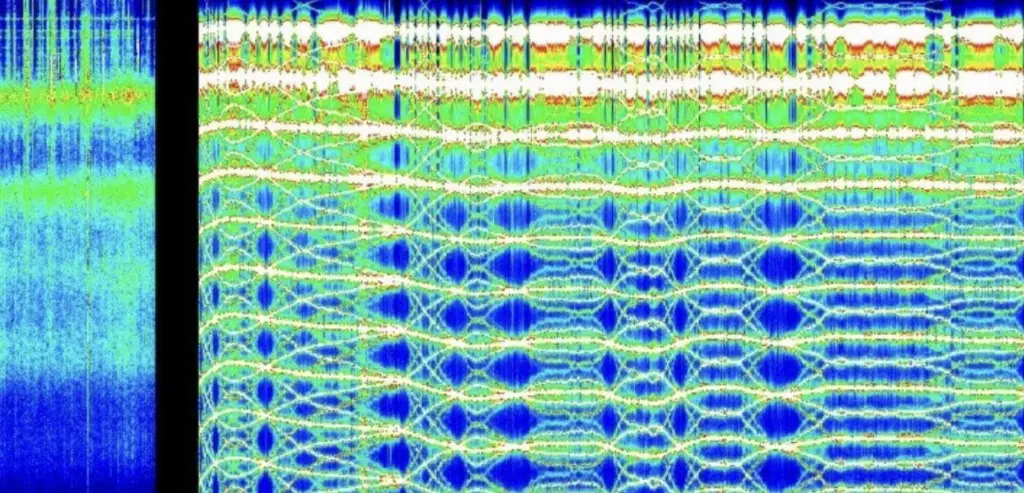
The Science Behind the Schumann Resonance
To truly understand this phenomenon, let’s explore the underlying scientific principles:
Electromagnetic Waves in the Atmosphere
- The Earth’s surface and the ionosphere (a layer of charged particles in the upper atmosphere) form a resonant cavity.
- When disturbances like lightning strikes occur, the cavity amplifies these electromagnetic waves at specific frequencies.
The Role of Lightning
On average, around 50 lightning strikes per second occur globally, creating a continuous supply of energy for the Schumann Resonance. These electromagnetic waves provide a natural “drumbeat” that sustains the resonance.
Why is the Schumann Resonance Important?
The Schumann Resonance is not just a quirky scientific phenomenon; it has profound implications for both Earth systems and life itself.
 A journey through the lunar phases Why does the Moon change shape?
For the Earth
- It serves as a natural indicator of atmospheric activity. Changes in the resonance may signal disruptions like solar storms or climate variations.
- Scientists use it to study the Earth’s electromagnetic environment, weather patterns, and global electric circuits.
For Human Health
- Brainwave Synchronization: The frequency of 7.83 Hz aligns with alpha brainwaves, which are associated with calmness, focus, and mental clarity.
- Circadian Rhythms: Some researchers believe exposure to these frequencies may influence biological clocks, potentially affecting sleep and hormonal cycles.
- Healing Properties: Certain alternative health practices claim that the resonance promotes wellness and healing, though these claims are not scientifically proven.
The Mysteries and Misconceptions
While much is known about the Schumann Resonance, there are myths and mysteries surrounding it.
Common Misconceptions
- It’s Constant: The frequency is not always 7.83 Hz. It can vary due to solar activity, changes in the ionosphere, or intense lightning storms.
- It’s a Cure-All: While intriguing, no scientific evidence supports the claim that the resonance cures diseases or improves health directly.
Unanswered Questions
- Could changes in the Schumann Resonance influence global consciousness or mass behavior?
- Is it possible that life evolved in sync with these electromagnetic rhythms?
Practical Applications of the Schumann Resonance
The Schumann Resonance has applications in several fields:
Space Exploration
- Astronauts in space, far from Earth’s natural frequencies, may experience Schumann Resonance simulators to maintain their biological rhythms.
Environmental Monitoring
- Scientists track variations in the resonance to study climate change, earthquakes, and other natural events.
Technology and Communication
- ELF waves are used in applications like submarine communication, leveraging the low frequency to penetrate water.
How to Tune into the Schumann Resonance
If you’re curious about connecting with the Earth’s “heartbeat,” here are some ideas:
- Meditation and Relaxation Techniques
- Listening to soundtracks tuned to 7.83 Hz can help achieve a meditative state.
- Spend Time in Nature
- Forests, mountains, and open fields are ideal for experiencing the Earth’s natural electromagnetic environment.
- Earthing (Grounding)
- Walking barefoot on grass or soil may enhance your connection to Earth’s energy.
Final Thoughts: Understanding Earth’s Heartbeat
The Schumann Resonance is a remarkable reminder of how interconnected life on Earth truly is. While its effects on humans remain a subject of study, its role as Earth’s natural frequency is undeniable. Whether you’re a scientist, a nature enthusiast, or simply curious, exploring this phenomenon opens a doorway to understanding the delicate balance of our planet’s systems.
 Lunar Craters: Scars of a Violent Past
So, next time you hear the crackle of a thunderstorm, think about the electromagnetic symphony it’s conducting—and how it might just be keeping Earth’s heart in rhythm.
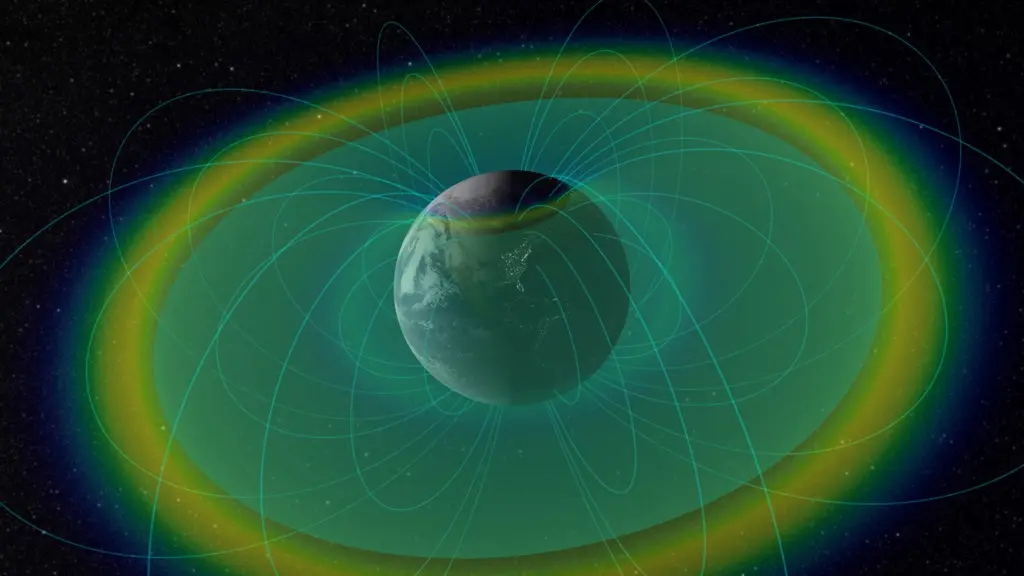
An artistic depiction of electromagnetic waves between the Earth’s surface and ionosphere.


