
Interstellar Exploration: Humanity’s Journey Beyond the Stars

For centuries, humanity has gazed up at the night sky with a sense of wonder, imagining the possibilities of worlds beyond our own. As our understanding of space and technology has grown, what was once confined to science fiction is gradually becoming a reality. Interstellar exploration (traveling to and studying other star systems) represents the next great frontier for humanity. But what exactly does interstellar exploration involve, and how close are we to achieving this monumental feat?
The Concept of Interstellar Exploration
Interstellar exploration refers to the study and potential travel to planets, stars, or other celestial bodies located outside our solar system. Unlike interplanetary missions, which target planets and moons within our solar system, interstellar missions would involve distances that are hundreds, thousands, or even millions of times farther. The nearest star to Earth, Proxima Centauri, is about 4.24 light years away—a journey far beyond the reach of current spacefaring technology.
The idea of interstellar travel has long captivated scientists, philosophers, and writers alike. From theoretical propulsion systems to the quest for habitable planets, the dream of venturing to the stars opens the door to profound possibilities, such as discovering extraterrestrial life or finding new homes for humanity.
The Challenges of Interstellar Exploration
The scale of interstellar exploration presents a unique set of challenges. While we’ve successfully sent probes to the outer edges of the solar system, like NASA’s Voyager missions, even the fastest spacecraft we’ve built would take tens of thousands of years to reach the closest star. This immense challenge can be broken down into several key obstacles:
Distance and Time
Interstellar distances are mind-boggling. A light year, the distance that light travels in a year, is approximately 9.46 trillion kilometers. Even Proxima Centauri, our closest stellar neighbor, is over 40 trillion kilometers away. With current propulsion systems, such as chemical rockets, the time it would take to reach even the nearest star would span many human lifetimes.
Energy Requirements
To make interstellar travel feasible, spacecraft would need to travel at a significant fraction of the speed of light, which requires vast amounts of energy. Current propulsion technologies are not efficient or powerful enough to achieve these speeds. Developing propulsion systems that can generate and sustain the necessary energy for long-duration space travel is one of the most critical challenges.
Communication Delays
As the distance between Earth and an interstellar spacecraft increases, so too does the time it takes for signals to travel between them. Communication over light years would introduce significant delays. For example, a message from a probe near Proxima Centauri would take over four years to reach Earth, and another four years for a response to return.
 Quantum Breakthroughs: Revolutionizing Science and Technology
Human Health and Survival
If humans are to travel between stars, we will need to solve problems related to long-duration space travel. Prolonged exposure to radiation, microgravity, and the psychological effects of isolation could pose serious risks to astronauts. Developing advanced life support systems, radiation shielding, and sustainable habitats are essential to ensuring the health and survival of future interstellar explorers.
Promising Technologies for Interstellar Travel
Despite the enormous challenges, there are several promising technologies and concepts that could make interstellar exploration possible in the distant future.
Breakthrough Starshot
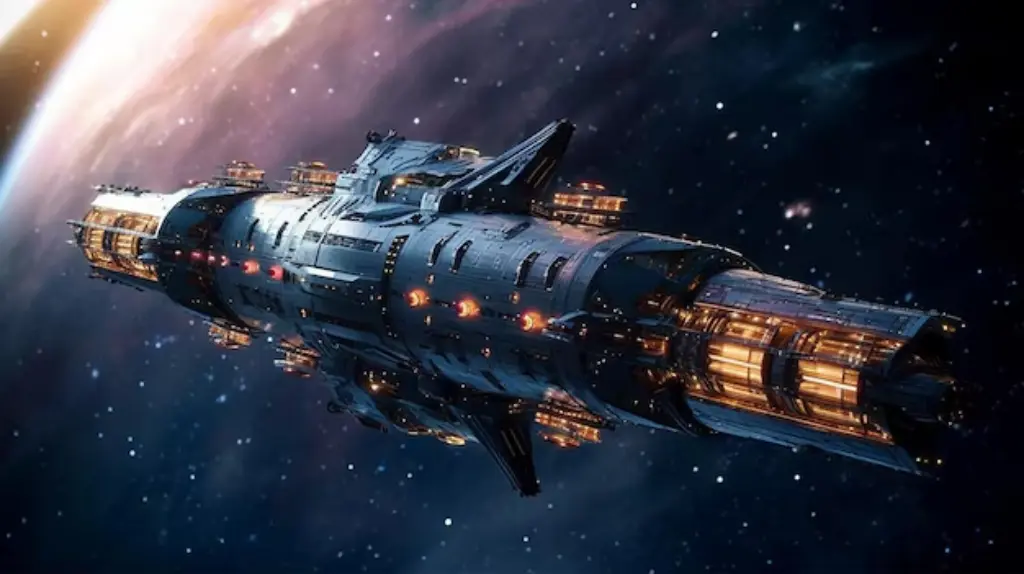
One of the most ambitious interstellar initiatives is Breakthrough Starshot, a project funded by billionaire Yuri Milner, with the backing of notable scientists like Stephen Hawking. The goal of Breakthrough Starshot is to send tiny, light-powered spacecraft called “StarChips” to Alpha Centauri, the closest star system to Earth.
These tiny probes would be propelled by powerful laser beams from Earth, allowing them to travel at speeds of up to 20% the speed of light. If successful, they could reach Alpha Centauri in just over 20 years.
Fusion Propulsion
Nuclear fusion, the process that powers stars, has long been considered a potential source of energy for space travel. Fusion propulsion systems could provide a continuous source of energy, allowing spacecraft to travel much faster than conventional rockets. While the technology is still in development, successful fusion propulsion could revolutionize space exploration and bring interstellar travel within reach.
Antimatter Engines
Antimatter is a substance that annihilates with normal matter to produce vast amounts of energy. If harnessed correctly, antimatter could provide an extremely efficient propulsion system for interstellar spacecraft. However, producing and storing antimatter in large quantities is a significant technical challenge that has yet to be overcome.
Warp Drives
Perhaps the most famous concept in the realm of interstellar travel, warp drives involve bending or “warping” space-time to allow faster-than-light travel. Popularized by science fiction like Star Trek, warp drives remain speculative, but some scientists, like theoretical physicist Miguel Alcubierre, have proposed models that could make such technology theoretically possible. However, the energy requirements for creating a warp bubble are currently beyond our technological capabilities.
 Cosmic Phenomena: Aurora Borealis and Meteorites
The Search for Habitable Planets
One of the primary motivations for interstellar exploration is the search for habitable planets, or exoplanets, that could support life. In recent years, astronomers have discovered thousands of exoplanets using techniques like the transit method, where the dimming of a star reveals the presence of a planet. Some of these planets, located in the “habitable zone” where conditions might allow liquid water to exist, have sparked interest as potential homes for future generations of humans.
The discovery of Earth-like exoplanets in star systems like Proxima Centauri and the TRAPPIST-1 system has intensified the search for life beyond our solar system. If interstellar travel becomes feasible, these planets would likely be among the first destinations for exploration.
The Role of AI and Robotics in Interstellar Missions
Given the vast distances and time scales involved, artificial intelligence (AI) and robotics are expected to play a crucial role in interstellar missions. Unmanned probes equipped with advanced AI could explore distant star systems autonomously, sending data back to Earth over the course of decades or even centuries.
Robots could also assist in the construction of space habitats or perform maintenance on interstellar spacecraft, reducing the risks and challenges associated with human spaceflight. Additionally, AI could be used to analyze the vast amounts of data gathered during interstellar missions, helping scientists on Earth make sense of new discoveries.
The Future of Interstellar Exploration
While the dream of interstellar exploration remains distant, the steps we are taking today could lay the foundation for future missions. Initiatives like Breakthrough Starshot, advancements in propulsion technology, and the ongoing search for habitable exoplanets all bring us closer to the stars.
As we continue to push the boundaries of what is possible, interstellar exploration may one day allow humanity to become a multi-planetary species, traveling to distant star systems and expanding our presence in the universe. The journey may be long and challenging, but the rewards (new knowledge, new worlds, and perhaps even new forms of life) are immeasurable.
In the end, interstellar exploration is not just about traveling to distant stars; it is about the limitless potential of human curiosity and the unquenchable desire to explore the unknown.
 Black holes: Mysteries of deep space


