
How Earth’s Oxygen Levels Have Changed Over Time

When we think of oxygen on Earth, we often assume it has always been as abundant as it is today. However, the history of oxygen levels on our planet is far more complex and dynamic. From anoxic beginnings to oxygen-rich atmospheres, Earth’s oxygen levels have fluctuated over billions of years, driven by biological, geological, and chemical processes.
These changes have significantly influenced life on Earth, shaping the evolution of organisms and ecosystems. Let’s delve into the fascinating journey of how Earth’s oxygen levels have evolved over time.
The Earliest Atmosphere: Anoxic Beginnings
In Earth’s earliest stages, around 4.6 billion years ago, its atmosphere was vastly different from what it is today. There was little to no free oxygen (O2) in the atmosphere. Instead, it consisted mainly of gases like hydrogen, methane, ammonia, and water vapor, creating a harsh environment. Without oxygen, life as we know it could not have survived.
The Great Oxidation Event: The First Rise in Oxygen
Around 2.4 billion years ago, the first major rise in oxygen levels occurred in an event known as the Great Oxidation Event (GOE). Cyanobacteria, also known as blue-green algae, began to produce oxygen as a byproduct of photosynthesis.
 Earth’s Hottest Places and What Makes Them So Extreme
This biological process, represented by the equation 6CO2 + 6H2O → C6H12O6 + 6O2, releases oxygen into the atmosphere. As cyanobacteria proliferated, oxygen began to accumulate, transforming the atmosphere and setting the stage for aerobic organisms.
Oxygen Fluctuations: The Boring Billion
Following the GOE, oxygen levels did not rise steadily but fluctuated for nearly a billion years, a period sometimes called the “Boring Billion.” During this time, oxygen levels in the atmosphere remained relatively low, fluctuating between 0.1% and 1% of current levels. Geologic activity, volcanic eruptions, and the burial of organic material played crucial roles in regulating oxygen levels. The limited oxygen allowed only simple life forms to thrive.
Neoproterozoic Oxygenation Event: A Second Oxygen Rise
Approximately 800 million years ago, Earth experienced another rise in oxygen levels, known as the Neoproterozoic Oxygenation Event. Oxygen levels increased to around 10% of present atmospheric levels, likely due to both biological factors, such as increased photosynthesis, and geological processes that trapped carbon and allowed oxygen to accumulate. This rise enabled the diversification of complex multicellular life, including the earliest animals.
The Paleozoic Era: The Oxygen Boom
During the Paleozoic Era (540–250 million years ago), oxygen levels surged, reaching an estimated 35% of the atmosphere at their peak. This significant increase supported the evolution of large and diverse terrestrial and marine life forms. Higher oxygen levels allowed for more efficient respiration and energy use, fostering the development of larger organisms, including the first land plants, insects, and amphibians.
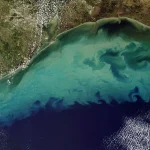 The Dead Zone in the Gulf of Mexico: An Oceanic Crisis
The Carboniferous Period: Peak Oxygen Levels
The Carboniferous Period (about 359–299 million years ago) saw some of the highest oxygen levels in Earth’s history, likely reaching 30-35%. This period was marked by vast forests of vascular plants, which contributed to a high rate of photosynthesis and oxygen release.
Much of the organic material from these plants was buried and fossilized, reducing the amount of carbon dioxide and increasing oxygen levels further. High oxygen levels during this period also contributed to the massive size of insects, with some dragonflies reaching wingspans of over 2 feet.
The Mesozoic to Present Day: Stabilization of Oxygen Levels
After the Carboniferous Period, oxygen levels gradually declined and stabilized. By the Mesozoic Era (250–65 million years ago), they had settled to levels closer to today’s concentration of approximately 21%. Geological and biological processes have helped regulate and maintain this balance. Modern plants and phytoplankton continue to produce oxygen through photosynthesis, while respiration and decomposition processes consume it.
Factors Affecting Earth’s Oxygen Levels
- Photosynthesis: Plants, algae, and cyanobacteria produce oxygen as a byproduct of photosynthesis, a crucial source of atmospheric oxygen.
- Geological Processes: Volcanic eruptions, mountain-building, and other geological activities release gases that can consume or produce oxygen, affecting atmospheric levels.
- Organic Material Burial: When organic material is buried and fossilized, it traps carbon, which allows more oxygen to accumulate in the atmosphere.
- Oxidation of Rocks: The weathering of minerals, particularly iron-bearing rocks, can consume oxygen from the atmosphere.
The Importance of Oxygen in Shaping Life on Earth
Oxygen is essential for aerobic organisms, including humans, as it allows for efficient energy production in cells. Changes in earth oxygen levels have had profound impacts on the evolution of life. Early anoxic environments allowed only anaerobic microbes to survive. Later, the rise in oxygen paved the way for complex multicellular organisms, leading to the diversity of life we see today.
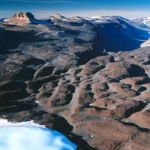 Antarctica’s Barren Soil: Earth’s Closest Thing to Martian Terrain
The story of oxygen on Earth is a testament to the planet’s dynamic and interconnected systems. Geological, biological, and atmospheric processes continuously interact, influencing oxygen levels and life itself. As we understand more about Earth’s oxygen history, we gain insights into both the resilience and vulnerability of life on our planet.


