

Mary Anning: The Fossil Hunter Who Changed Paleontology
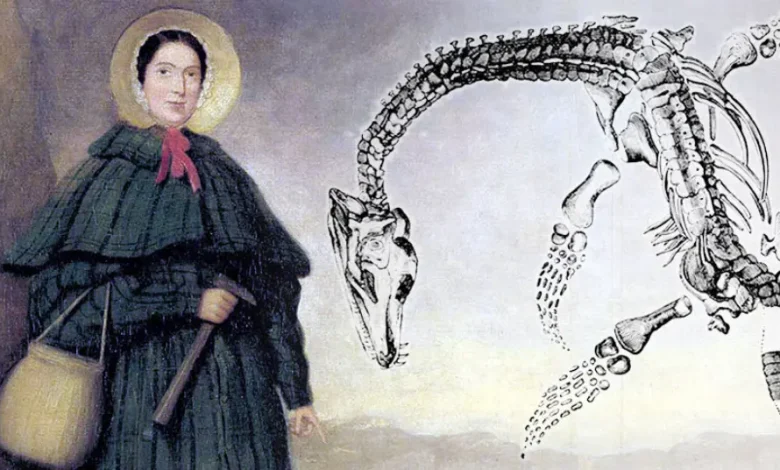
Mary Anning: The Fossil Hunter Who Changed Paleontology
In the early 19th century, a young woman from a small coastal town in England was on the brink of a groundbreaking discovery. Mary Anning, despite limited access to education, went on to become one of the most influential figures in paleontology, changing our understanding of Earth’s history and the creatures that once roamed it. This is her story and the legacy of her fossil discoveries.
The Early Life of Mary Anning
Mary Anning was born in 1799 in Lyme Regis, a town on the southern coast of England that sits on the Jurassic Coast. Her family was poor, and from an early age, Mary would help her father collect and sell fossils to supplement their income. The seaside cliffs of Lyme Regis were rich in fossil deposits, remnants of the prehistoric world that held secrets waiting to be uncovered.
Mary’s father, Richard Anning, was a carpenter and amateur fossil collector who passed down his knowledge to Mary. When her father died, young Mary and her family faced financial hardships. Undeterred, Mary continued searching for fossils along the cliffs, honing her skills and making discoveries that would soon capture the attention of the scientific world.
The Historic Discovery of Ichthyosaurus
In 1811, when Mary was just 12 years old, she made a discovery that would propel her into scientific history: the fossilized skeleton of an Ichthyosaurus, an extinct marine reptile. This was one of the earliest known fossils of a prehistoric reptile, and it provided a significant clue to the existence of creatures that no longer roamed the Earth. Her discovery challenged established beliefs about the age of the planet and its inhabitants, as many still believed in a world created as described by religious texts.
 Ada Lovelace: The World’s First Computer Programmer
 This discovery marked the beginning of a series of important fossil finds that would establish Mary as a pioneering fossil hunter. Despite her growing reputation, she was often dismissed by the scientific establishment of the time, which did not easily accept contributions from women, especially those with no formal education.
Other Groundbreaking Discoveries
Mary’s work did not stop with the Ichthyosaurus. Over the years, she uncovered fossils of several other significant prehistoric creatures, including:
- Plesiosaurus – Another marine reptile, whose unusual long neck challenged even established paleontologists. Mary’s discovery of the Plesiosaurus fossil in 1823 led to the first-ever complete skeleton found and further stirred scientific debates.
- Pterodactylus – Mary discovered the fossil of a Pterodactylus, a flying reptile that highlighted the diversity of prehistoric life beyond land-dwelling dinosaurs.
- Fossil Fish – Her meticulous findings included numerous fossilized fish species, shedding light on the ancient marine ecosystem that had thrived millions of years before.
Each discovery cemented her reputation as an expert fossil hunter, and scientists began visiting Lyme Regis specifically to consult with her. However, due to the prejudices of the time, she often received little credit for her work, and male scientists would frequently present her discoveries as their own.
Contributions to Science and Paleontology
Mary Anning’s work transformed paleontology in ways that are still acknowledged today. She not only contributed significant fossil specimens but also engaged in detailed anatomical studies that advanced scientific understanding of extinct species. Her ability to interpret fossil evidence helped lay the foundation for later paleontological studies.
 Richard Feynman: The Life of a Curious Physicist
 Some of her contributions to science include:
- Advancing the understanding of prehistoric life through her fossil discoveries.
- Challenging established beliefs about Earth’s age, paving the way for the development of geological time scales.
- Providing crucial fossil specimens that helped form the basis of modern paleontological classifications.
Mary’s discoveries contributed to what we now know as the Mesozoic Era, which spans approximately 180 million years from 252 to 66 million years ago and is often called the “Age of Reptiles.”
Legacy and Recognition
In her lifetime, Mary Anning received limited recognition for her contributions. However, her story is now celebrated for its influence on paleontology and science as a whole. Today, the importance of her discoveries and her contributions to science is widely acknowledged. In 2010, Mary was finally recognized by the Royal Society as one of the ten most influential British women in science.
Mary’s story remains an inspiration, reminding us that curiosity and passion can change the world, regardless of one’s background or formal education. Her dedication and persistence led to discoveries that forever altered our understanding of life on Earth.
 Hypatia of Alexandria: The First Woman in Mathematics and Astronomy
 Conclusion
Mary Anning was more than just a fossil hunter; she was a pioneering scientist whose work laid the foundation for modern paleontology. Her discoveries along the cliffs of Lyme Regis unveiled a prehistoric world that had been lost to time. The fossils she uncovered sparked debates and new theories, challenging conventional beliefs and advancing our understanding of Earth’s ancient past. Mary’s legacy lives on as a testament to the power of perseverance and passion in science.


