

How Dmitri Mendeleev Created the Periodic Table
Mendeleev periodic table
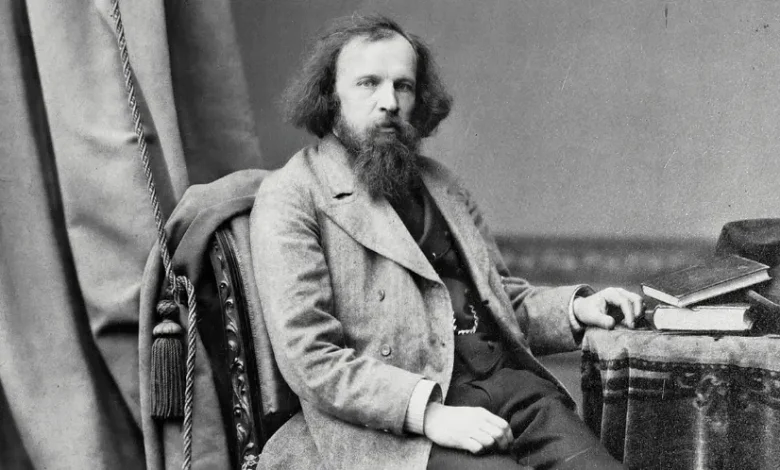
The Periodic Table of Elements is one of the most iconic achievements in the world of science, serving as a roadmap to understanding the fundamental building blocks of matter. Dmitri Mendeleev, a Russian chemist, was the mastermind behind the creation of the Mendeleev Periodic Table in the late 19th century.
This table not only organized the known elements in a structured format but also predicted the existence of undiscovered elements with remarkable accuracy. In this article, we’ll explore how Mendeleev’s genius and determination led to the creation of the periodic table as we know it today.
The Early Days of Chemistry: A Need for Order
Before Mendeleev, chemists struggled to make sense of an increasing number of chemical elements. By the mid-1800s, around 60 elements had been discovered, but they lacked a unifying framework. Scientists noticed patterns and similarities among elements, but these observations were scattered and unorganized.
- Confusion and Chaos: There was no consistent system to categorize or understand elements.
- Emerging Patterns: Certain elements showed similar properties, hinting that a more organized structure could be possible.
Mendeleev’s Journey to Organize the Elements
Born in 1834, Dmitri Mendeleev had a passion for science and excelled in chemistry. As a professor, he became particularly interested in understanding the properties of elements and sought a way to organize them logically. His inspiration for the Mendeleev Periodic Table came in 1869, when he began arranging elements based on their atomic masses and observed patterns that hinted at a deeper order.
 Louis Pasteur and the Birth of Vaccines
 The Evolving Structure of the Periodic Table
Mendeleev’s breakthrough involved arranging elements in a table where their properties aligned periodically. His structure was based on the atomic mass of each element, and he grouped them so that elements with similar properties appeared in the same column, or group. Here’s how he structured it:
- Horizontal Rows (Periods): Elements in each row followed an increase in atomic mass.
- Vertical Columns (Groups): Elements in each column shared similar properties, such as reactivity or metallic behavior.
Mendeleev’s Predictive Genius
One of the most remarkable aspects of Mendeleev’s periodic table was his courage to leave gaps for elements that hadn’t yet been discovered. Mendeleev believed these gaps represented unknown elements, and he went as far as predicting their properties based on their positions in the table. He named these missing elements with placeholder terms such as eka-aluminum and eka-silicon.
Incredibly, Mendeleev’s predictions were later confirmed with the discovery of elements like gallium (predicted as eka-aluminum) and germanium (predicted as eka-silicon). His ability to foresee these elements validated the periodic table and earned him significant recognition in the scientific community.
Why Atomic Mass Worked—And Its Limitations
Mendeleev organized elements by atomic mass rather than atomic number, as atomic numbers had not yet been discovered. This method allowed him to observe periodic trends, but it also led to a few inconsistencies. For example, elements like iodine and tellurium had to be placed out of order based on their properties rather than their atomic masses.
 Jane Goodall: The Revolutionary Work with Chimpanzees
 The Discovery of Atomic Number: Refining Mendeleev’s Table
In the early 20th century, scientists discovered that the properties of elements were better explained by atomic number rather than atomic mass. This breakthrough led to a reorganization of the periodic table, solving the inconsistencies Mendeleev had encountered and strengthening the framework he had established. Today, elements are arranged by their atomic number (Z), which represents the number of protons in an atom’s nucleus, refining the structure of the Mendeleev Periodic Table further.
The Legacy of Dmitri Mendeleev’s Periodic Table
Mendeleev’s periodic table remains a foundational achievement in chemistry. It not only transformed the study of elements but also set the stage for new discoveries. Periodic trends such as atomic size, ionization energy, and electronegativity emerged from this table, giving scientists a powerful tool for predicting the behavior of elements and compounds.
Today, the periodic table continues to be updated as new elements are discovered, but Mendeleev’s core design remains the same. His work paved the way for future scientists and serves as a testament to the power of curiosity, logic, and scientific intuition.
Key Takeaways
- Mendeleev’s periodic table organized elements by atomic mass and grouped them based on similar properties.
- He left gaps for undiscovered elements, which he accurately predicted, showcasing his scientific foresight.
- Later discoveries, such as atomic number, refined Mendeleev’s table, addressing initial inconsistencies.
The Mendeleev Periodic Table is not just a scientific tool but a monumental achievement that changed the way we understand the elements and their relationships. Dmitri Mendeleev’s insight and commitment to order left a legacy that continues to inspire scientists today.
 George Washington Carver’s Agricultural Innovations


