
James Watson and Francis Crick: The Discovery of DNA Structure

James Watson and Francis Crick “DNA”
The discovery of the structure of DNA is one of the most significant breakthroughs in the field of biology, and it is largely attributed to the collaborative efforts of two scientists: James Watson and Francis Crick.
Their work revolutionized our understanding of genetics and laid the foundation for modern molecular biology. In this article, we will explore how their groundbreaking research led to the discovery of the famous double helix structure of DNA and the lasting impact it has had on science.
The Background: A Race to Unlock the Secrets of Life
In the 1950s, scientists were grappling with the question of how genetic information was stored and passed on from one generation to the next. The key to unlocking this mystery was the structure of deoxyribonucleic acid (DNA), the molecule responsible for heredity. However, despite years of research, the precise structure of DNA remained elusive.
By 1951, two important pieces of the puzzle were already known:
- DNA was a polymer, meaning it was made up of repeating units (nucleotides).
- Chromosomes contained DNA, but how this molecule could store genetic information was still unclear.
This is where Watson and Crick entered the picture. They were not the first to work on the DNA structure, but their approach would ultimately lead to the breakthrough.
 Dorothy Hodgkin and the Power of X-Ray Crystallography
The Role of X-ray Crystallography
While Watson and Crick were developing their model of DNA, they had access to crucial data obtained by other scientists. One of the most important contributors was Rosalind Franklin, whose X-ray crystallography images provided vital insights into the structure of DNA. Franklin’s famous Photograph 51 revealed a clear, repeating pattern, which hinted at a helical structure. However, Franklin’s work was not fully appreciated at the time, and Watson and Crick were able to build on this information.
Using Franklin’s X-ray data along with other sources, Watson and Crick were able to propose the double helix model of DNA in 1953. This was a major scientific breakthrough.
The Double Helix Model
Watson and Crick’s model of DNA described it as a double helix, a spiral-shaped structure composed of two intertwined strands. The two strands of DNA are made up of nucleotides, which consist of three components:
- A phosphate group
- A sugar molecule (deoxyribose)
- A nitrogenous base: adenine (A), thymine (T), cytosine (C), or guanine (G)
These nitrogenous bases pair in a very specific way:
- Adenine (A) always pairs with Thymine (T)
- Cytosine (C) always pairs with Guanine (G)
The base pairing rule is key to understanding how genetic information is passed from one generation to the next. The specific pairing of bases ensures that when the DNA molecule is replicated, the exact sequence of nucleotides is copied accurately.
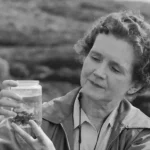 Rachel Carson: The Scientist Who Sparked Environmental Awareness
The strands of DNA are held together by hydrogen bonds between the complementary bases, forming a stable structure. The two strands twist around each other, creating the well-known “double helix” shape.
Impact and Recognition
On April 25, 1953, Watson and Crick published their landmark paper in the journal Nature, detailing their discovery of the DNA structure. The publication was a momentous occasion in the scientific community and immediately captured the world’s attention. The double helix model provided a clear explanation of how genetic information could be stored and transmitted, which was crucial for understanding inheritance, evolution, and disease.
Although Watson and Crick received the majority of the credit for the discovery, the contributions of others like Rosalind Franklin and Maurice Wilkins were also significant. In 1962, Watson, Crick, and Wilkins were awarded the Nobel Prize in Physiology or Medicine for their work on the structure of DNA. Unfortunately, Franklin had passed away in 1958 and was not eligible for the Nobel Prize, which is only awarded to living scientists.
The Legacy of Watson and Crick’s Discovery
The discovery of the DNA structure had far-reaching consequences that continue to shape modern science. Some of the most important developments resulting from this discovery include:
- Genetic Engineering: The ability to manipulate DNA has led to advancements in biotechnology, including the development of genetically modified organisms (GMOs) and gene therapies.
- Human Genome Project: Understanding the structure of DNA allowed scientists to map the entire human genome, a monumental project completed in 2003.
- Personalized Medicine: DNA analysis is now used to tailor medical treatments to individuals based on their genetic makeup.
Today, the work of James Watson and Francis Crick is regarded as one of the most important scientific achievements of the 20th century, and it continues to influence research in fields ranging from medicine to evolutionary biology.
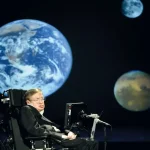 Stephen Hawking’s Theories About the Universe
Conclusion
The discovery of the DNA structure by James Watson and Francis Crick is a shining example of how collaboration, critical thinking, and technological advancements can lead to scientific breakthroughs. Their work not only answered fundamental questions about the nature of life but also opened the door to countless new possibilities in biology and medicine. The double helix model of DNA remains one of the most iconic images in science and continues to inspire scientists around the world to unravel the mysteries of genetics.


