

Nikola Tesla: The Eccentric Genius Behind Modern Technology
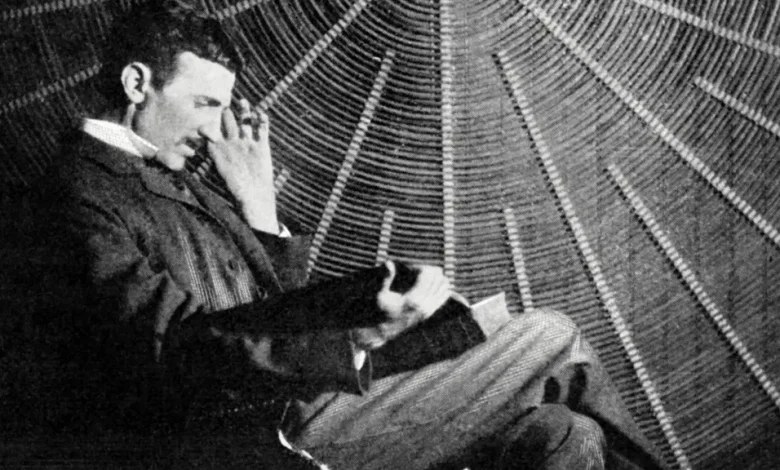
Nikola Tesla, often described as an eccentric genius, was one of the most innovative and influential scientists of the modern era. Born in 1856 in Smiljan, part of modern-day Croatia, Tesla made groundbreaking discoveries in electrical engineering and physics, paving the way for technologies we depend on today.
While he is remembered for his eccentric personality, Tesla’s contributions to modern technology, particularly in the field of alternating current (AC) power, are undeniably transformative. This article explores Tesla’s remarkable life, his innovations, and the legacy of his vision.
Early Life and Education
From a young age, Tesla demonstrated a unique talent for invention and imagination. He attended the Austrian Polytechnic in Graz, Austria, where he studied mathematics, physics, and mechanics. Though he never graduated, his studies laid the foundation for his future work in electromagnetism. By his early twenties, Tesla had developed his ideas for an alternating current motor, which he would later bring to fruition in the United States.
 Leonardo da Vinci’s Greatest Inventions Ahead of His Time
 The Battle of Currents: AC vs. DC
One of Tesla’s most well-known contributions to technology was his work with alternating current (AC). When Tesla arrived in the U.S. in 1884, he briefly worked with Thomas Edison, who was a proponent of direct current (DC). The two inventors clashed, as Edison believed DC was safer, while Tesla argued that AC was more efficient for long-distance power transmission. This disagreement became known as the “War of Currents.”
- Direct Current (DC): Flows in a single direction, making it ideal for short-distance power but inefficient over long distances due to high energy losses.
- Alternating Current (AC): Reverses direction periodically and can be transmitted over greater distances with minimal energy loss.
Ultimately, Tesla’s AC system, backed by entrepreneur George Westinghouse, won out, leading to the modern electrical grid that powers cities and homes worldwide.
Inventions and Innovations
Tesla was known for his relentless experimentation and imaginative inventions. Here are some of his most notable contributions:
 How Einstein Revolutionized Physics with the Theory of Relativity
 - Tesla Coil: A high-voltage transformer used for wireless transmission of electricity, which paved the way for modern radio and wireless technologies. The Tesla coil produces electrical discharges and operates based on resonance and the equation
L \times I = V, whereLis inductance,Iis current, andVis voltage. - Induction Motor: Powered by alternating current, this motor was the first of its kind and is still widely used today. The operation of an induction motor is based on rotating magnetic fields, represented by the formula
F = B \cdot I \cdot L, whereBis the magnetic field,Iis current, andLis length. - Wireless Transmission of Power: Tesla dreamed of a world where energy could be transmitted without wires, and he even built a massive transmission tower on Long Island known as the Wardenclyffe Tower to demonstrate this. Though ultimately unsuccessful, this concept inspired future wireless power and communication systems.
- Radio Technology: Though credited to Guglielmo Marconi, Tesla held many of the patents used in the development of radio. In fact, the U.S. Supreme Court eventually recognized Tesla’s work as fundamental to radio technology.
The Eccentric Side of Tesla
Tesla’s eccentric personality contributed to his legacy as much as his inventions. He was known for his unusual habits and beliefs. Tesla claimed to have photographic memory, which allowed him to visualize his inventions in extraordinary detail without blueprints. He also suffered from obsessive-compulsive disorder, often performing rituals involving the number three. For example, he would walk around a building three times before entering.
Additionally, Tesla believed he could communicate with animals and claimed to have received signals from extraterrestrial life. His eccentricity sometimes led people to label him as “mad” or overly ambitious, but his unusual approach was integral to his creative process and visionary ideas.
Tesla’s Legacy in Modern Technology
Despite his challenges, Tesla’s influence on modern technology is profound and enduring. His work laid the foundation for numerous fields:
 Galileo Galilei: The Father of Modern Astronomy
 - Electric Power Systems: The widespread adoption of AC power, which Tesla championed, is fundamental to today’s electrical infrastructure.
- Wireless Communication: Tesla’s experiments with radio waves and wireless power paved the way for radio, Wi-Fi, and Bluetooth technologies.
- Renewable Energy and Sustainable Power: Tesla’s vision of harnessing natural energy sources inspired future generations to explore renewable energy.
Conclusion
Although Nikola Tesla struggled with recognition during his lifetime, today he is celebrated as one of history’s greatest minds. His title as an “eccentric genius” is well-earned, as he dared to imagine a world far beyond the limitations of his era. Tesla’s inventions and ideas continue to shape modern technology, proving that his work was indeed ahead of its time. As we look to the future, Tesla’s vision serves as a reminder of the limitless potential of human curiosity and ingenuity.


