Reproduction: Sexual and asexual in the biological world

Reproduction is at the core of life on Earth. It lets living things keep their species going. This ensures life keeps going through generations. It’s key to understand how sexual and asexual reproduction work together.
Sexual reproduction is fascinating. It mixes male and female gametes to make a zygote. This mix creates unique offspring, adding variety to a species. Asexual reproduction, on the other hand, makes copies of an organism without mixing gametes. This happens through special structures or by breaking apart.
Both methods have their benefits. They are used by simple cells to complex life forms. Learning about these ways helps us see how life adapts and survives. It shows how species keep going in a changing world.
Introduction to Reproduction in Organisms
Reproduction is key to life on Earth. It lets all living things, from simple cells to complex life forms, pass on their genes. This section will explain why reproduction is vital and the different ways organisms reproduce.
Reproduction creates new individuals, either through sex or asexually. Sexual reproduction mixes male and female gametes to form a zygote. This zygote grows into a new organism. Asexual reproduction uses one parent to make offspring that are genetically the same. Both methods are important for the life cycle of organisms, helping species survive and evolve.
- Understanding the importance of reproduction in the maintenance of life on Earth.
- Exploring the fundamental differences between sexual and asexual reproduction.
- Recognizing the significance of the life cycle in the continuity of species.
Learning about biological reproduction helps us appreciate life’s diversity and strength. This knowledge can guide us to make choices that help the natural world thrive.
Types of Reproduction
Sexual Reproduction
Organisms can reproduce in two main ways: sexual and asexual. Sexual reproduction combines male and female gametes, leading to new, unique offspring. This method is key for keeping a population’s genetic diversity.
During sexual reproduction, gametes (sperm and eggs) merge. This starts a series of events like meiosis and fertilization. The zygote then grows into a new individual, blending genetic material from both parents.
Asexual Reproduction
Asexual reproduction creates new individuals without gamete fusion. This means the offspring are genetically identical to the parent. Asexual reproduction happens through budding, fragmentation, or structures like stolons, rhizomes, tubers, and bulbs.
This method is quicker and more efficient, especially in good environments. It’s common in simple organisms or where resources are plentiful and stable.
Sexual and asexual reproduction each have benefits and drawbacks. Sexual reproduction boosts genetic diversity, helping organisms adapt to new conditions. Asexual reproduction, however, leads to fast population growth, ideal in stable, resource-rich environments.
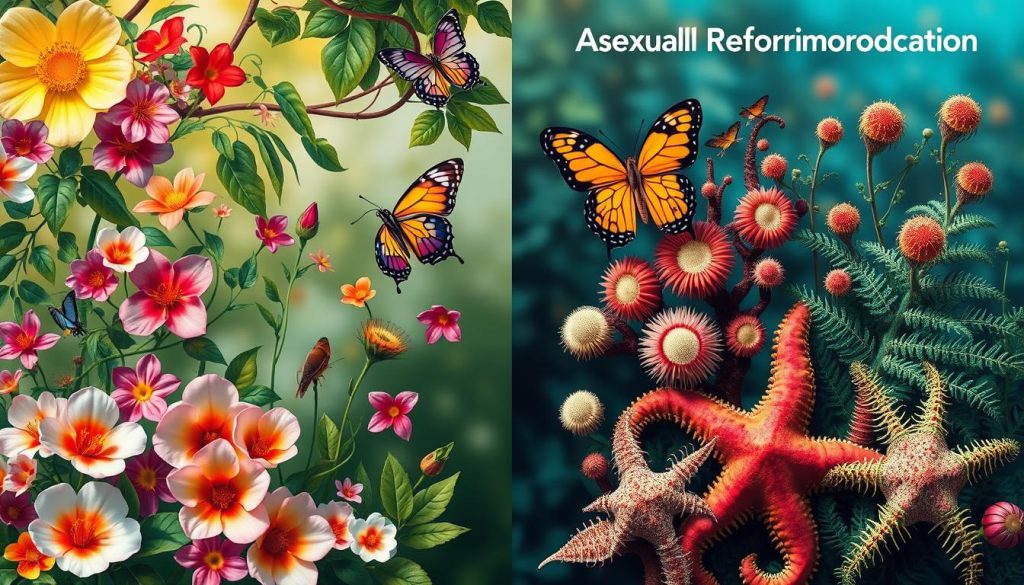
It’s vital to understand both reproductive strategies. They help us see how organisms keep their species alive and adapt to their surroundings.
Reproduction in Plants
The plant kingdom is known for its many ways of reproducing. It uses both sexual and asexual methods. Specialized propagation organs and plant growth regulators are key in these processes.
Propagation Organs
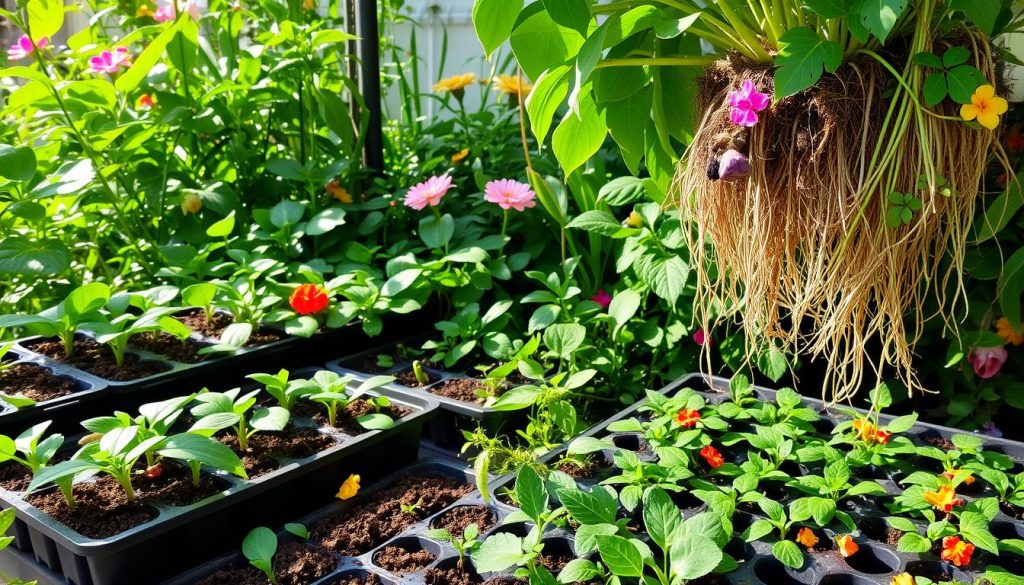
Plants have developed many ways to reproduce without sex. They use stolons, rhizomes, tubers, and bulbs for this. These parts help plants spread and grow in different places.
- Stolons are horizontal stems that grow above ground. They make new plants at their nodes, like strawberries.
- Rhizomes are underground stems. They produce new shoots and roots, seen in irises and ginger.
- Tubers are underground stems that store nutrients. They can grow into new plants, like potatoes.
- Bulbs are underground storage organs. They have modified leaves and stem bases, found in onions and tulips.
Plant Growth Regulators
Plant growth regulators (PGRs) are also very important. They help control plant growth and reproduction. Chemicals like auxins, cytokinins, and gibberellins work together to help plants grow and reproduce.
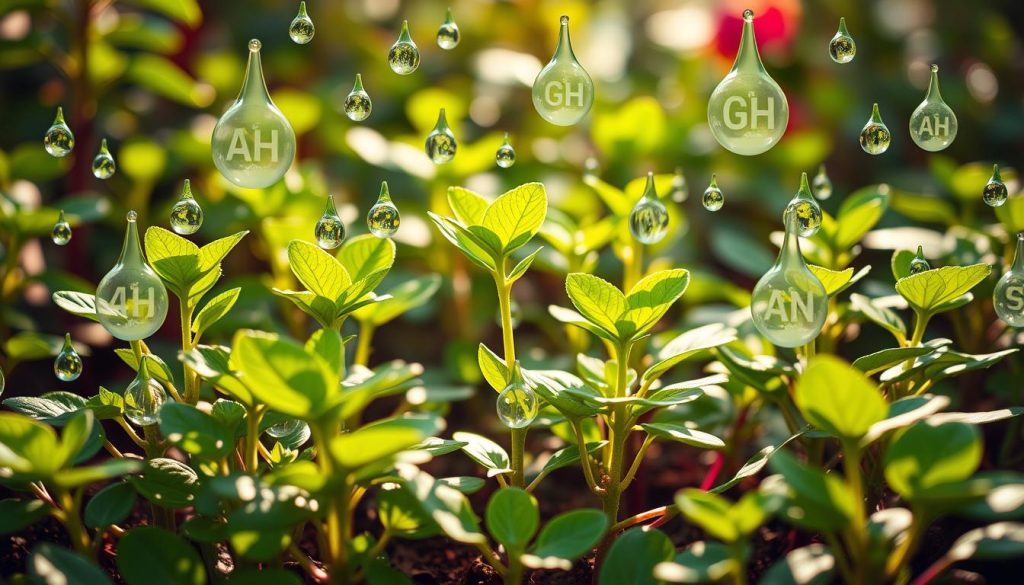
Auxins help cells grow and roots form. Cytokinins help cells divide and shoots grow. Gibberellins make plants flower and break dormancy. These regulators help plants spread and grow, both sexually and asexually.
Micropropagation Technique
In the world of plant propagation, micropropagation is a game-changer. It involves growing plant tissues and cells in a controlled setting. This method helps quickly multiply valuable plant species.
Tissue Culture
Tissue culture is key to micropropagation. It grows plant tissues in a nutrient-rich environment. This way, plants can grow fast and reproduce quickly.
Plant growth regulators (PGRs) are crucial in micropropagation. They help plants grow and produce more. This ensures the best growth and reproduction.
Researchers use tissue culture on many plants. It’s used for vegetables and flowers. This makes micropropagation vital in plant science and farming.
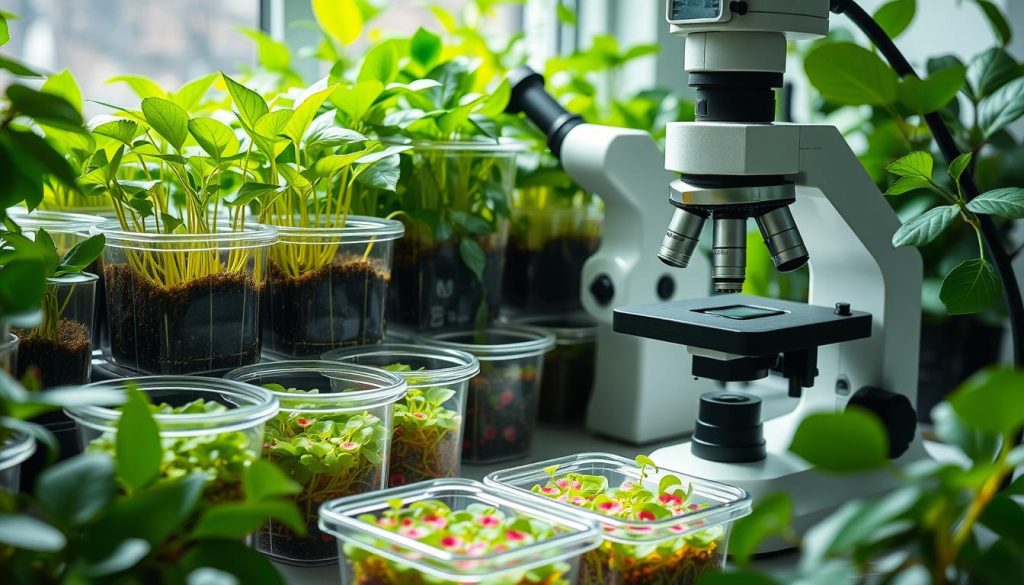
Micropropagation has big advantages over old methods. It can produce plants that are true to type. This is faster than seed propagation.
The world’s population is growing fast. We need more plant-based food. Micropropagation can help increase plant yields. This meets the demand for plant products.
 Population genetics: Genetic diversity and its importance
 Fundamental Elements of Propagation
Successful plant propagation needs careful selection and balance of key elements. These include primary and secondary nutrients, amino acids, vitamins, organic additives, carbon sources, and growth regulators. By mixing these elements right, you help your plants grow well.
Primary nutrients like nitrogen, phosphorus, and potassium are key for plant health. Secondary nutrients, including calcium, magnesium, and sulfur, are also important. Amino acids, like glycine and proline, help plants use nutrients better. Vitamins, especially vitamin B1 and C, aid in root growth and stress resistance.
Organic additives, like humic acids and seaweed extracts, improve soil quality and nutrient availability. Carbon sources, like sucrose or glucose, give plants energy. Growth regulators, such as auxins and gibberellins, control cell growth and development.
By balancing these propagation media components, you create the best environment for plant propagation. This leads to healthy growth and a successful propagation program.
| Propagation Element | Function |
|---|---|
| Primary Nutrients | Promote overall plant health and vigor |
| Secondary Nutrients | Support various physiological processes |
| Amino Acids | Enhance nutrient uptake and utilization |
| Vitamins | Promote root growth and stress tolerance |
| Organic Additives | Improve soil structure, water-holding capacity, and nutrient availability |
| Carbon Sources | Provide energy for the plant’s metabolic processes |
| Growth Regulators | Manipulate cell differentiation, root formation, and shoot development |
Understanding and managing these nutrient requirements for plant propagation helps create a great environment. This supports the healthy growth and development of your plants.
Reproduction in Animals
Sexual Reproduction in Animals
Animals mainly use sexual reproduction to keep their species alive. This method involves the mixing of male and female gametes. This leads to fertilization and the start of embryonic development.
Males make sperm cells, and females make egg cells. These cells have half the usual number of chromosomes. This allows them to combine fully during fertilization.
Fertilization is when male and female gametes come together. It starts the journey of embryonic development. The genetic mix from both parents creates a unique individual. This individual then goes through many developmental stages before being born or hatching.
The time it takes for an embryo to develop and for a baby to be born varies. It can be just a few hours for some invertebrates or months for large mammals. These detailed processes help animals reproduce and keep their genetic diversity alive.
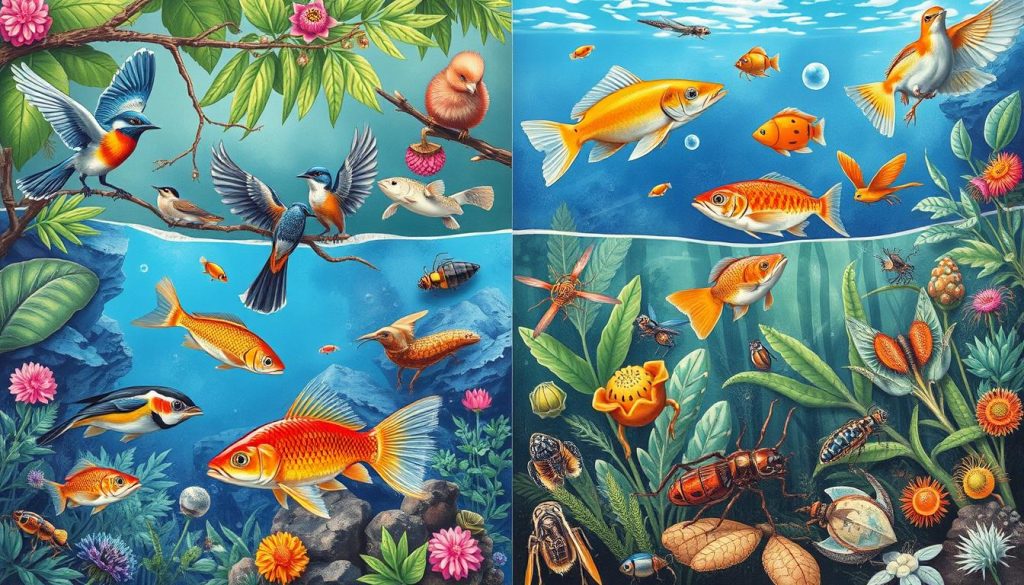
| Reproduction Characteristic | Description |
|---|---|
| Gamete Production | Males produce sperm cells, while females produce egg cells. |
| Fertilization | The fusion of male and female gametes, leading to the creation of a genetically unique individual. |
| Embryonic Development | The complex series of developmental stages that the embryo undergoes, leading to birth or hatching. |
| Gestation Period | The duration of the embryonic development, which can vary significantly among different animal species. |
Sexual reproduction is key for animals to keep their genetic diversity. It helps them adapt and survive in changing environments. By studying animal reproduction, we learn about evolution and the variety of life on Earth.
Asexual Reproduction Strategies
Some animals don’t reproduce like most others. They use asexual ways to make more of themselves. This helps them live in many different places. Let’s look at how animals reproduce without sex.
Budding
Budding is when a new creature grows from a part of the old one. It’s seen in asexual reproduction in animals like hydras, corals, and worms. The new creature breaks off and is just like the parent.
Fragmentation
Fragmentation is when a part of an animal breaks off and grows into a new one. It happens in sponges, starfish, and worms. The broken piece can grow into a new, complete animal.
Parthenogenesis
Parthenogenesis is when an egg turns into a new creature without a male. It’s seen in insects, reptiles, and amphibians. The new creature is just like the mother.
Vegetative Reproduction
Vegetative reproduction is when new creatures grow from parts like runners or tubers. It’s mostly seen in plants but also in some sea slugs and coral polyps.
These ways of reproducing have good points. They help animals grow fast and spread to new places. But, they also have downsides. They might not have as much genetic variety and could be more vulnerable to sickness or changes in their environment. Learning about these ways helps us understand how life can adapt and survive.
| Asexual Reproduction Strategy | Examples | Advantages | Disadvantages |
|---|---|---|---|
| Budding | Hydras, corals, some worms | Rapid population growth, genetic uniformity | Limited genetic diversity, vulnerability to environmental changes |
| Fragmentation | Sponges, starfish, some annelid worms | Ability to regenerate from a small fragment, genetic uniformity | Potential vulnerability to predation or damage |
| Parthenogenesis | Certain insects, reptiles, amphibians | Efficient reproductive strategy, genetic uniformity | Reduced genetic diversity, potential vulnerability to diseases or environmental changes |
| Vegetative Reproduction | Some plants, certain sea slugs, coral polyps | Rapid propagation, maintenance of successful genetic traits | Limited genetic diversity, potential for slower growth compared to sexual reproduction |
Reproductive Cycles and Patterns
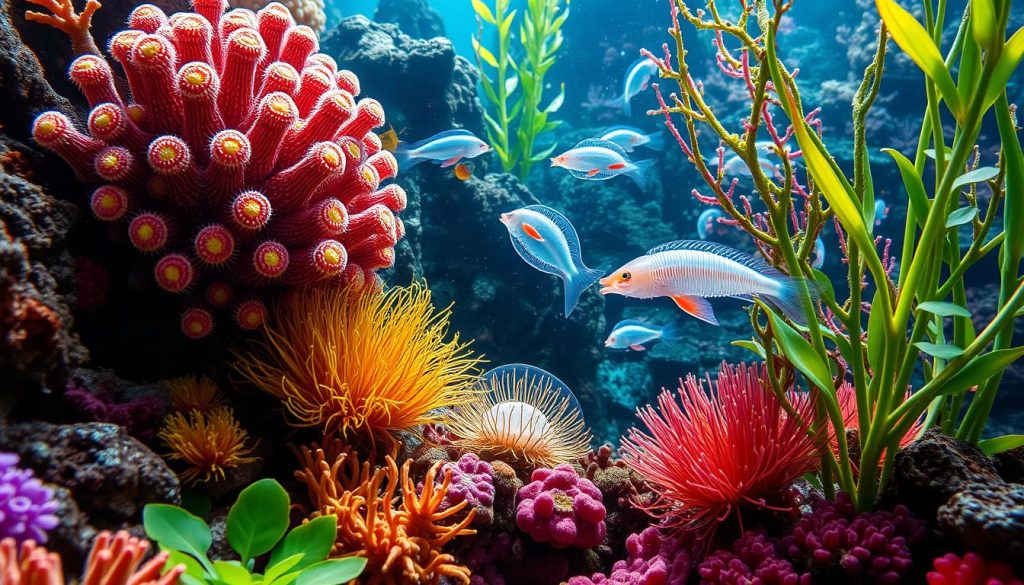
The natural world is full of different ways for species to reproduce. Each method is tailored to fit the needs and environments of various species. These reproductive cycles and patterns are truly fascinating.
Many animals breed at specific times of the year. This is because their breeding is linked to things like temperature, rainfall, and food. For example, the praying mantid species Rhombodera megaera has a unique sex determination system. It involves 27 diploid chromosomes in males and a sex trivalent that aligns during meiosis.
On the other hand, some species breed at different times. This ensures there are always offspring being born. This is common in tropical areas with stable climates.
- Reproductive cycles can be influenced by a range of environmental factors, such as temperature, photoperiod, and resource availability.
- Synchronization of breeding activities within a population can provide advantages in terms of resource sharing, predator defense, and successful mating.
- Reproductive patterns may also vary depending on the specific needs and constraints of different species, such as the need to adjust to seasonal changes or maintain a continuous breeding cycle.
Understanding the diverse reproductive biology of organisms is key for conservation and managing agricultural and aquacultural systems. By studying these intricate reproductive cycles and patterns, researchers can learn a lot. They can see how species adapt and thrive in their environments.
Reproduction in Organisms
Reproduction is key to life on Earth. It helps keep species going and evolving. At its heart is biological reproduction, a complex process tied to the life cycle of many organisms.
There are many ways organisms reproduce. Some, like bacteria, can make new ones without another parent. Others, like humans, need two parents to create offspring. Many use a mix of both, adapting to their surroundings.
 Hormones: Chemical regulators in organisms
 Studying reproduction helps us understand life’s mysteries. It shows how life has survived and thrived. By looking at different ways of reproducing, scientists learn about life’s diversity and resilience.
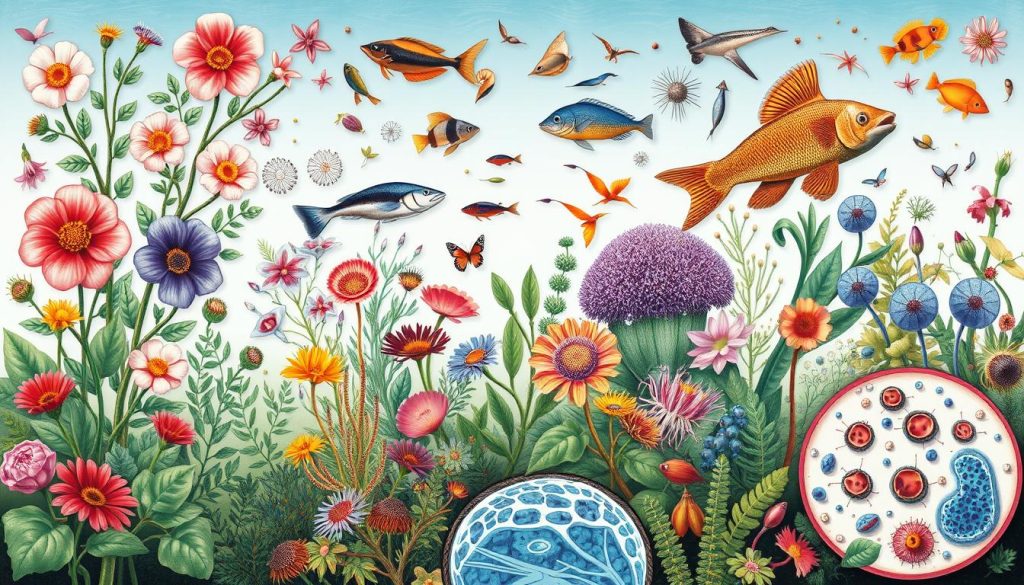
Reproduction is a fundamental process that underpins the maintenance and evolution of life on Earth. It encompasses the diverse strategies organisms employ to generate offspring, ensuring the continuation of their genetic lineage and species.
Evolutionary Significance of Reproduction
Reproduction is key in the evolution of life on Earth. It helps create genetic diversity. This diversity lets organisms adapt and survive in changing environments.
Natural selection favors organisms with high reproductive fitness. They pass on their traits to future generations. This keeps good traits and gets rid of bad ones.
- Sexual reproduction mixes up genes, creating more genetic diversity. This diversity helps species adapt to new conditions and fight off threats.
- Asexual reproduction is good in stable places. It quickly spreads successful genes without mixing them up.
The evolutionary significance of reproduction is seen in how organisms spread their genes. From plants’ special parts to animals’ courtship, these are results of evolution.
| Reproductive Strategy | Evolutionary Advantage | Example |
|---|---|---|
| Sexual Reproduction | Increased genetic diversity | Flowering plants with cross-pollination |
| Asexual Reproduction | Rapid multiplication of successful genotypes | Bacterial binary fission |
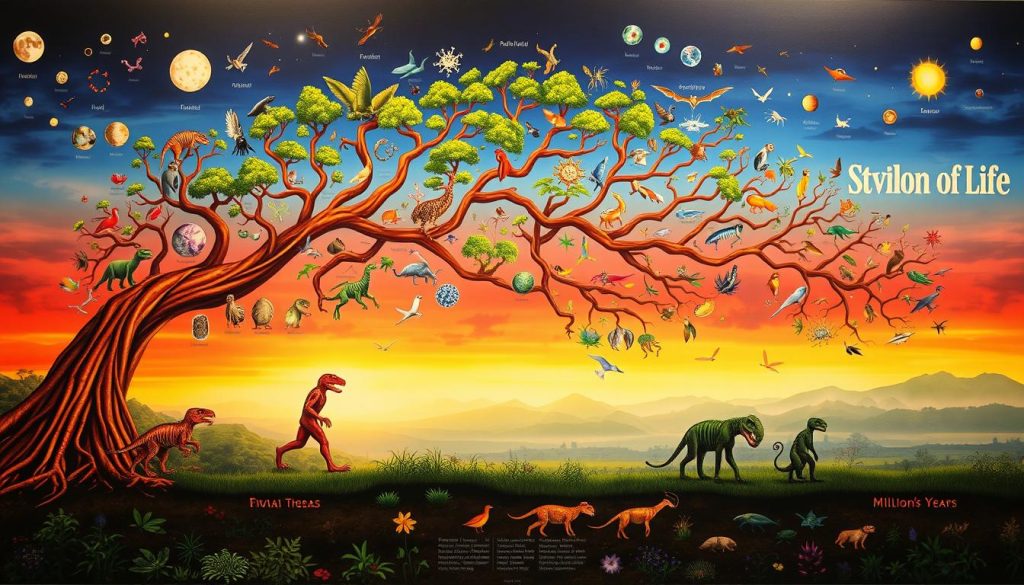
Understanding reproduction’s role in evolution helps scientists. They can learn how to save and manage biodiversity. This is important for facing environmental challenges.
Challenges and Adaptations in Reproduction
Organisms face many challenges in reproduction, like environmental stressors and physical limits. But, through evolution, they’ve developed amazing reproductive adaptations to keep their species alive. This section explores the obstacles they meet and how they’ve found creative solutions.
Environmental factors, like climate change and limited resources, are big reproductive challenges. These stressors can mess with reproductive cycles. For example, the RhPIP2;1 gene in plants helps with flower opening. But, under drought, the RhPIP1;1 gene helps plants adapt to dry conditions.
Physiological limits also create reproductive challenges. Cell water balance and turgor pressure affect flower size and opening. Studies show that genes like PIP2;1 in rice and ZmPIP2;5 in maize can change corolla size. This shows how important reproductive adaptations are for successful reproduction.
Organisms have also come up with evolutionary responses to overcome these challenges. Plant hormones and growth regulators help with cell growth and differentiation. By controlling these, scientists can improve plant development and yields in crops.
In summary, organisms face many reproductive challenges. But, their reproductive adaptations and evolutionary responses show their incredible resilience and creativity. Understanding these complex mechanisms helps us better manage and conserve diverse species.
Environmental Factors Affecting Reproduction
Many things in our environment affect how living things reproduce. This includes things like temperature, moisture, light, and food. Changes in these areas, especially because of climate change, can really mess with how different species reproduce. This can cause problems and changes in their reproductive biology.
Climate Change and Reproduction
Climate change can have big effects on how living things reproduce. Changes in temperature and rain can mess up when they mate, lay eggs, or make seeds. For example, a study found a 91.9% male-to-female sex ratio in black soldier flies in a particular context, potentially due to environmental factors.
Also, changes in light and food can affect how well living things can reproduce. Researchers observed that altering enclosures with slats increased lekking sites for Ceratitits capitata, enhancing their reproductive performance.
These changes can cause big problems for living things. They can mess up how populations grow, how species interact, and how ecosystems work. It’s really important to understand how environmental factors and reproductive biology work together. This helps us figure out how to protect and manage living things when faced with climate change.
| Environmental Factor | Impact on Reproduction |
|---|---|
| Temperature and Humidity | Identified as factors that increase the rate of nutrient cycling and soil formation. |
| Enclosure Design | Altering enclosures with slats increased lekking sites for Ceratitits capitata, enhancing reproductive performance. |
| Artificial Plants | The inclusion of artificial plants in black soldier fly cages increased the absolute surface area available for each fly. |
| Larval Diet | The first Gainesville diet provided to the larvae weighed 5 kg, and the second weighed 3 kg. |
| Temperature and Humidity | The walk-in incubator, set to 26°C, experienced markedly different conditions during grow-out periods. |
Assisted Reproductive Technologies
In the field of reproductive biology, new tools have been developed. These tools, like in vitro fertilization and artificial insemination, help in breeding plants and animals. They have changed how we think about reproduction, helping those facing fertility issues.
In vitro fertilization (IVF) means fertilizing an egg outside the body and then implanting the embryo in the uterus. It has helped many people have children, overcoming big challenges. Artificial insemination involves putting sperm directly into the female reproductive tract. This method increases the chance of getting pregnant without natural mating.
The field of assisted reproduction keeps growing. Scientists are finding new ways to help different species. They are using things like freezing gametes and special breeding programs. These advances help in conservation, breeding in captivity, and keeping genetic diversity.
As these technologies get better, we must think about their ethics, laws, and social impacts. It’s important to use them wisely and with rules. This ensures they are used in a way that respects everyone’s well-being and reproductive rights.
| Reproductive Technology | Description | Key Benefits |
|---|---|---|
| In Vitro Fertilization (IVF) | Fertilization of an egg by a sperm outside the body, followed by embryo implantation. | Enables conception for individuals with fertility challenges, increases chances of successful pregnancy. |
| Artificial Insemination | Direct introduction of sperm into the female reproductive tract, bypassing natural mating. | Enhances fertility rates, particularly for individuals with specific reproductive conditions or limited access to partners. |
| Cryopreservation | Preservation of gametes (sperm, eggs) or embryos at low temperatures for future use. | Allows for the storage and later use of genetic material, benefiting fertility treatments, conservation efforts, and genetic diversity preservation. |
The field of assisted reproduction is always changing. These technologies have greatly impacted people’s lives and the biological world. They help with family planning and support conservation efforts, changing how we see reproduction.
Conservation Efforts and Reproductive Biology
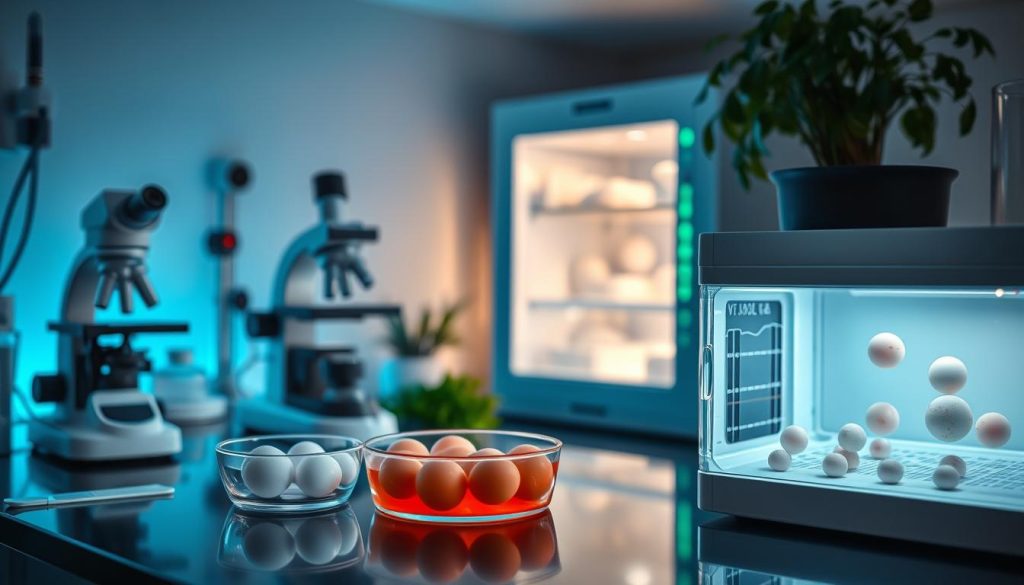
Reproductive biology is key in saving endangered species and keeping biodiversity alive. Knowing how species reproduce helps in breeding and reintroducing them. It also protects genetic diversity in ecosystems.
 Human genome: What we have Learned from DNA sequencing
 Scientists use reproductive biology to create new ways to breed animals in captivity. They study how endangered species mate, carry young, and grow. This knowledge helps in breeding, embryo transfer, and raising young animals. It’s helped save many species, like the black-footed ferret and California condor.
Understanding reproductive biology also helps keep genetic diversity in nature. By freezing gametes, embryos, and tissue, experts can keep gene pools alive. This way, they can bring back genetic variation to dwindling populations. It helps species stay healthy and adaptable against environmental changes.