The Evolution of Stars: From Birth to Death

The life cycle of stars is a fascinating journey. It starts in cosmic nurseries and ends with their demise. Understanding this stellar evolution helps us grasp our universe’s structure and composition. Stars undergo many changes, influenced by gravity, nuclear fusion, and the interaction of matter and energy.

Stars begin with the collapse of molecular clouds and end with spectacular supernovae. This path shows how dynamic and changing our universe’s stars are. Let’s dive into the amazing life cycle of stars, revealing the mysteries and wonders along the way.
Understanding the Birth of Stars in Molecular Clouds
The birth of stars starts in molecular clouds. These are huge areas filled with gas and dust in space. Gravity holds these clouds together, preparing them for star formation.
The Role of Gravity in Star Formation
Gravity is key in making stars. When gas and dust in clouds get dense, gravity pulls them together. This pull is the first step in creating a new star, called a protostar.
Initial Mass and Temperature Conditions
The future of a star depends on its mass and temperature at the start. More material means a bigger star. The cloud’s temperature also affects the star’s temperature and features.
Protostar Development Stages
- The protostar grows hotter and denser, going through different stages.
- The first stage, Class 0, has a thick gas and dust envelope. This envelope fades as the star grows.
- As it gets more material, it becomes a Class I protostar. It has a thinner envelope and starts to form a disk.
- Later, as a Class II and Class III protostar, the disk gets clearer. The star then reaches the main sequence, where it spends most of its life.
Star formation takes millions of years. The protostar grows in mass and temperature, becoming a star that can fuse atoms in its core.
| Protostar Class | Characteristics |
|---|---|
| Class 0 | Surrounded by a dense envelope of gas and dust |
| Class I | Less dense envelope, beginnings of a circumstellar disk |
| Class II | Refined disk, closer to main sequence |
| Class III | Disk is more dispersed, star reaches main sequence |
Life Cycle of Stars: A Comprehensive Overview
The life cycle of stars is a captivating and complex journey. It shows the intricate dance of cosmic objects. Stars are born in dense molecular clouds and die in a remarkable transformation, shaping the universe.
Stars are born when massive clouds of gas and dust collapse. As these clouds contract, the center heats up, and a protostar forms. Over time, the protostar grows, eventually igniting nuclear fusion in its core, marking the birth of a new star.
The life cycle of a star depends on its initial mass. Smaller, low-mass stars live longer, while high-mass stars evolve faster and more dramatically.
During the main sequence stage, stars convert hydrogen into helium through nuclear fusion. This process powers the star, giving us the energy we see as its luminosity.
When a star’s fuel runs low, it enters the later stages of its life. Low-mass stars may become red giants, expanding and shedding layers. High-mass stars can end in a supernova explosion, leaving behind a neutron star or a black hole.
Studying stellar evolution is fascinating and continues to uncover the cosmos’ intricate tapestry. By understanding star life cycles, we learn about the formation and transformation of our world and the universe.
The Main Sequence Stage: Where Stars Spend Most Time
Stars spend most of their lives in the main sequence stage. Here, they undergo nuclear fusion in their stellar core. This fusion turns hydrogen into helium and powers the star.
Nuclear Fusion in Stellar Cores
The core of a star is where hydrogen atoms fuse into helium. This fusion creates a lot of energy. This energy keeps the star shining and stable.
 The Role of Marine Protected Areas in Conservation Efforts
The time a star spends in this stage depends on its mass. Heavier stars use up their fuel faster than lighter ones.
Hydrogen to Helium Conversion Process
- In the core, hydrogen atoms fuse into helium through nuclear reactions.
- This process releases a lot of energy, which spreads out through the star.
- The speed of this fusion depends on the star’s mass. Bigger stars burn their fuel quicker.
Factors Affecting Main Sequence Duration
| Factor | Impact on Main Sequence Duration |
|---|---|
| Star Mass | More massive stars have a shorter main sequence lifespan, burning through their fuel faster. |
| Core Temperature | Higher core temperatures lead to faster nuclear fusion rates, shortening the main sequence stage. |
| Luminosity | Brighter, more luminous stars consume their fuel more rapidly, spending less time on the main sequence. |
The main sequence is a key part of a star’s life. It’s where gravity and fusion balance, keeping the star alive for most of its time. Knowing about this stage helps us understand how stars evolve.
Red Giants: The Expansion Phase
Stars that run out of hydrogen in their cores enter a critical phase called the red giant phase. During this time, these stars expand dramatically and become cooler but more luminous. This change is a key moment in their life cycle.
The red giant phase is marked by fusion happening in layers around a helium core. As the core shrinks, the outer layers grow, making the star cooler. But this growth also makes the star shine brighter, making it stand out in the night sky.
Red giants can grow by hundreds or thousands of times their original size. This huge change shows how dynamic and transformative stellar evolution can be. It highlights the amazing changes in Red Giants, Stellar Expansion, and Late-Stage Stars.
| Characteristic | Red Giants |
|---|---|
| Core Composition | Inert Helium |
| Fusion Process | Occurring in Shells |
| Surface Temperature | Cooler |
| Luminosity | Increased |
| Size | Dramatically Expanded |
The transition to the red giant phase is a key moment in a star’s life. It’s a time when stars prepare for further changes that will decide their ultimate fate.
Stellar Mass and Its Impact on Evolution
A star’s stellar mass is key to its life story. It affects how a star works and how long it lives. Knowing about stellar mass helps us understand the different paths stars can take.
Low-Mass Star Evolution Patterns
Stars like our Sun are low-mass and live longer. They slowly turn hydrogen into helium, staying stable for billions of years. Then, they swell up into red giants and lose their outer layers. What’s left is a dense white dwarf.
High-Mass Star Development Paths
High-mass stars, on the other hand, burn out fast. They explode in supernovas. Their cores collapse, making neutron stars or black holes.
The Role of Mass in Determining Stellar Fate
The stellar mass shapes a star’s life and death. Low-mass stars usually end as white dwarfs. High-mass stars can go supernova, leaving behind neutron stars or black holes.
| Stellar Mass | Evolutionary Paths | Final Fate |
|---|---|---|
| Low-Mass | Slow star development, stable main sequence, red giant expansion | White dwarf |
| High-Mass | Rapid star development, short main sequence, supernova explosion | Neutron star or black hole |
White Dwarfs: The Fate of Small Stars
White dwarfs are the last stage for small to medium stars. They are dense, Earth-sized balls that show the universe’s ability to change and adapt. This is the end of a star’s life.
These stars are made mostly of carbon and oxygen. Their matter is so dense that it stays small, even as it cools slowly over billions of years. Eventually, they will become black dwarfs.
The story of a white dwarf is fascinating. About 97% of stars in the Milky Way will become white dwarfs. They can be very hot or very cool, with an average temperature of 20,000 Kelvin.
White dwarfs are also interesting because of their mass. They can weigh between 0.17 and 1.33 times as much as our Sun. Their density is incredibly high, making them among the densest things in the universe.
As they lose heat, white dwarfs slowly move towards becoming black dwarfs. This process takes billions of years. It’s the end of a star’s life, but white dwarfs are very important as stellar remnants.
 The Impact of Climate Change on Marine Biodiversity
In the universe, white dwarfs show how resilient and adaptable it is. They are the final home for many low-mass stars that once lit up the sky. Their study helps us understand the universe better, exciting astronomers and stargazers.
Supernovae: Spectacular Stellar Explosions
Supernovae are incredible cosmic events that mark the end of massive stars. These explosions happen when a star’s core can’t hold itself anymore. This leads to a huge collapse.
The core collapse starts a series of complex processes. These processes make the star lose its outer layers in a burst of light and energy.
Types of Supernovae Events
There are two main types of supernovae: Type Ia and core-collapse. Type Ia supernovae happen when a white dwarf star gets too much matter from its companion. This leads to a thermonuclear explosion.
Core-collapse supernovae occur when massive stars implode at the end of their life.
Element Formation During Explosions
Supernovae are key in making and spreading heavy elements across the universe. The intense heat and pressure in these events create and spread a variety of elements, including Supernovae, Stellar Explosions, and Heavy Elements.
These elements are then mixed into the surrounding space. This enriches the material for new stars and planets to form.
The creation of Heavy Elements in supernovae is vital for the universe’s chemistry. These elements, made in the death of stars, are crucial for planets, moons, and life. Learning about Supernovae and Stellar Explosions helps us understand the cosmos.
The Formation of Neutron Stars and Black Holes
The universe is filled with extreme objects, like neutron stars and black holes. These come from massive stars after they explode in supernovas.
Neutron stars are incredibly dense, made mostly of neutrons. They can be as small as 6 miles (10 kilometers) in radius but have a mass 1.4 times Earth’s. The neutron star 4U 1820-30 spins at an incredible 716 times per second, making it one of the fastest-spinning objects known.
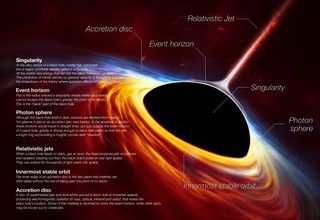
Black holes, on the other hand, have gravity so strong that not even light can escape. They are the most extreme states of matter, pulling in stars and even solar systems.
Studying neutron stars and black holes helps us understand star life cycles and their impact on the universe. Research into these objects gives us insights into binary star systems and element formation.
| Characteristic | Neutron Star | Black Hole |
|---|---|---|
| Composition | Composed almost entirely of neutrons | Extremely dense object with gravitational pull so strong that even light cannot escape |
| Size | Radius as small as 6 miles (10 kilometers) | Varies greatly, but can be extremely small |
| Mass | 1.4 times the mass of Earth | Varies, but can be several times the mass of the Sun |
| Rotation | The neutron star 4U 1820-30 spins 716 times per second | Varies, but can be extremely fast |
| Location | 4U 1820-30 is located 26,000 light-years from Earth | Can be found throughout the universe |
The formation of Neutron Stars and Black Holes shows the universe’s most extreme matter states. Studying these objects is key to understanding binary star systems and element creation.
Star Remnants and Their Impact on the Universe
The universe is shaped by the leftovers of once-bright stars. These include white dwarfs, neutron stars, and black holes. They are key to the universe’s structure, help create new stars and planets, and teach us about physics.
White dwarfs are the dense hearts of small stars. They let scientists study matter under extreme conditions. Neutron stars offer a peek into nuclear physics and the smallest matter. Black holes, the most mysterious and powerful, help us understand gravity and the universe’s beginnings.
 How do marine biologists contribute to the conservation of marine ecosystems?
Knowing how these star leftovers affect the universe is vital. They shape galaxy structures and help form new stars and planets. By studying them, we learn about the universe’s creation, from heavy elements to cosmic events.