

The Role of Soil Micromorphology in Archaeological Interpretation
Are you interested in archaeology? You might have heard about soil micromorphology. It’s a key method for studying ancient sites. By looking at sediments under a microscope, researchers learn a lot about the past.
The Archaeological Micromorphology Short Intensive course at UCL Institute of Archaeology is a great opportunity. It’s a 40-hour program for both new and experienced students. Led by experts like Manuel Arroyo-Kalin and Richard Macphail, it covers many topics. You’ll also get to study reference collections and get help with your research.
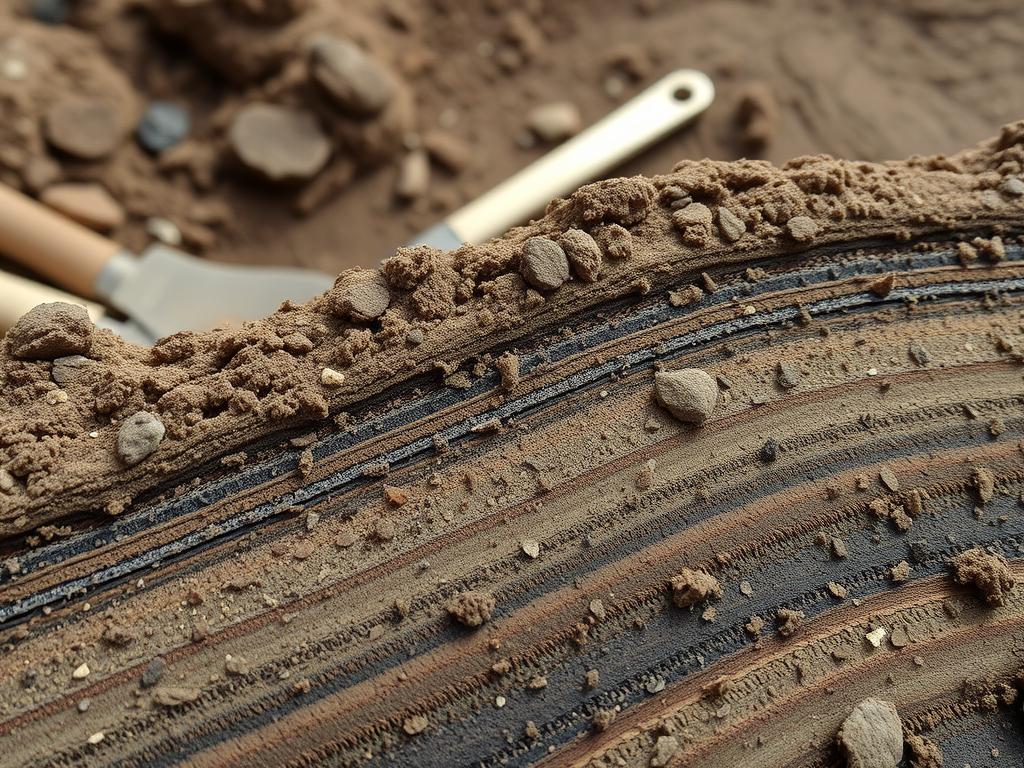
Soil micromorphology helps us understand ancient human activities and the environment. It’s changing how we study archaeology. This method lets us find information that was previously unknown.
Understanding Soil Micromorphology in Archaeology
Soil micromorphology is key to uncovering secrets at archaeological sites. It involves looking at soil thin sections under a microscope. This helps us understand how sites were formed, what humans did there, and how the environment changed over time.
The study of soil has come a long way. From simple descriptions to today’s advanced methods, it’s been an exciting journey.
Core Principles of Micromorphological Analysis
At the center of this analysis are soil thin sections. These are tiny slices of soil, preserved in resin. They show us a lot about the soil’s microscopic makeup and structure.
By looking at these sections under a microscope, archaeologists can spot signs of human activities. They can see things like charcoal, burned bones, and even ancient plants and animals.
Evolution of Soil Analysis Techniques
Soil micromorphology has made big strides in recent years. It started with simple soil descriptions but now uses advanced methods like digital documentation and image analysis. These new tools help archaeologists get more detailed information from soil samples.
This has changed how we understand past human-environment interactions. It’s a big leap forward in archaeological research.
Modern Applications in Archaeological Research
Today, micromorphological analysis is used in many archaeological studies. It helps us learn about hunter-gatherer lifestyles, farming practices, and how settlements were organized.
Looking at anthropogenic soils, like dark earths, gives us clues about how ancient societies managed their environment and resources. These methods are crucial for modern archaeological research. They help us uncover the complex stories hidden in the soil.
| Micromorphological Analysis | Soil Thin Sections | Anthropogenic Soils |
|---|---|---|
| The 2025 Archaeological Micromorphology Short Intensive course at the UCL Institute of Archaeology will cover various applications of soil micromorphology in archaeology. | Manuel Arroyo-Kalin and Richard Macphail, experts in the field, will teach the course, which includes topics like hunter-gatherer sediments, cultivation practices, and settlement morphology. | The analysis of anthropogenic soils, such as dark earths, provides insights into past human-environment interactions and resource management. |
Essential Tools and Methods for Soil Analysis
Exploring Soil Microfabrics, Pedofeatures, and Archaeological Sediments needs the right tools and careful work. As a soil micromorphology expert, you start with key tools.
The microscope is central to your work. It lets you see the tiny details of soil samples. With thin section prep gear, you can study the physical and chemical aspects of Soil Microfabrics and Pedofeatures. These are the basic parts of Archaeological Sediments.
But there’s more to do. Digital imaging systems are key for recording and saving your findings. They help capture the small details and patterns that might reveal past human activities.
- Microscopes: Unveiling the Microscopic World
- Thin Section Preparation: Unraveling the Soil’s Fabric
- Digital Imaging: Capturing the Essence of Soil Features
With these tools, you can start a detailed study of Soil Microfabrics, Pedofeatures, and Archaeological Sediments. From collecting samples to lab work and microscopic analysis, each step can reveal important info about the past.
As you explore soil micromorphology, you’ll see these tools and methods are more than just steps. They open up the complex stories in Archaeological Sediments. By getting good at these skills, you’ll help uncover the past and move forward in archaeological science.
What geophysical techniques are used in archaeological prospecting?Geoarchaeological Approaches to Site Investigation
Geoarchaeological methods are key to understanding archaeological sites. They use field observations, lab analysis, and data interpretation. These methods give us deep insights into site formation processes and how archaeological sediments are preserved.
Field Sampling Techniques
Field sampling is the first step in geoarchaeology. It involves collecting undisturbed soil samples carefully. These samples are then analyzed under a microscope through thin section preparation.
This process lets researchers see the tiny details of the sediments. It shows how natural and human-made processes have changed the site over time.
Laboratory Processing Methods
After collecting samples, the lab work begins. This includes preparing the samples for microscopic analysis. The samples are impregnated, cut, and ground to make thin sections.
By combining field work with lab analysis, researchers get a full picture of the site’s history. This helps them understand past human activities and the environment.
Data Interpretation Strategies
The last step is interpreting the data from field and lab work. Researchers look for signs of human and natural activities in the soil. This helps them understand how the site was formed.
By studying these signs, researchers learn about past human behaviors and land use. They also get a better picture of the site’s environmental context.
| Technique | Application | Insights Gained |
|---|---|---|
| X-ray Fluorescence (XRF) | Elemental analysis of submerged objects and features | Detailed stratigraphic information and insights into formation processes |
| Laser-Induced Breakdown Spectroscopy (LIBS) | Quantitative chemical analysis for environmental and archaeological studies | In-situ elemental composition analysis of submerged materials |
Archaeological Sediments and Their Stories
The study of archaeological sediments is key to understanding past human societies. It lets researchers explore the details of ancient landscape deposits. This way, they can learn about site formation, cultural practices, and long-term occupation.
Sediments from archaeological sites, like multilayered settlements, are full of information. By examining these sediments closely, researchers can figure out past environmental conditions and human activities. They can also see how landscapes have changed over time.
- Micromorphological analysis can uncover subtle details about the depositional and post-depositional processes that have shaped the archaeological record.
- Studying the composition, texture, and microstructure of sediments can provide clues about the intensity and duration of human occupation, as well as the nature of activities carried out in different parts of a site.
- Integration of soil micromorphology with other geoarchaeological techniques, such as geochemical analysis and stratigraphic investigation, further enhances our understanding of ancient landscapes and their evolution.
The stories in archaeological sediments can change how we see past human societies. By exploring these sediment archives, researchers can uncover the complex stories of ancient landscapes. This helps us understand the rich history of human societies.
Interpreting Ancient Human Activities Through Soil Features
The study of Anthropogenic Soils and Archaeological Sediments through Micromorphological Analysis offers a deep look into ancient lives. It shows us what people did, how they lived, and how they interacted with their environment. By studying soil at a microscopic level, researchers find clues about human behavior and culture.
Anthropogenic Soil Markers
Soil markers like charcoal, ash, and bone fragments tell us about human activities. These anthropogenic soil markers hint at burning, cooking, and tool-making. They help us understand ancient practices.
Cultural Layer Analysis
Looking at cultural layers helps us learn about a site’s past. These layers show how long a place was used, how waste was handled, and why it was left. By studying these layers, archaeologists can tell a site’s story.
Activity Area Identification
Micromorphological analysis helps find where people did specific tasks. Soil features linked to cooking, crafting, or farming show how ancient places were organized. This gives us a glimpse into daily life and social structures.
By using Anthropogenic Soils, Archaeological Sediments, and Micromorphological Analysis, archaeologists gain a deeper understanding of history. They uncover the complex stories of human activities and adaptations that shaped our world.
Site Formation Processes and Soil Development
Understanding site formation processes is key to correctly reading archaeological sites. Soil micromorphology offers deep insights into natural and human factors that shape sites. By studying pedofeatures like clay coatings, archaeologists learn about the site’s history and environment.
Underwater archaeology is growing, thanks to new tools and methods. On-site labs are becoming more common, helping divers analyze artifacts without harming the site. Tools like X-ray fluorescence (XRF) and laser-induced breakdown spectroscopy (LIBS) allow for quick analysis underwater.
How are geographic information systems (GIS) used in geoarchaeology?The Antikythera shipwreck excavation shows the power of on-site labs. They help identify materials and understand preservation. This has led to finding many artifacts, including the Antikythera Mechanism, a unique ancient device.
The study of pedogenic carbonate helps us understand past environments. For 40 years, stable isotopes have given clues about climate. In places like central Iran, where climate data is rare, these soil records are crucial for studying human history.
| Technique | Application | Significance |
|---|---|---|
| X-ray Fluorescence (XRF) | In situ analysis of elemental composition in marine archaeology | Enables divers to conduct real-time elemental analysis on submerged objects and features |
| Laser-induced Breakdown Spectroscopy (LIBS) | Analysis of elemental composition of aqueous solutions and submerged solids in marine archaeology | Provides quantitative chemical analysis for submerged archaeological materials |
| On-site Geoarchaeological Laboratories | Sediment characterization, preservation analysis, and material identification in shipwreck excavations (e.g., Antikythera shipwreck) | Facilitates in-depth understanding of archaeological contexts and recovery of diverse artifacts |
Soil micromorphology and other sciences are changing how we see site formation processes and past landscapes. By combining these fields, archaeologists uncover the stories in the soil. This gives us a deeper look into how humans and environments interacted in the past.
Advanced Techniques in Micromorphological Analysis
Micromorphological analysis has grown a lot in archaeological soil studies. It now uses new methods to learn more about the past. These include high-resolution thin section preparation, new microscopic analysis, and digital documentation. These tools change how we understand Soil Thin Sections, Micromorphological Analysis, and Archaeological Sediments.
Thin Section Preparation
Preparing soil thin sections is key in micromorphological analysis. It involves careful sampling, resin impregnation, and grinding. This makes it possible to see the soil’s tiny parts up close.
Microscopic Analysis Methods
New microscopic analysis techniques have been added. Now, scanning electron microscopy (SEM) is used to see the tiny details of Archaeological Sediments. This gives us a lot more information than before.
Digital Documentation Techniques
The digital world has changed Micromorphological Analysis too. Now, we have databases, image archives, and research platforms. These tools help manage data and let researchers work together from anywhere.
With these new methods, archaeologists and soil scientists can explore the Earth’s layers more deeply. They can learn about human history, site formation, and how people interacted with their environment.
Applications in Settlement and Landscape Archaeology
Soil micromorphology is a key tool in studying ancient landscapes. It helps researchers understand the past by analyzing sediments. This field reveals how people lived, used land, and affected their environments.
It’s especially useful in studying how ancient communities organized their spaces. By looking at sediments, researchers can see patterns that show how people lived and worked. This helps us understand their social and economic lives.
At a larger scale, it helps us see how environments changed over time. The sediment studies of the fluvial sediments at the Early Pleistocene site of El Kherba in northern Algeria show how environments changed 1.8 million years ago. This helps us understand how humans adapted to their environments.
| Technique | Application | Insights Gained |
|---|---|---|
| Spatial Analysis of Sediments | Settlement Archaeology | Site organization, activity areas, land use practices |
| Landscape-scale Micromorphology | Landscape Archaeology | Environmental changes, human-environment interactions |
Soil micromorphology works well with other sciences like stratigraphy and geochronology. Together, they give us a deeper look into Ancient Landscapes and human-environment relationships. As this field grows, we’ll learn more about the past and how people lived.
Integration with Other Archaeological Sciences
Soil micromorphology is often used with other sciences in archaeology. Geoarchaeology mixes micromorphology with other methods to understand site formation. This helps us learn more about the past.
The study of archaeological sediments gets better with ancient DNA analysis. It gives us clues about past biodiversity and human populations. This teamwork helps us understand the past better.
Soil micromorphology works well with other sciences. It helps us understand culture, environment, and behavior in the past. This teamwork makes our understanding of the past more detailed and accurate.
Soil micromorphology is great because it works with many sciences, like geoarchaeology and ancient DNA. This teamwork helps us see how humans and their environments interacted. It makes our picture of the past more complete and interesting.
Future Directions in Archaeological Soil Studies
The field of Soil Micromorphology in Archaeology is growing fast. Researchers are looking into new areas that will help us learn more about the past. They are using better microscopy, digital tools, and big data to make big strides in Geoarchaeology and Archaeological Sediments analysis.
Understanding Site Formation Processes: A Geoarchaeological PerspectiveNew methods are coming up that let us see soil details better than ever before. Machine learning could make analyzing soil easier and faster. Also, big databases and team projects will help us compare findings from different places.
The future is bright for Soil Micromorphology in Archaeology. It will blend with other sciences like geochemistry and remote sensing. This will give us a deeper look at how sites were formed, how people lived with their environment, and how societies changed over time. With these new tools, we can uncover the secrets in the soil and shed light on human history.
