

The Oldest Rocks on Earth: Tracing Earth’s History
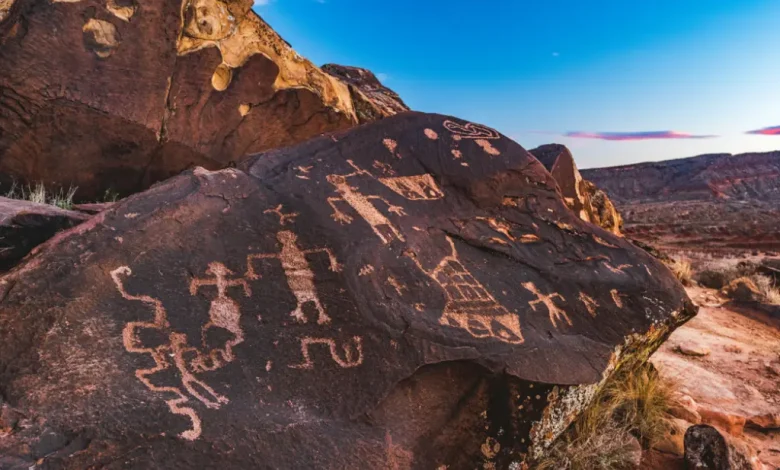
The Earth’s surface holds many secrets about its past, but few are as profound as those contained within the oldest rocks on Earth. These rocks are not just mineral formations; they are time capsules that help scientists trace the origins and evolution of our planet.
Understanding these ancient rocks offers insights into early Earth’s atmosphere, crust formation, and even the dawn of life. This article explores where these rocks are found, what makes them unique, and why they are essential for piecing together Earth’s geological history.
How Old Are the Oldest Rocks on Earth?
The oldest rocks on Earth are estimated to be around 4 billion years old. However, determining their exact age requires precise dating techniques. Scientists use radiometric dating, which measures the decay of radioactive isotopes like Uranium-238 into Lead-206. By comparing the ratio of these isotopes, scientists can estimate when a rock crystallized. These techniques have led to the discovery of rocks as old as 4.03 billion years, found in Canada’s Acasta Gneiss, making it one of the oldest known rock formations on Earth.
 Earth’s Atmospheric Layers: From Troposphere to Exosphere
 Where Are the Oldest Rocks Found?
Ancient rocks are rare, as the Earth’s surface constantly changes due to erosion, tectonic activity, and volcanic processes. Nonetheless, some regions have preserved ancient crustal fragments. Key locations of the oldest rocks include:
- Acasta Gneiss, Canada: Dating back approximately 4.03 billion years, this formation in Canada’s Northwest Territories contains some of Earth’s earliest crust.
- Jack Hills, Australia: Home to zircon crystals that are estimated to be up to 4.4 billion years old. These crystals provide indirect evidence of Earth’s early crust.
- Isua Greenstone Belt, Greenland: Rocks here are around 3.7 to 3.8 billion years old, offering evidence of early Earth’s volcanic and sedimentary processes.
What Can These Rocks Tell Us?
Studying the oldest rocks on Earth can answer fundamental questions about our planet’s early environment. Here are some of the key insights:
- Formation of the Earth’s Crust: Rocks such as those in Acasta Gneiss and Isua Greenstone show early crust formation, providing evidence of tectonic activity as early as 4 billion years ago.
- Earth’s Early Atmosphere: By analyzing isotopic ratios within these rocks, scientists can infer the composition of Earth’s primordial atmosphere, which was likely rich in gases like methane, ammonia, and water vapor.
- Potential for Early Life: Some of these rocks contain traces of carbon, a possible indicator of biological activity. While controversial, this evidence suggests that life may have existed as early as 3.8 billion years ago.
The Methods Used to Date Ancient Rocks
To date these ancient rocks accurately, scientists use a combination of dating methods:
 Auroras: Earth’s Magical Light Show in the Sky
 - Uranium-Lead Dating: The decay of
Uranium-238toLead-206with a half-life of about 4.47 billion years allows geologists to date very old rocks accurately. - Potassium-Argon Dating: This method is useful for dating volcanic rock formations, as it measures the decay of
Potassium-40toArgon-40, with a half-life of 1.25 billion years. - Isotopic Analysis: For rocks that are not suitable for radiometric dating, isotopic analysis of elements like carbon can reveal indirect evidence of early life forms.
Implications of Studying Ancient Rocks
The study of the oldest rocks on Earth goes beyond geology. It offers a glimpse into the early conditions that shaped our planet. These rocks help us understand:
- Planetary Formation Processes: Earth’s oldest rocks provide a comparison with other planetary bodies, helping scientists to model the evolution of rocky planets.
- Climate and Atmosphere Evolution: Traces of gases trapped in ancient rocks allow for models of early atmospheric evolution, shedding light on climate conditions that existed billions of years ago.
- The Origin of Life: Ancient rocks with carbon isotopic signatures hint at potential early life forms, raising questions about how and when life began on Earth.
Challenges in Studying the Oldest Rocks
Studying the Earth’s oldest rocks comes with significant challenges:
- Erosion and Alteration: Many of Earth’s ancient rocks have been eroded or metamorphosed, altering their original composition and making dating more difficult.
- Contamination: Modern contamination can affect isotopic readings, especially in rocks that have been exposed to the surface for long periods.
- Limited Accessibility: Some of these ancient formations are located in remote, harsh environments, making them difficult to access for research purposes.
Conclusion
Uncovering the secrets of the oldest rocks on Earth offers a unique perspective on our planet’s past. By analyzing their structure and composition, scientists can trace the geological and environmental conditions that prevailed billions of years ago. From clues about Earth’s early atmosphere to potential evidence of primitive life, these rocks are critical to our understanding of planetary evolution. As technology advances, further discoveries about these ancient rocks will continue to shed light on Earth’s remarkable history.
 Polar Shift Phenomena: How Earth’s Magnetic Poles Flip


