
Earth’s Atmospheric Layers: From Troposphere to Exosphere
Earth atmospheric layers
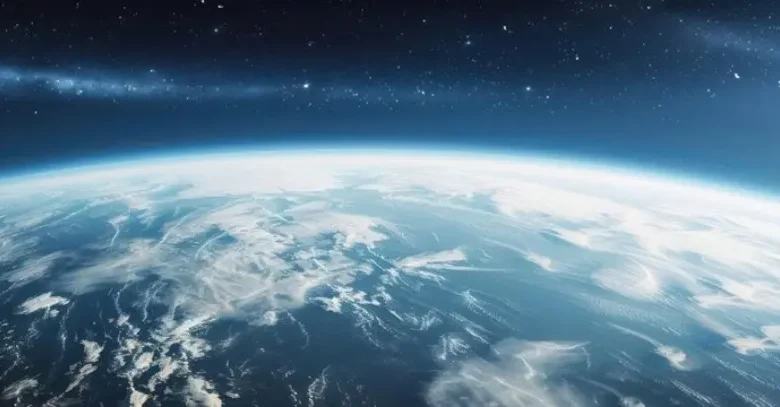
The Earth’s atmospheric layers are an intricate system of gases and particles that protect life, moderate climate, and enable various essential processes. This unique atmosphere consists of five distinct layers, each with its specific characteristics, role, and composition. Understanding these layers, from the dense troposphere to the distant exosphere, reveals the vital balance and function of our atmosphere.
Troposphere: The Lowest Layer
The troposphere is the lowest atmospheric layer, extending from the Earth’s surface up to about 8-15 kilometers. It is where almost all weather events occur, including clouds, rain, and storms, and is therefore often referred to as the “weather layer.” In this layer, temperature decreases with altitude at an average rate of -6.5°C per kilometer. The troposphere contains approximately 75% of the atmosphere’s total mass and is composed primarily of nitrogen, oxygen, and trace amounts of carbon dioxide, water vapor, and other gases.
- Average Thickness: 8-15 km
- Main Components: Nitrogen, oxygen, and water vapor
- Temperature Gradient: Decreases with altitude
- Weather: All weather phenomena occur in this layer
Stratosphere: The Ozone Layer
Above the troposphere lies the stratosphere, extending from approximately 15 km to 50 km above the Earth’s surface. This layer is known for the presence of the ozone layer, which absorbs and scatters the Sun’s ultraviolet (UV) radiation, protecting life below.
 Auroras: Earth’s Magical Light Show in the Sky
Unlike the troposphere, temperature in the stratosphere increases with altitude, due to ozone absorption of UV radiation. This layer is relatively stable, and its lack of weather phenomena allows for smoother conditions for high-altitude flights.
- Average Thickness: 15-50 km
- Main Component: Ozone
- Temperature Gradient: Increases with altitude
- Significance: UV radiation absorption
Mesosphere: The Coldest Layer
The mesosphere spans from about 50 km to 85 km above the Earth’s surface. Temperatures in this layer decrease dramatically with altitude, reaching lows of around -90°C, making it the coldest layer in the Earth’s atmosphere. The mesosphere also protects Earth from meteors, as most meteoroids burn up due to increased friction at these altitudes, resulting in visible meteor trails. This layer is less dense and primarily composed of oxygen and nitrogen molecules.
- Average Thickness: 50-85 km
- Temperature: Coldest layer, with lows around -90°C
- Significance: Meteors burn up in this layer
Thermosphere: The High-Temperature Layer
The thermosphere extends from approximately 85 km to 600 km and is characterized by extremely high temperatures, which can rise to up to 2,500°C or more. However, despite these high temperatures, the air density is so low that it would feel cold to human skin.
 Polar Shift Phenomena: How Earth’s Magnetic Poles Flip
The thermosphere contains the ionosphere, a region filled with charged particles that enable radio communication by reflecting radio waves back to Earth. This layer is also where auroras, like the Northern and Southern Lights, occur due to interactions between solar particles and atmospheric gases.
- Average Thickness: 85-600 km
- Temperature: Extremely high, but low density
- Key Feature: Ionosphere supports radio communication
- Significance: Location of auroras
Exosphere: The Outermost Layer
The exosphere is the uppermost layer of Earth’s atmosphere, extending from about 600 km up to 10,000 km, where it gradually transitions into outer space. This layer is extremely thin, with molecules so sparse that they rarely collide. The exosphere contains mostly hydrogen and helium atoms, which escape into space over time. Due to its vast distance from the surface, it essentially marks the boundary between Earth’s atmosphere and outer space.
- Average Thickness: 600-10,000 km
- Main Components: Hydrogen and helium
- Significance: Gradual transition to outer space
Importance of Understanding Earth’s Atmospheric Layers
Understanding the Earth’s atmospheric layers provides insights into climate regulation, weather patterns, and life sustainability. Each layer has a unique function, from protecting against harmful radiation in the stratosphere to supporting communication in the thermosphere. As we explore the atmosphere’s complexities, we deepen our knowledge of Earth’s environment and the delicate balance that makes life possible on our planet.
 Oldest Life Forms on Earth: Tracing the Origins of Life


