
Autonomous Robots: The Future of Transportation and Logistics

The development of autonomous robots is redefining the future of transportation and logistics. These advanced machines leverage sophisticated algorithms, sensors, and AI to navigate, process, and execute complex tasks independently. As they become increasingly viable for real-world applications, autonomous robots have the potential to streamline logistics, reduce costs, and enhance safety in various industries.
Understanding Autonomous Robots
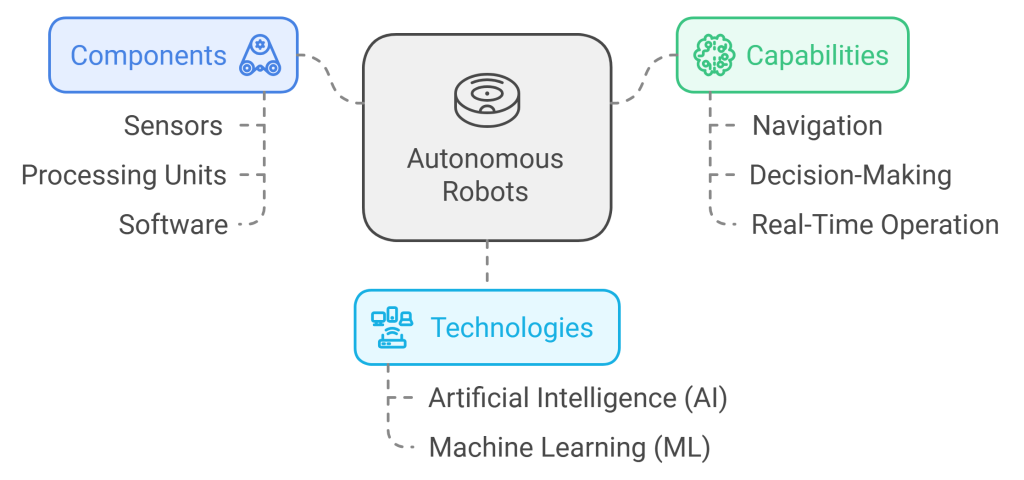
An autonomous robot is a machine capable of performing tasks with minimal human intervention by utilizing advanced software, machine learning (ML), and artificial intelligence (AI) algorithms. These robots are equipped with sensors, cameras, and LIDAR technology, allowing them to gather data from their surroundings, process this information, and make real-time decisions.
Core Components of Autonomous Robots
- Sensors and Perception Systems: These components gather environmental data. LIDAR, RADAR, and camera systems enable autonomous robots to create a 3D model of their environment.
- Control Systems: Autonomous robots use control systems to process data and execute actions. Path planning algorithms calculate optimal routes, while obstacle detection helps them avoid collisions.
- Software Algorithms and AI: Machine learning and AI allow these robots to learn from data, improve over time, and make decisions in dynamic environments.
- Energy Source and Battery Management: Energy-efficient power sources and advanced battery management systems ensure these robots can operate for extended periods without recharging.
Applications in Transportation and Logistics
The integration of autonomous robots in transportation and logistics is driving transformative changes across industries. Below are some key areas where they are making a significant impact:
 Human-Robot Interaction: Developments in Communication and Collaboration
Last-Mile Delivery
Autonomous delivery robots are becoming more common in urban environments, providing efficient last-mile delivery for companies like Amazon and UPS. These robots can navigate sidewalks, use GPS for navigation, and rely on cameras and sensors to detect obstacles. Benefits include reduced delivery times and lower carbon emissions.
Warehouse Automation
In logistics centers and warehouses, autonomous robots streamline processes such as inventory management, sorting, and packing. Amazon’s warehouses, for example, utilize robots to transport goods between storage and packing stations, reducing labor costs and minimizing human error.
Autonomous Trucks
Self-driving trucks equipped with Level 4 automation (fully autonomous on highways) are being tested for long-haul transportation. Autonomous trucks, with advanced route optimization and platooning, reduce fuel consumption, increase efficiency, and address driver shortages in the trucking industry.
 Robotics in Medicine: Advances in Assisted Surgery and Rehabilitation
Port and Terminal Operations
Autonomous robots play an essential role in port and terminal operations, performing container transportation and handling. With precision navigation, they can transport cargo with minimal delay, helping optimize throughput and reduce turnaround times for freight carriers.
Key Technologies Powering Autonomous Robots
The following technologies are integral to the capabilities of autonomous robots:
Sensors and Perception Technologies
- LIDAR (Light Detection and Ranging): This technology uses lasers to measure distances and create detailed maps.
- RADAR: Radar sensors provide object detection by bouncing radio waves off objects, useful in low-visibility environments.
- Computer Vision: Cameras paired with machine learning algorithms enable robots to interpret visual data and recognize objects.
Machine Learning and AI Algorithms
- Path Planning Algorithms: Used to find the most efficient route from point “A” to point “B.” Popular algorithms include A* (A-star) and Dijkstra’s algorithm.
- Obstacle Avoidance: Autonomous robots use algorithms to detect obstacles and adjust their course. Techniques like Simultaneous Localization and Mapping (SLAM) allow robots to map environments while navigating.
- Reinforcement Learning (RL): RL algorithms train robots to make decisions through trial and error, optimizing performance over time based on feedback.
Control Systems and Communication
Control systems are essential for motor control, trajectory tracking, and communication between robots and centralized control hubs. 5G technology and Internet of Things (IoT) integration enable faster data transmission and remote control capabilities, essential for large-scale logistics operations.
 Developing Educational Robots: Promoting STEM Learning from an Early Age
Advantages and Challenges of Autonomous Robots in Logistics
Advantages
- Efficiency and Cost Reduction: Autonomous robots reduce the need for human labor, resulting in cost savings and faster operation.
- Increased Safety: Robots can operate in hazardous conditions, reducing the risk of injuries.
- Scalability: These robots can work around the clock, providing a scalable solution for logistics demands.
Challenges
- Regulatory and Safety Concerns: The widespread adoption of autonomous robots requires compliance with regulatory standards and rigorous safety testing.
- High Initial Costs: Development and deployment of autonomous robots are capital-intensive, which may limit accessibility for smaller businesses.
- Technical Limitations: Obstacles like data processing limitations, energy requirements, and navigation in unpredictable environments remain challenging.
The Future of Autonomous Robots in Transportation and Logistics
The future of autonomous robots in transportation and logistics looks promising, with advancements in AI and robotics technology continuously pushing boundaries. Some future trends include:
- Integration with Blockchain: Blockchain technology could improve tracking and security of logistics, enabling robots to autonomously verify shipments and track goods.
- Improved Energy Management: The development of more efficient batteries, wireless charging systems, and alternative energy sources will extend the operational time of autonomous robots.
- Collaborative Robotics (Co-bots): Autonomous robots will increasingly collaborate with humans in hybrid workplaces, combining the strengths of both to enhance productivity.
- Swarm Robotics: Inspired by insect behavior, multiple robots could work in unison to accomplish tasks more efficiently, making operations more flexible and resilient to individual robot failures.
Autonomous robots represent a fundamental shift in the landscape of transportation and logistics, offering enhanced efficiency, safety, and flexibility across various industries. Although challenges remain, advancements in AI, machine learning, and robotics technology are enabling these robots to reach new levels of autonomy and functionality. As these technologies mature, autonomous robots will become an integral part of logistics and transportation infrastructure, transforming the industry and shaping the future of global commerce.


