
Nuclear Energy: Benefits and Risks of Nuclear Fission

Nuclear energy is a topic that sparks a lot of debate. It has the potential to be a reliable and green source of electricity. But, it also comes with risks and challenges. We will look at both sides of nuclear power, covering its benefits and drawbacks.
Nuclear energy is known for its reliability and efficiency. For example, France gets over 70% of its electricity from nuclear power. This helps keep France’s carbon footprint low, which is good for fighting climate change. Also, nuclear plants emit very little CO2, much less than coal or natural gas.
But, the nuclear industry has big challenges too. Managing radioactive waste and preventing accidents are major issues. For example, Sweden’s Forsmark deep storage is a model for safe waste storage. Even though nuclear energy is very safe, accidents like Chernobyl or Fukushima can have huge, lasting effects.
What is Nuclear Energy?
Nuclear energy comes from nuclear fission or fusion reactions. Fission splits heavy atoms like uranium, while fusion combines light atoms like hydrogen. Nuclear energy is a clean and reliable way to make electricity for decades.
Nuclear power plants use heat from fission to make electricity. First, they mine and enrich nuclear fuel, like uranium. Then, this fuel heats a reactor core, which makes steam. This steam turns turbines to generate electricity.
| Key Facts about Nuclear Energy | Details |
|---|---|
| Current Nuclear Reactors Worldwide | More than 400 nuclear power reactors using fission technology are currently operational worldwide, with the majority being light water reactors. |
| Nuclear Thermal Propulsion Advantages |
|
| Nuclear Thermal Propulsion Development | Between 1955 and 1973, NASA, General Electric, and Argonne National Laboratories developed and ground-tested 20 nuclear thermal propulsion engines. |
| DRACO Program for Nuclear Thermal Propulsion | The DRACO program by NASA and DARPA plans to launch a nuclear thermal propulsion engine using high-assay, low-enriched uranium (HALEU) fuel in 2027, developed in collaboration with Lockheed Martin and BWX Technologies. |
The future of nuclear energy looks bright, especially for space travel. Nuclear thermal propulsion could make trips to Mars much faster. But, the industry still faces challenges like waste management and public trust.
How Nuclear Power Plants Work
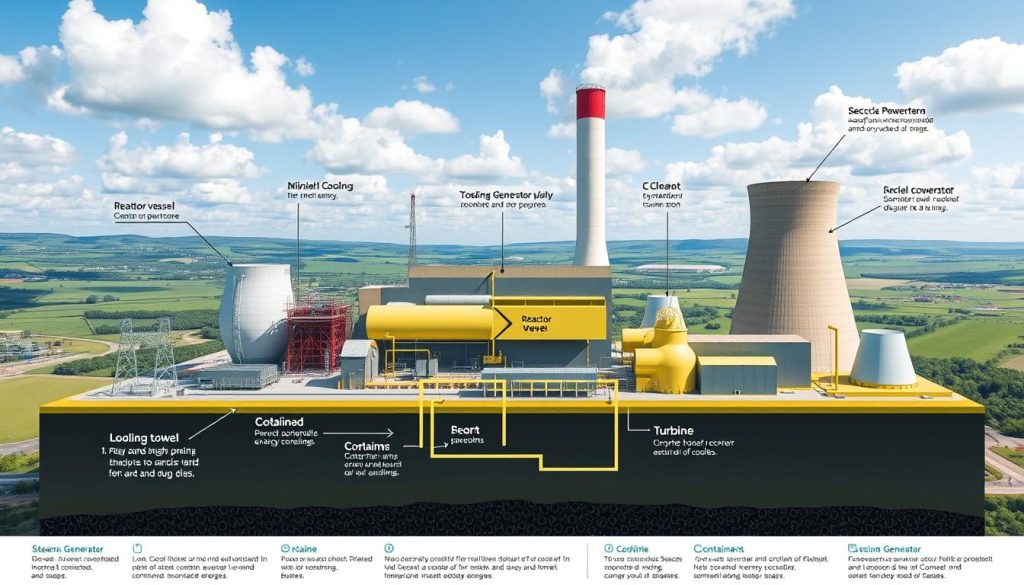
Nuclear power plants are complex facilities that generate electricity through nuclear fission. At their heart is a nuclear reactor. This reactor houses the nuclear fuel that produces the heat needed for electricity.
The process starts with loading uranium or plutonium into the reactor core. When these atoms split, they release a lot of heat energy. This heat boils water, creating steam. The steam turns turbines and generators, making electricity.
The key parts of a nuclear power plant work together. They convert the heat from nuclear fission into electricity. These parts include:
- Reactor core: where the nuclear fuel is housed and the fission process happens
- Coolant system: pipes and pumps that carry water or coolant through the reactor core
- Steam turbine: a machine that turns the steam’s thermal energy into mechanical energy
- Generator: a device that turns the mechanical energy into electrical energy
Understanding nuclear power plants shows us the advanced technology behind nuclear power. It’s a reliable source of electricity generation. It has a big role in the future of nuclear reactors energy.
Advantages of Nuclear Energy
Nuclear energy is a reliable and efficient way to make electricity. It has a low carbon footprint compared to fossil fuels. This makes it a good choice for fighting climate change and reducing harm to the environment.
Another big plus is its high energy density. This means a small amount of fuel can make a lot of electricity. It’s efficient and doesn’t take up much space.
- Nuclear energy is a reliable and consistent source of electricity, as nuclear power plants can operate continuously without the intermittency issues often associated with renewable energy sources like solar or wind.
- The high energy density of nuclear fuel means that a small amount can produce a significant amount of power, making nuclear energy a highly efficient option for electricity generation.
- Nuclear power plants have low greenhouse gas emissions, making them an environmentally friendly choice compared to fossil fuel-based energy sources.
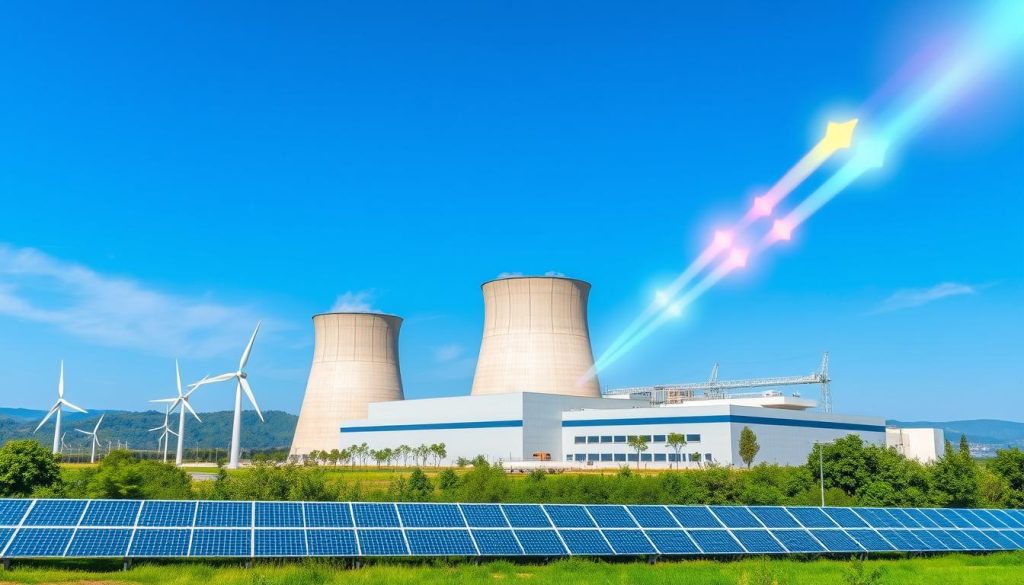
Nuclear energy is reliable, efficient, and good for the environment. It’s a strong contender for meeting our energy needs and fighting climate change. As we look for sustainable energy, nuclear power becomes more appealing for the future.
Disadvantages of Nuclear Energy
Nuclear energy has many benefits, but it also has some big drawbacks. One major issue is the radioactive waste it produces. This waste is very dangerous and needs to be stored and disposed of safely and securely. Doing this is hard and can be very expensive.
Another big problem is the potential for catastrophic accidents at nuclear plants. The Chernobyl and Fukushima disasters are examples of what can go wrong. These accidents can harm the environment and human health for a long time.
The high initial construction costs of nuclear plants are also a big issue. Building a new nuclear facility costs a lot of money upfront. This makes it harder for nuclear energy to compete with cheaper ways to make electricity, like natural gas or renewable energy.
- Radioactive waste management: Safely storing and disposing of the highly hazardous waste produced by nuclear power plants is a complex and expensive process.
- Potential for accidents: The risk of catastrophic accidents, such as Chernobyl and Fukushima, can have severe environmental and health consequences.
- High construction costs: The initial investment required to build a nuclear power plant is significantly higher than other electricity generation methods.
| Disadvantage | Description | Impact |
|---|---|---|
| Radioactive Waste | Safe storage and disposal of nuclear waste is technologically challenging and financially burdensome. | Requires specialized facilities and long-term management to prevent environmental contamination and health risks. |
| Nuclear Accidents | The potential for catastrophic accidents at nuclear facilities, such as Chernobyl and Fukushima. | Can have devastating environmental and health consequences that can last for decades. |
| High Construction Costs | Significant upfront investment required to build a nuclear power plant. | Makes nuclear energy less economically viable compared to other electricity generation methods. |
Nuclear Fuel Cycle
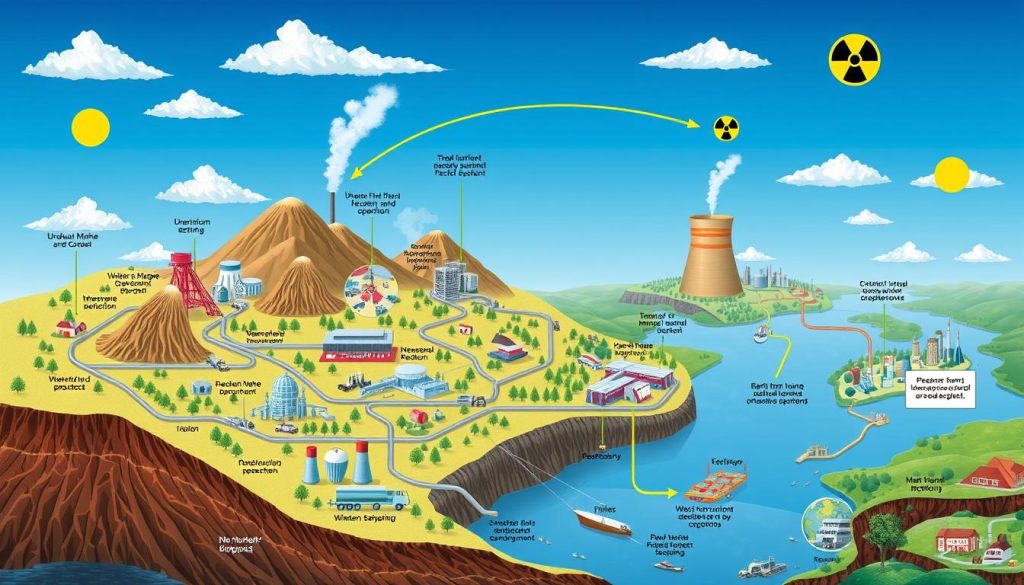
The nuclear fuel cycle is key to nuclear energy. It involves several steps to turn natural resources into fuel. First, uranium ore is mined and milled. Then, the uranium is enriched to boost the U-235 concentration.
After enrichment, the uranium is made into fuel assemblies. These are loaded into reactors. In reactors, nuclear fission releases energy, which is used to make electricity.
Uranium Mining and Enrichment
Uranium mining and milling kick off the fuel cycle. India has the world’s largest thorium reserves, about 846,000 tonnes, in Monazite sands. The extracted uranium is then enriched.
This enrichment process increases the U-235 concentration. This makes the uranium ready for use in reactors.
Fuel Fabrication and Reactor Use
Enriched uranium is turned into fuel assemblies. These are then put into reactors. In India, the Kalpakkam Prototype Fast Breeder Reactor (PFBR) uses uranium-plutonium Mixed Oxide (MOX) fuel.
The PFBR also uses liquid sodium as a coolant. It has a 500 MWe capacity. The construction costs have risen from INR 3,492 crore to INR 7,670 crore by 2023.
Spent Fuel Management
Spent fuel needs safe storage and disposal or reprocessing. Thorium-based fuel reprocessing is still in its early stages. More research is needed.
India aims to commercialize thorium-based reactors and build more Fast Breeder Reactors (FBRs). This is crucial for energy security and reducing carbon emissions.
| Key Aspects | Details |
|---|---|
| Uranium Mining and Reserves | India possesses the largest thorium reserves globally, estimated at around 846,000 tonnes, primarily found in Monazite sands. |
| Nuclear Reactor Technology | The Kalpakkam Prototype Fast Breeder Reactor (PFBR) uses a uranium-plutonium Mixed Oxide (MOX) fuel and employs liquid sodium as a coolant, with a capacity of 500 MWe. |
| Spent Fuel Management | The development of spent fuel reprocessing of thorium-based fuel is still in the early stages, and further research and development are required. |
| Future Developments | The commercialization of thorium-based nuclear reactors and the establishment of more Fast Breeder Reactors (FBRs) in India are crucial for achieving energy security and decarbonization. |
 Chemistry in Everyday Life: Applications and Examples
Nuclear Safety Measures
Keeping nuclear power plants safe is a top priority. These plants use many safety systems to lower risks and protect people. They have strong containment, emergency cooling, and extra safety features to stop and fix accidents.
Government agencies like the Nuclear Regulatory Commission (NRC) in the U.S. watch over these plants closely. They make sure plants follow strict safety rules. This includes regular checks, enforcing rules, and setting up safety plans.
Scientists and engineers are always trying to make nuclear tech safer and more reliable. They work on better reactor safety systems and emergency plans. Their goal is to make nuclear power safer and reduce accident risks.
- Multiple layers of containment to prevent the release of radioactive materials
- Emergency core cooling systems to prevent reactor core meltdown
- Redundant safety features to ensure reliable and fail-safe operation
- Strict regulatory oversight and enforcement of safety standards
- Ongoing research and development to improve nuclear reactor safety systems
The nuclear industry focuses on nuclear safety with strong measures and new ideas. This way, they aim to offer safe and reliable electricity while reducing nuclear regulation risks.

Nuclear Waste Disposal
Managing and disposing of radioactive waste from nuclear power plants is a big challenge. It needs strong solutions to keep people and the environment safe. There are two main ways to handle nuclear waste:
Deep Geological Repositories
Deep geological repositories are a promising solution. They bury radioactive waste hundreds of meters underground in stable rocks like granite or salt. These places are made to keep the waste away from living things for thousands of years, letting the radioactivity fade.
Interim Storage Facilities
For now, spent nuclear fuel is stored at power plants in dry casks or cooling pools. These spots are a temporary fix until a permanent solution is found. Scientists are also working on making nuclear waste smaller and less radioactive, like through reprocessing and new reactor designs.
Handling nuclear waste well is key for nuclear energy to be safe and sustainable. Strong storage and disposal methods help the nuclear industry use power safely and reduce risks from radioactive waste.
| Location | Waste Management Challenges | Regulatory Oversight |
|---|---|---|
| Sellafield, England |
|
|
| United States |
|
|

Managing nuclear waste well is crucial for nuclear energy to grow sustainably. By using strong storage and disposal methods, the nuclear industry can use this energy safely and responsibly.
The Future of Nuclear Energy
The future of nuclear energy is both promising and challenging. It has the potential to help fight climate change and meet energy needs. But, it faces obstacles like public doubts, rules, and the need for new tech.
New nuclear tech, like small reactors and fusion, could make energy safer and cleaner. These nuclear technologies might change how we see nuclear power development and energy’s future.
- Small modular reactors (SMRs) are smaller, cheaper, and faster to build. They could solve problems with big nuclear plants.
- Gen IV reactors aim to be safer, waste less, and work better. They could start a new era of nuclear power.
- Fusion power is still being worked on but could be limitless and clean. It could change the future of nuclear energy a lot.
More research, money, and support from policies are key for nuclear energy‘s future. We must also tackle public fears and rules to move forward.
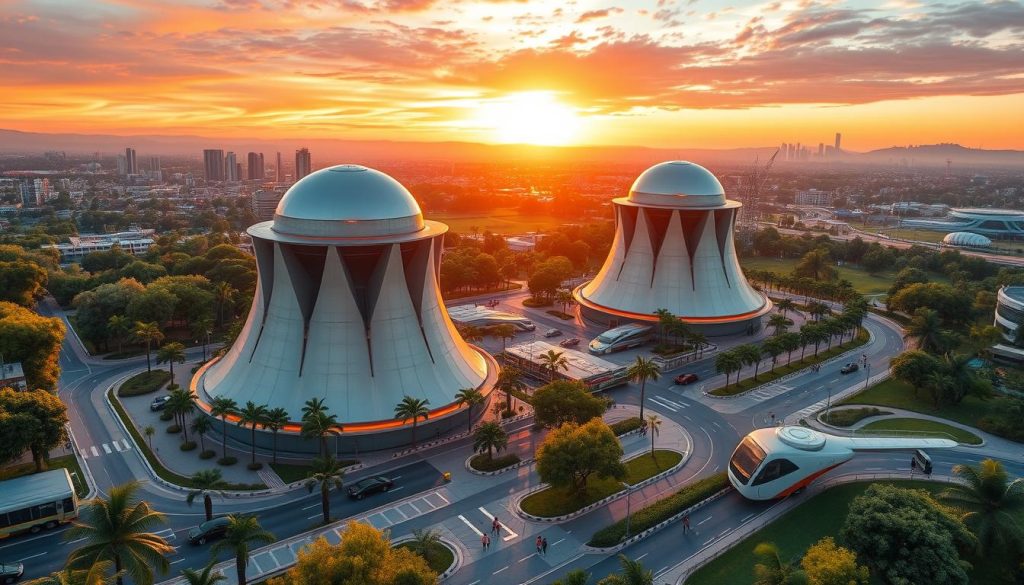
The future of nuclear energy looks set for big changes. It could be a big help in fighting climate change and meeting energy needs. With advanced nuclear technologies and tackling challenges, the future of nuclear power could be very bright.
Nuclear Energy in the United States
The United States is a big player in nuclear energy worldwide. It has a lot of US nuclear power plants that make a big part of the country’s electricity. But, the US nuclear industry has faced big challenges. These include old plants shutting down and finding it hard to build new ones.
The US nuclear energy policy and rules, along with what people think, really matter for nuclear energy’s future here.
Managing radioactive waste is a big problem for the US nuclear industry. The country has about 100,000 tons (90,000 metric tons) of spent nuclear fuel. This amount grows by over 2,000 tons every year. Plans to build permanent storage sites, like one in Texas, have run into trouble. This shows the hard work needed to solve the nuclear waste problem.
Even with these problems, the US government sees nuclear power as important for cutting down greenhouse gas emissions and fighting climate change. There are ongoing efforts to make nuclear energy better and safer. Also, there are plans to teach people more about nuclear power. These efforts will help decide the future of nuclear energy in the US.

The US nuclear industry is changing, with new technologies like small modular reactors and advanced designs. As the world looks for cleaner energy, the US’s nuclear energy future will depend on solving its problems. It also depends on how people see the risks and benefits of nuclear power.
Nuclear Nonproliferation Efforts
Nuclear nonproliferation is key to stopping nuclear weapons spread. It involves international agreements and strict monitoring. The goal is to use nuclear tech for peace and stop weapons development.
But, the world faces big challenges in stopping nuclear weapons spread. Russia’s information influence activities (IIA) against nonproliferation have intensified in recent years. Russia uses tricks like fake news to harm nonproliferation efforts.
Russia’s actions in Ukraine show its aim to weaken nonproliferation efforts. It has used fake claims to harm the US and Ukraine. This is part of Russia’s long history of spreading false info.
The future of stopping nuclear weapons spread is uncertain. Countries like Iran, Russia, and China are big challenges. Iran’s attack on Israel and the US’s old nuclear weapons show the need for action.
We must keep nuclear tech safe and use it wisely. The US needs to update its nuclear strategy to face threats from Iran, Russia, and China. This is crucial for the future.
| Country | Nuclear Proliferation Concerns | Nonproliferation Efforts |
|---|---|---|
| Russia | Intensified information influence activities (IIA) against nonproliferation, including disinformation, misinformation, and propaganda | Participating in international agreements like the Nuclear Non-Proliferation Treaty, but undermining nonproliferation norms and regimes through information warfare tactics |
| Iran | Conducted large-scale military operations, like Operation True Promise 2, raising concerns about nuclear proliferation | Signatory to the Nuclear Non-Proliferation Treaty, but accused of pursuing nuclear weapons development |
| United States | Aging nuclear warheads necessitate modernization efforts to counter threats from countries like Russia and China | Leading global nonproliferation efforts, but facing challenges in reshaping its nuclear posture to address evolving threats |
Public Perception and Acceptance
The way people see nuclear energy greatly affects its future. Some see it as a clean and reliable source of power. Yet, others worry about accidents, radioactive waste, and the chance of nuclear weapons.
 Heisenberg’s Uncertainty Principle: What Does It Really Mean?
What people watch on TV, hear in politics, and experience personally shapes their views. This makes nuclear energy a hot topic of debate.
Recent polls show mixed feelings about nuclear energy. A recent survey found that 49% of people support it, while 47% are against. This shows the ongoing debate about whether nuclear energy is right for our energy needs.
To win more people over, nuclear energy needs to be more open, safe, and green. By tackling these issues and talking more with the public, the industry can clear up misunderstandings. This could help build trust in nuclear power.
| Indicator | Value |
|---|---|
| Public support for nuclear energy | 49% |
| Public opposition to nuclear energy | 47% |
| Decrease in dangerous incidents of trains passing red signals | 51% (from 593 in 1999-2000 to 287 in the year ending March) |
The public’s view of nuclear energy is key to its future. By focusing on safety, being more open, and talking more with people, nuclear energy can gain trust. This could help it play a bigger part in the world’s energy mix.

Nuclear Energy and Climate Change
Nuclear energy can help fight climate change by reducing greenhouse gas emissions. It’s a low-carbon way to make electricity, unlike fossil fuels. This makes nuclear power a key part of a sustainable energy mix.
But, the nuclear industry faces challenges like managing nuclear waste and winning public trust. Overcoming these hurdles is essential for nuclear energy to be a real climate solution.
The Role of Nuclear Power in Emissions Reduction
Nuclear power is clean and efficient, producing virtually no greenhouse gas emissions when it runs. It’s much better for the environment than fossil fuel plants. This makes nuclear reactors a strong ally in the battle against climate change.
- Studies show nuclear energy is key to meeting the Paris Agreement’s goals. This includes keeping global warming under 2°C.
- The International Energy Agency (IEA) says nuclear power is crucial for reaching net-zero emissions by 2050. They also mention renewable energy, energy efficiency, and carbon capture.
- Countries like France have cut their carbon emissions a lot. They do this by using a lot of nuclear power, which makes up about 70% of their electricity.
The world needs to keep working on climate change. Nuclear energy’s role in cutting emissions is something to think about for leaders and energy experts.
Economics of Nuclear Power
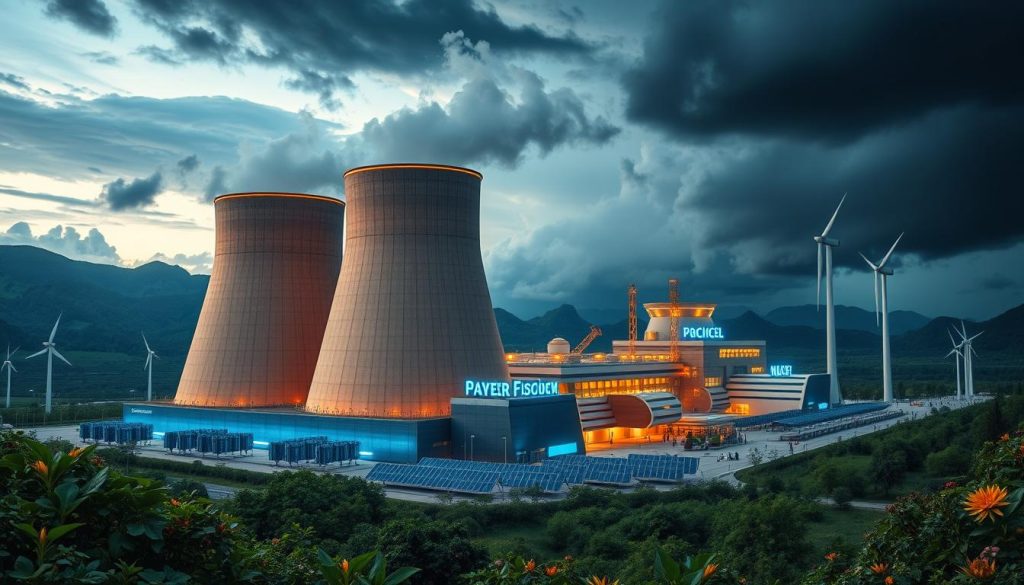
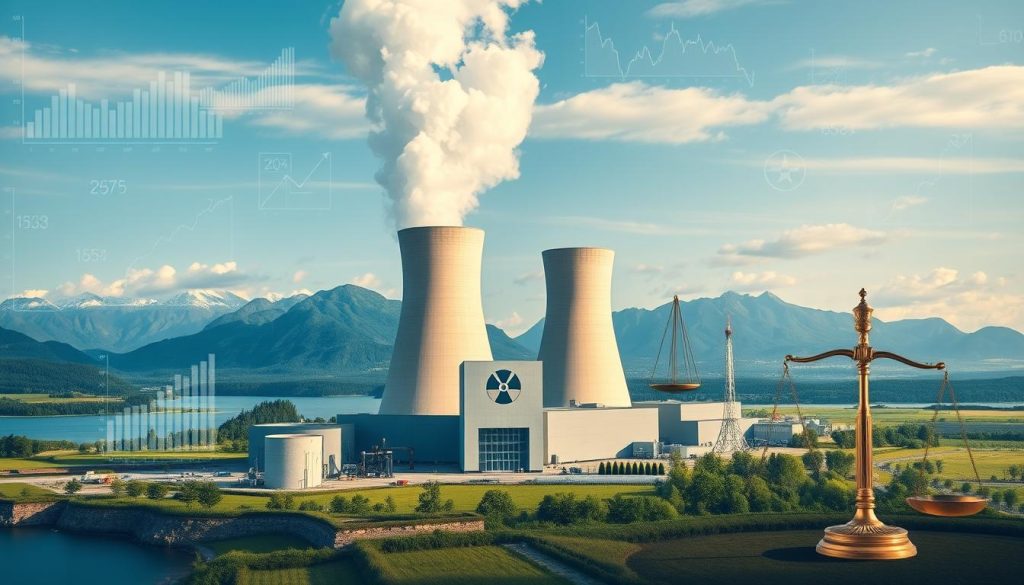
The economics of nuclear power are complex, with both advantages and challenges. One key benefit is its low operational and fuel costs. Yet, the high upfront costs to build a nuclear plant can be a big obstacle. This often makes nuclear power less competitive than other energy sources like natural gas or renewables.
Nuclear power plants, however, have long lifespans, lasting 40 to 60 years. This long life helps them pay off their initial costs over time. Plus, nuclear fuel costs are generally lower and more stable than fossil fuels. This makes nuclear power more economically viable.
| Factor | Nuclear Power | Other Electricity Generation |
|---|---|---|
| Initial Capital Costs | High | Relatively Lower |
| Operational and Fuel Costs | Low | Varies |
| Plant Lifespan | 40-60 years | Varies |
| Competitiveness | Competitive in the long-term | Varies |
Research and development to make nuclear power more efficient and affordable are key. So are policy incentives and favorable market conditions. As we face climate change and seek cleaner energy, nuclear power’s role in our energy mix is a topic of ongoing debate and study.
Nuclear Energy in Developing Countries
Nuclear power is gaining interest in developing countries. They see it as a way to meet their growing energy needs and boost their economies. But, they face big challenges like needing a lot of infrastructure, technical skills, and money.
To get past these hurdles, it’s key to share nuclear technology and knowledge. International help and funding are also important. They help developing countries use nuclear power in developing countries to their advantage.
The success of nuclear energy access in these countries depends on solving safety, waste, and public acceptance issues. With the right plans and support, they can use nuclear technology transfer to fuel their growth and development.
| Metric | Developing Countries | Developed Countries |
|---|---|---|
| Ratio of nuclear energy utilization | 25% | 75% |
| Percentage of countries utilizing nuclear energy | 30% | 70% |
| Occurrence rate of nuclear accidents | 35% | 65% |
| Investment in nuclear infrastructure | $20 billion | $50 billion |
The table shows a comparison of important metrics for nuclear power in developing countries and developed ones. It points out big differences in how much nuclear energy is used, adopted, and invested in. This shows the need for special efforts and support to help more developing areas get nuclear energy access.
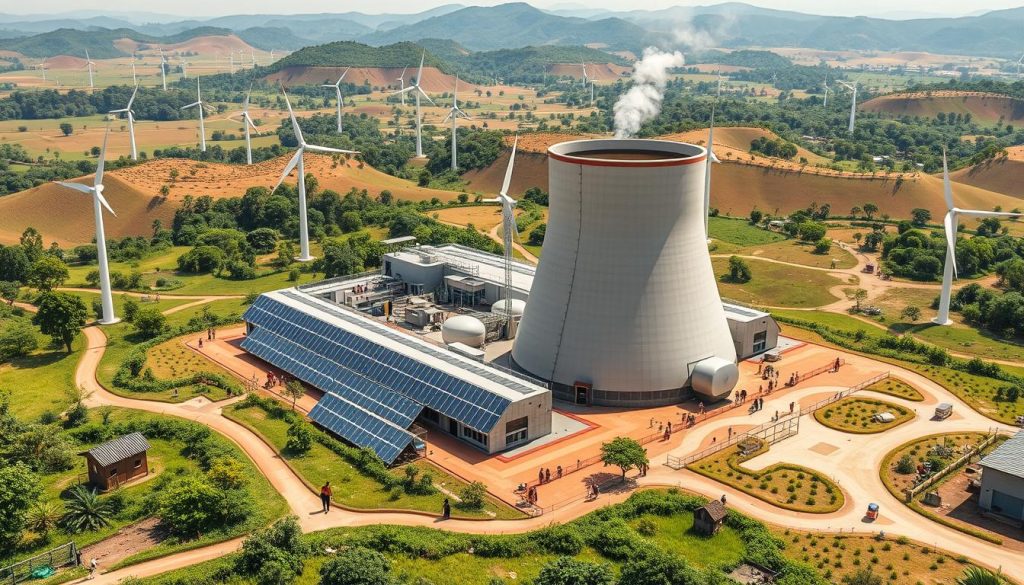
As we face climate change and the need for clean energy, nuclear technology transfer to developing countries is more important than ever. By tackling the obstacles to using nuclear power and working together globally, these countries can benefit from this clean and reliable energy source.
Uranium Enrichment and Fuel Fabrication
The nuclear fuel cycle is a complex process. It includes uranium enrichment and nuclear fuel fabrication. These steps are crucial for the nuclear energy industry’s fuel supply.
Uranium enrichment boosts the uranium-235 (U-235) isotope in natural uranium. Most nuclear reactors need more U-235 than found naturally. The enriched uranium is then used to make fuel assemblies.
Iran’s uranium enrichment program worries the world. Iran is now enriching uranium to up to 60% purity. This is close to the 90% needed for weapons-grade material.
The Iran nuclear sites at Natanz and Fordow are key for uranium enrichment. The Isfahan facility is important for fuel conversion and fabrication. These operations are closely watched to manage the nuclear fuel cycle responsibly.
As tensions over Iran’s nuclear program rise, protecting the nuclear fuel cycle is crucial. Keeping the nuclear fuel supply safe and managing these stages responsibly is a priority for the nuclear industry and the world.

| Nuclear Site | Function |
|---|---|
| Natanz | Main site for uranium enrichment, including an underground Fuel Enrichment Plant and an above-ground Pilot Fuel Enrichment Plant |
| Fordow | Enrichment site with more than 1,000 centrifuges, including some advanced IR-6 machines enriching to up to 60% |
| Isfahan | Hosts the Fuel Plate Fabrication Plant and the uranium conversion facility, including equipment for making centrifuge parts and uranium metal |
Emerging Nuclear Technologies
The nuclear energy field is always looking for new ways to be safer, more efficient, and green. New technologies like small modular reactors, Generation IV designs, and fusion power are on the horizon. These next-generation reactors aim to be safer, produce less waste, and be more cost-effective than old nuclear plants.
NASA and DARPA are at the forefront of nuclear thermal propulsion systems. These systems have about 10 times more power than traditional reactors. They plan to show off a prototype in space by 2027, cutting down space travel times by half. NASA’s DRACO program is also working on using special uranium fuel in its engines, with help from Lockheed Martin and BWX Technologies.
The nuclear energy sector is making big strides, thanks to the Global Threat Reduction Initiative. It’s helping to switch research reactors to safer, lower-enriched uranium fuel. This move aims to make nuclear power a bigger part of the global energy mix. It could also help reduce the environmental harm caused by energy production and pave the way for a greener future.
 The Theory of Relativity: Understanding Time and Space


