Ocean Observation Technologies: Innovations and Challenges

The ocean is one of Earth’s most vital and mysterious ecosystems, covering over 70% of the planet’s surface. Ocean observation technologies play a crucial role in understanding ocean dynamics, marine biodiversity, and climate change.
By advancing our ability to monitor the oceans, these technologies help scientists collect data for predictive models, conservation efforts, and resource management. However, ocean observation technologies face unique challenges due to the harsh oceanic environment, high costs, and technological limitations. This article will delve into the innovations in ocean observation technologies, the challenges they encounter, and the impact they have on scientific exploration.
Innovations in Ocean Observation Technologies
Recent advances in technology have transformed oceanography, enabling scientists to collect unprecedented amounts of data across various ocean parameters, such as temperature, salinity, and pH levels. Key innovations in ocean observation technologies include:
Autonomous Underwater Vehicles (AUVs)
Autonomous Underwater Vehicles (AUVs) are robotic submarines that can independently explore ocean depths. Equipped with sensors and cameras, AUVs gather valuable data on ocean conditions, seafloor topography, and marine ecosystems without human intervention. These vehicles navigate pre-programmed routes and can adjust to environmental conditions in real time, making them ideal for detailed surveys of remote oceanic areas.
Key Capabilities of AUVs:
- High-resolution mapping of the seafloor
- Collection of temperature, salinity, and oxygen level data
- Monitoring of underwater habitats and biodiversity
Remote Sensing Satellites
Satellites equipped with remote sensing technology have revolutionized large-scale ocean observation. They can monitor vast areas, track weather patterns, measure sea surface temperature (SST), and map ocean currents. Satellites are particularly valuable for studying global ocean circulation, which impacts climate and weather.
Main Satellite Functions:
- Sea Surface Temperature (SST): Satellites use infrared sensors to measure SST, helping to identify climate change patterns.
- Chlorophyll Concentration: Remote sensing detects chlorophyll levels, indicating phytoplankton abundance and ocean health.
- Sea Level Rise: Using radar altimeters, satellites track sea level variations, offering insight into the effects of global warming on ice melt and ocean expansion.
Buoy Networks and Profiling Floats
Ocean buoys and profiling floats are essential for continuous ocean monitoring. These devices are deployed at sea and measure parameters such as temperature, salinity, and wave height. Profiling floats, like those used in the Argo program, move vertically through the water column, providing valuable data on ocean stratification.
 Oceanographic Exploration: Key Challenges in Unlocking the Mysteries of the Ocean
 Applications of Buoy Networks and Profiling Floats:
- Monitoring ocean temperature and salinity profiles at various depths
- Tracking ocean currents and detecting changes in the thermocline
- Contributing to global climate models by recording long-term oceanic data
Acoustic Monitoring Systems
Acoustic technology plays a vital role in underwater monitoring. By emitting sound waves and analyzing echoes, scientists can map the seafloor, monitor marine species, and track ocean currents. Acoustic Doppler Current Profilers (ADCPs) are commonly used to measure water velocity, providing valuable data for understanding ocean circulation.
Advantages of Acoustic Systems:
- Non-invasive monitoring of marine mammals and fish populations
- Detailed mapping of underwater landscapes and ocean floor structures
- Real-time measurement of water column movements and currents
Ocean Gliders
Ocean gliders are specialized AUVs that use buoyancy changes to move through the water, consuming minimal energy and enabling long-duration missions. Gliders can travel over thousands of kilometers while collecting data on water temperature, salinity, and dissolved oxygen.
Ocean Glider Functions:
- Monitoring seasonal and regional variations in oceanic properties
- Providing data on areas affected by climate change, such as polar regions
- Recording ocean conditions in nearshore and deep-sea environments
Challenges in Ocean Observation Technologies
Despite their capabilities, ocean observation technologies face significant challenges that limit their deployment, accuracy, and data quality.
Harsh Environmental Conditions
The ocean environment is hostile, with high pressures, corrosive saltwater, and extreme temperatures. Technical components of observation devices must be resilient to withstand such conditions, yet even robust materials degrade over time. Instruments operating in deep-sea regions encounter pressures up to 1100 bar (at depths of 11,000 meters), which demands specialized, pressure-resistant technology.
High Costs of Development and Maintenance
Developing and deploying ocean observation equipment requires substantial financial resources. AUVs, satellites, and ocean gliders involve advanced materials and cutting-edge technologies, often resulting in high production costs. Maintenance expenses also add up due to the need for retrieval, repair, and calibration of equipment, particularly in remote locations.
 Recent Advances in Marine Biology
 Data Transmission and Storage Issues
Transmitting data from ocean devices to onshore facilities can be challenging, particularly for devices operating at depth. Satellites and buoys transmit data in near real-time, but acoustic systems and deep-sea equipment often rely on data storage on the device itself, which limits immediate access. Storage capacity and transmission delays are ongoing issues for oceanographers needing high-frequency data.
Energy Supply Limitations
Ocean observation devices, especially those in remote areas, face energy supply challenges. Many devices rely on battery power, which limits the duration of their operation. Although solar panels and wave-powered technologies have been integrated to extend operational times, energy limitations still impact the frequency and range of data collection.
Applications of Ocean Observation Technologies
Ocean observation technologies provide essential data for a wide range of applications, advancing scientific research and supporting global sustainability efforts.
Climate Change Research
Long-term ocean monitoring is crucial for understanding climate change, as oceans play a significant role in carbon cycling and heat absorption. Technologies like profiling floats and satellite measurements of sea surface temperature and sea level rise provide critical data that feed into climate models and help predict future climate scenarios.
Marine Conservation
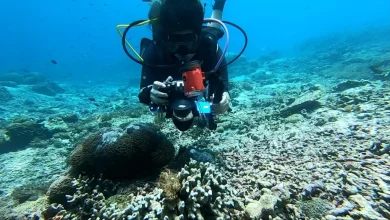
By tracking marine species, monitoring coral reefs, and assessing biodiversity, ocean observation technologies contribute to marine conservation. Acoustic systems, for instance, help scientists study whale migration patterns, assess fish stocks, and monitor endangered species, aiding conservation efforts and policy-making.
Disaster Prediction and Management
Ocean observation systems are instrumental in predicting natural disasters such as tsunamis and hurricanes. Buoy networks detect changes in sea level and temperature, while satellites track storm development. Early warning systems provide governments and communities with valuable information to prepare and respond to these events.
Sustainable Fisheries Management
Sustainable fisheries rely on accurate data about fish stocks and ecosystem health. Acoustic monitoring and buoy data inform fish population assessments and help determine sustainable catch limits, promoting responsible fishing practices and ensuring long-term ecosystem stability.
Future Prospects for Ocean Observation Technologies
The future of ocean observation technologies is likely to be shaped by advancements in sensor miniaturization, data processing capabilities, and renewable energy solutions.
 How are stars studied in modern astronomy?
 - Improved Data Integration: By integrating data from multiple observation platforms, scientists can develop comprehensive models to improve predictions of oceanic phenomena and support more accurate climate projections.
- Artificial Intelligence (AI) and Machine Learning (ML): AI and ML are being utilized to analyze massive datasets collected by observation technologies. These tools enable faster data processing, allowing for real-time monitoring and the automation of pattern recognition in complex ocean data.
- Renewable Power Sources: Future developments may include energy-efficient devices powered by ocean currents or thermal energy. These innovations would allow long-term ocean monitoring without the frequent need for recharging or maintenance.
Ocean observation technologies are crucial for understanding the vast, dynamic, and interconnected marine environments that define much of our planet. While these technologies face significant challenges, including harsh environments, high costs, and energy limitations, ongoing advancements promise to enhance our monitoring capabilities and deepen our understanding of the oceans.
As these technologies continue to evolve, they will play an essential role in addressing global issues such as climate change, marine conservation, and disaster management, ensuring a sustainable future for ocean ecosystems and human societies alike.