
Space Exploration Milestones: From Sputnik to the Moon Landing

Space exploration missions
Space exploration missions have played a vital role in expanding our understanding of the universe. From the first artificial satellite launched into space to the historic Apollo Moon landing, these milestones represent humanity’s persistent curiosity and determination to explore beyond Earth’s atmosphere. In this article, we will take a journey through some of the most significant space exploration missions that shaped the modern space age.
The Dawn of Space Exploration: Sputnik 1
The story of space exploration began with the launch of the world’s first artificial satellite, Sputnik 1, by the Soviet Union on October 4, 1957. This event marked the beginning of the Space Age and set the stage for future space exploration missions.
 Life on Mars: Discoveries and Theories on Possible Life on the Red Planet
- Sputnik 1 was the first man-made object to orbit Earth.
- The satellite sent radio signals back to Earth, allowing scientists to study its orbit and characteristics.
- Its launch triggered the Space Race between the United States and the Soviet Union.
Yuri Gagarin: The First Human in Space
On April 12, 1961, the Soviet Union achieved another milestone in space exploration by sending the first human into space. Yuri Gagarin, aboard the spacecraft Vostok 1, completed one orbit around Earth. This historic flight represented a major leap forward in space travel and solidified Gagarin’s place as a global hero.
- Yuri Gagarin became the first person to travel into space and orbit the Earth.
- The flight lasted 108 minutes, but its impact on space exploration was immeasurable.
- This mission proved that humans could survive in space and laid the foundation for future crewed missions.
The Apollo Program: Man’s First Steps on the Moon
The Apollo program, led by NASA, marked the next great chapter in human space exploration. One of its most iconic moments was the Moon landing on July 20, 1969, when astronaut Neil Armstrong became the first person to walk on the Moon.
 Is Interstellar Travel Possible? Theories and Future Technologies
The mission, Apollo 11, was a culmination of years of planning, innovation, and scientific breakthroughs. The successful landing and Armstrong’s famous words, “That’s one small step for man, one giant leap for mankind”, signified not only a technological triumph but also a profound moment in human history.
- Apollo 11 was the first successful mission to land humans on the Moon and bring them back safely to Earth.
- Neil Armstrong and Buzz Aldrin spent over 21 hours on the lunar surface, conducting experiments and collecting samples.
- The Apollo missions helped to expand our understanding of the Moon’s composition, surface features, and potential for future exploration.
Advancements in Space Exploration Technologies
After the Apollo missions, space exploration continued to evolve. Several key technological advancements paved the way for deeper exploration of the solar system and beyond:
 Black Holes: What They Are and How They Form
- Space Stations: The International Space Station (ISS), launched in 1998, is an ongoing project where astronauts conduct research in space and test long-duration spaceflight effects on the human body.
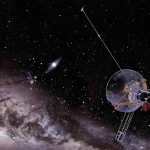
- Robotic Spacecraft: Space probes, like Voyager 1 and Voyager 2, launched in the 1970s, have traveled farther than any human-made object, transmitting valuable data about our solar system and interstellar space.
- Rovers on Mars: Robotic rovers such as Spirit, Opportunity, and Curiosity have explored the surface of Mars, discovering key insights into the planet’s geology and potential for past life.
The Future of Space Exploration Missions
The future of space exploration missions holds exciting prospects. Plans for returning humans to the Moon with NASA’s Artemis Program, as well as the growing interest in Mars missions, are at the forefront of space exploration efforts. Advancements in technology, private spaceflight companies like SpaceX, and international collaborations are all contributing to a new era of exploration.
- Artemis I: The uncrewed mission to the Moon, designed to pave the way for sustainable lunar exploration.
- Mars Missions: NASA’s Perseverance rover and future crewed missions to Mars will provide further insights into the potential for human colonization of the Red Planet.
- Private Space Ventures: Companies like SpaceX, Blue Origin, and others are aiming to make space travel more accessible and open new possibilities for exploration.
Space exploration missions have provided us with unparalleled insights into the cosmos. From the launch of Sputnik to the Apollo 11 Moon landing, humanity has taken significant steps toward exploring the unknown. With new technologies, international cooperation, and private ventures, the next chapters in space exploration promise to be even more thrilling and groundbreaking. As we look to the future, it’s clear that space exploration is not just about reaching new frontiers but also about inspiring generations to push the boundaries of human achievement.


